

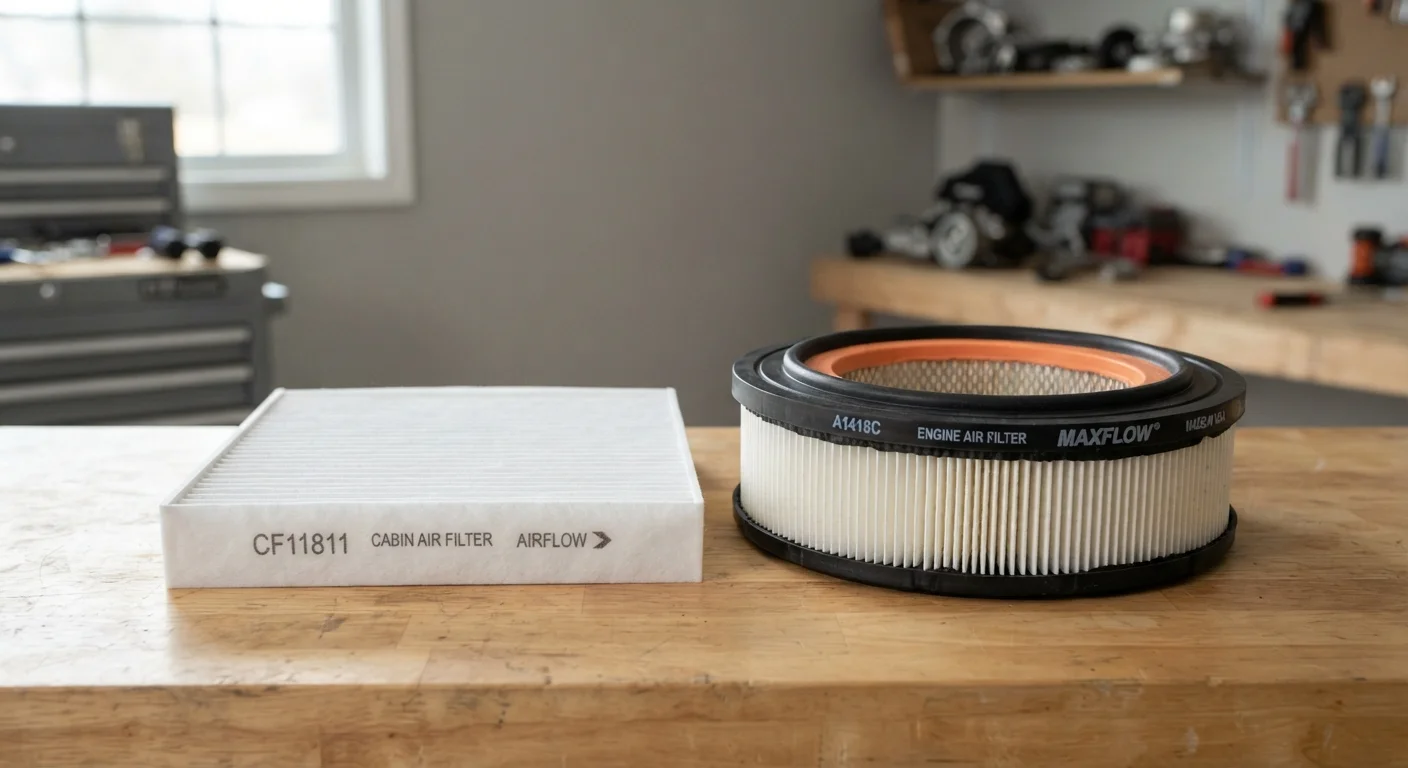
Key Takeaways
Option A
Cabin Air Filter
The filter that cleans the air you breathe inside the car.
Best for: Protecting drivers and passengers from dust, pollen, exhaust fumes, and other airborne particles entering the vehicle interior.
Option B
Engine Air Filter
The filter that keeps your engine breathing cleanly.
Best for: Preventing dirt, debris, and contaminants from entering the engine's combustion system and causing wear or damage.
If you or your passengers suffer from allergies or live in a high-pollen area
Cabin Air Filter
Replacing a clogged cabin filter restores the HVAC system's ability to trap pollen, dust, and fine particles before they reach your lungs. Some cabin filters also include activated carbon layers that reduce odors.
If you notice reduced acceleration, rough idling, or a drop in fuel economy
Engine Air Filter
A restricted engine air filter starves the engine of the air it needs for combustion, which can cause sluggish performance and inefficient fuel use. Replacing it is often one of the simplest performance restores available.
If you drive frequently on dirt roads or in dusty environments
Engine Air Filter
Dusty conditions accelerate engine filter clogging. Checking and replacing the engine air filter more frequently than the standard interval helps prevent abrasive particles from entering the engine.
If you notice weak airflow from your car's vents even at maximum fan speed
Cabin Air Filter
Blocked cabin air filters are the most common cause of reduced HVAC airflow and are straightforward to replace, usually located behind the glove box or under the dashboard.
What Each Filter Actually Does
Despite being found in the same vehicle and both going by the name "air filter," the cabin air filter and the engine air filter have completely separate jobs and are not interchangeable.
The cabin air filter sits in the HVAC (heating, ventilation, and air conditioning) system and filters all air that enters the passenger compartment - whether through the vents, defrost system, or air conditioning. It traps pollen, dust, mold spores, bacteria, and fine particulate matter before they reach the people inside the car. Some higher-grade versions also include activated carbon to absorb odors and exhaust fumes.
The engine air filter is part of the engine's intake system. Its job is to block airborne contaminants - dirt, sand, insects, and debris - from entering the engine's combustion chambers. Without it, abrasive particles would accelerate wear on pistons, cylinders, and other internal components. A clean engine air filter allows the engine to draw in the right volume of clean air for efficient combustion.
| Criterion | Cabin Air Filter | Engine Air Filter |
|---|---|---|
| Primary function | Cleans air entering the passenger cabin | Cleans air entering the engine intake |
| Location | Behind glove box or under dashboard | Inside air box under the hood |
| Typical replacement interval | 15,000-25,000 miles | 15,000-30,000 miles |
| Effect when clogged | Weak HVAC airflow, odors, poor air quality | Reduced power, lower fuel economy |
| Triggers dashboard warning? | Rarely | Rarely |
| DIY replacement difficulty | Easy - no tools usually needed | Easy - basic clips or screws |
Replacement Intervals and Warning Signs
Both filters degrade over time and need periodic replacement, but their service intervals differ - and neither will trigger a dashboard warning light in most vehicles.
Cabin Air Filter
A general guideline is to replace the cabin air filter every 15,000 to 25,000 miles, though this varies by vehicle and driving environment. You may need to replace it sooner if you notice:
- Reduced airflow from vents even at high fan settings
- Musty or unpleasant odors when the HVAC runs
- Increased dust accumulation on interior surfaces
- Allergy symptoms that worsen while driving
Engine Air Filter
Engine air filters are commonly replaced every 15,000 to 30,000 miles, but check your owner's manual for the manufacturer's recommendation. Signs that it may be overdue include:
- Noticeably reduced acceleration or throttle response
- Decreased fuel economy over several fill-ups
- Rough idling or misfires
- A visibly dirty or clogged filter on inspection
Owner's Manual Is Your Best Reference
Replacement intervals listed on filter packaging or in general guides are estimates. Your vehicle's owner's manual contains manufacturer-specific intervals that account for your engine design and expected conditions. For severe-duty driving - dusty roads, stop-and-go traffic, extreme temperatures - many manufacturers recommend shorter intervals than the standard guidance.
Driving conditions matter more than mileage alone. City driving with frequent stops, high-dust environments, or heavy pollen seasons can shorten both filters' effective lifespans significantly.
How to Inspect Both Filters
Checking both filters is a straightforward task that most drivers can do during routine maintenance. You don't need special tools for most vehicles.
Inspecting the Cabin Air Filter
On most vehicles, the cabin air filter is located behind the glove box, under the dashboard on the passenger side, or sometimes under the hood near the base of the windshield. Consult your owner's manual for the exact location. Remove the filter and hold it up to light - if it's visibly gray, clogged with debris, or has a noticeable odor, it's time to replace it.
Inspecting the Engine Air Filter
The engine air filter is housed in a plastic air box connected to the intake ducting under the hood. Unclip the housing, remove the filter, and inspect it visually. A new engine air filter is typically white or light gray. If the filter appears dark brown or black throughout, or if debris falls from it when tapped, replacement is warranted.
15,000-30,000 mi
Typical engine air filter service interval
Manufacturer recommendations vary - always refer to your vehicle's owner's manual for the specific interval.
~80%
Of engine wear attributed to airborne dirt ingestion
Industry estimates suggest a significant share of premature engine wear is linked to inadequate filtration of intake air, underscoring the engine filter's importance.
Both replacements are among the most DIY-friendly maintenance tasks on a car. If you're unsure about the procedure or your vehicle has a non-standard layout, a qualified mechanic can handle both quickly during a routine service visit.