

Key Takeaways
Disc Brake System
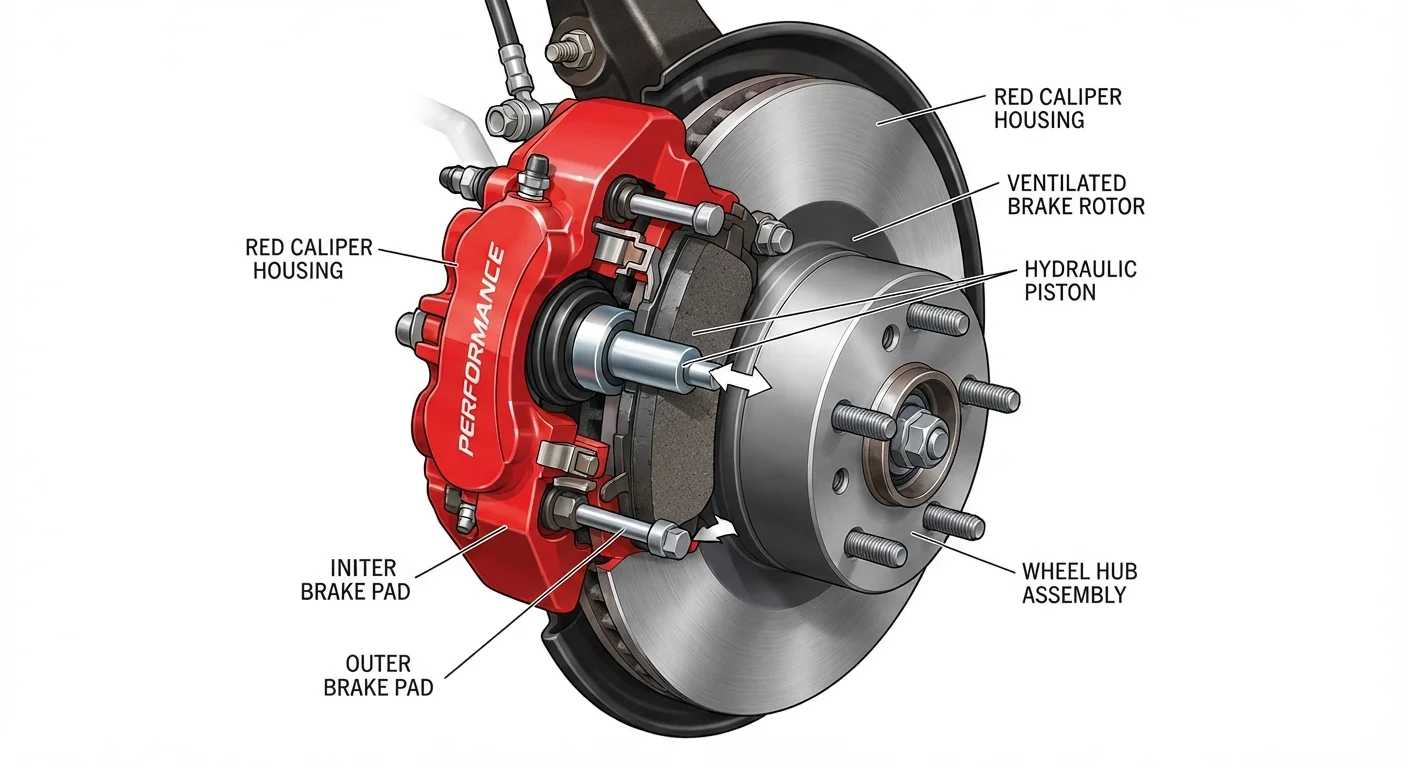
A disc brake system is the most common braking setup on modern passenger vehicles. It uses three main components - pads, rotors, and calipers - that work together to slow and stop the wheels when you press the brake pedal. Friction generated between these parts converts the vehicle's kinetic energy into heat, bringing the car to a controlled stop.
Most vehicles use disc brakes on all four wheels, though some budget models retain drum brakes at the rear axle. Drum brakes use a different friction mechanism (shoes pressing outward against a drum) but serve the same function.
The Three Core Components of Your Braking System
Every time you press the brake pedal, a chain of mechanical and hydraulic events unfolds in milliseconds. Three components do the heavy lifting: brake pads, rotors, and calipers. Understanding what each one does makes it much easier to recognize when something is going wrong.
Brake Pads
Brake pads are flat friction materials mounted inside the caliper. When you press the pedal, the pads are pushed against the spinning rotor, creating the friction that slows the wheel. They are intentionally designed as the sacrificial part of the system - they wear down gradually so that harder, more expensive components are protected. Pad material varies: organic compounds are quieter, semi-metallic pads offer stronger performance, and ceramic pads balance durability with low dust and noise.
Rotors
Rotors (also called brake discs) are the large metal discs attached to the wheel hub that spin with the wheel. The brake pads clamp against the rotor's flat surface to generate stopping friction. Rotors are engineered to dissipate heat quickly, which is why many feature ventilation slots or drilled holes. Over time, repeated heat cycles can cause rotors to warp slightly or wear thin, reducing braking efficiency.
Calipers
The caliper is the hydraulic clamp that houses the brake pads and squeezes them against the rotor when hydraulic pressure arrives from the master cylinder. Most modern vehicles use floating calipers with a single piston, while performance vehicles often use fixed calipers with multiple pistons for more even clamping force. A caliper that seizes or leaks can cause dragging brakes, uneven pad wear, or loss of stopping power.
30K-70K
Miles brake pads typically last
This range reflects variation in driving habits, pad material, and vehicle type - city driving tends toward the lower end.
~12%
Of crashes linked to brake-related issues
A NHTSA large-scale crash causation study found brake problems among the most common vehicle-related crash factors.
2 years
Typical brake fluid flush interval
Many vehicle manufacturers recommend replacing brake fluid every two years to prevent moisture absorption that lowers its boiling point.
How Wear Happens - and What Accelerates It
Brake components don't wear at a fixed rate. Driving habits, vehicle weight, and road conditions all influence how quickly pads and rotors are consumed.
- Frequent hard stops: Aggressive braking generates extreme heat, accelerating pad wear and increasing the risk of rotor warping.
- City driving: Stop-and-go traffic means the brakes engage far more often than highway driving, shortening service intervals.
- Driving in hilly terrain: Long descents that rely heavily on braking can overheat pads and rotors, a condition sometimes called brake fade.
- Vehicle weight and towing: Heavier loads demand more braking force, which translates directly into faster component wear.
As a general baseline, brake pads on most passenger vehicles last between 30,000 and 70,000 miles. That's a wide range - which is exactly why regular visual inspections matter more than mileage milestones alone. Your owner's manual will list the manufacturer's recommended inspection schedule.
Use Engine Braking to Extend Pad Life
On long downhill stretches, shift to a lower gear (or use the 'L' or 'B' mode on automatics and EVs) to let the engine or motor help slow the vehicle. This reduces how hard your friction brakes have to work, keeping temperatures lower and extending pad and rotor life. Always use conventional braking for precise, controlled stops - engine braking is a supplement, not a replacement.
Warning Signs You Shouldn't Ignore
Your braking system communicates problems in predictable ways. Learning to recognize these signals early can prevent a minor service visit from turning into a major repair - or worse, a safety failure on the road.
Sounds
- Squealing or squeaking: Often the wear indicator doing its job. It's time to schedule a brake inspection.
- Grinding or metal-on-metal noise: Pads are likely worn through. The caliper or rotor may already be damaged. This needs immediate attention.
Feelings
- Soft or spongy pedal: May indicate air in the brake lines or low fluid. See the brake fluid section of our car fluid glossary for context on fluid maintenance.
- Vibration when braking: Often a sign of warped rotors. The pulsation you feel through the pedal or steering wheel is the pad hitting an uneven rotor surface.
- Vehicle pulling to one side: Can indicate a seized caliper applying uneven pressure.
Dashboard Alerts
A brake warning light should never be dismissed. Depending on your vehicle, it may signal low brake fluid, worn pads, or an ABS fault. Our guide on what your car's warning lights are actually telling you explains how to interpret these symbols correctly.
When to See a Mechanic
Brake work sits firmly in the category of tasks best left to a qualified mechanic unless you have verified mechanical training and the proper tools. Improperly installed pads or calipers can cause brake failure - a safety risk that outweighs any potential cost savings from a DIY attempt.
Plan on having your brakes inspected at least once a year, or whenever any of the warning signs described above appear. Many tire shops perform visual brake inspections during routine tire rotations - a convenient opportunity to catch wear early. For a comprehensive look at the connected systems that keep your vehicle road-safe, our tire maintenance guide covers what to watch for from the ground up.
When a mechanic recommends service, ask them to explain the remaining pad thickness in millimeters and the rotor measurement versus the minimum spec. These are objective numbers that help you make an informed decision about timing and scope of repairs.
This article is for general informational purposes only. Always consult a qualified mechanic before performing or deferring any brake-related maintenance. If you experience sudden brake failure or significantly reduced stopping ability, do not continue driving - seek professional assistance immediately.