

Key Takeaways
Our Verdict
Neither leasing nor buying is universally the better financial move - it depends on how long you hold the vehicle, how many miles you drive, and what flexibility means to you. Buyers who keep their cars well past the loan term build equity and reduce annual costs over time, while lessees trade ownership for lower monthly exposure and predictable upgrade cycles.
| Best for | Recommended |
|---|---|
| Drivers who keep vehicles 7+ years and want lowest long-term cost | Buying |
| Those who prefer driving a newer vehicle every 2-3 years with predictable payments | Leasing |
| High-mileage drivers logging 15,000+ miles annually | Buying |
| Drivers who want minimal maintenance surprises during the ownership period | Leasing |
The Core Financial Structure of Each Option
When you buy a vehicle - whether outright or through a loan - you're paying for the full value of the car. Each loan payment builds toward ownership of an asset. Once the loan is paid off, that vehicle belongs to you free and clear, and your monthly transportation cost drops significantly.
When you lease, you're essentially paying for the depreciation that occurs during the lease term, plus a finance charge. You return the car at the end. Lease payments are typically lower than loan payments on the same vehicle because you're not paying for the entire purchase price - but that difference doesn't translate into savings in any traditional sense. You end the lease with no asset.
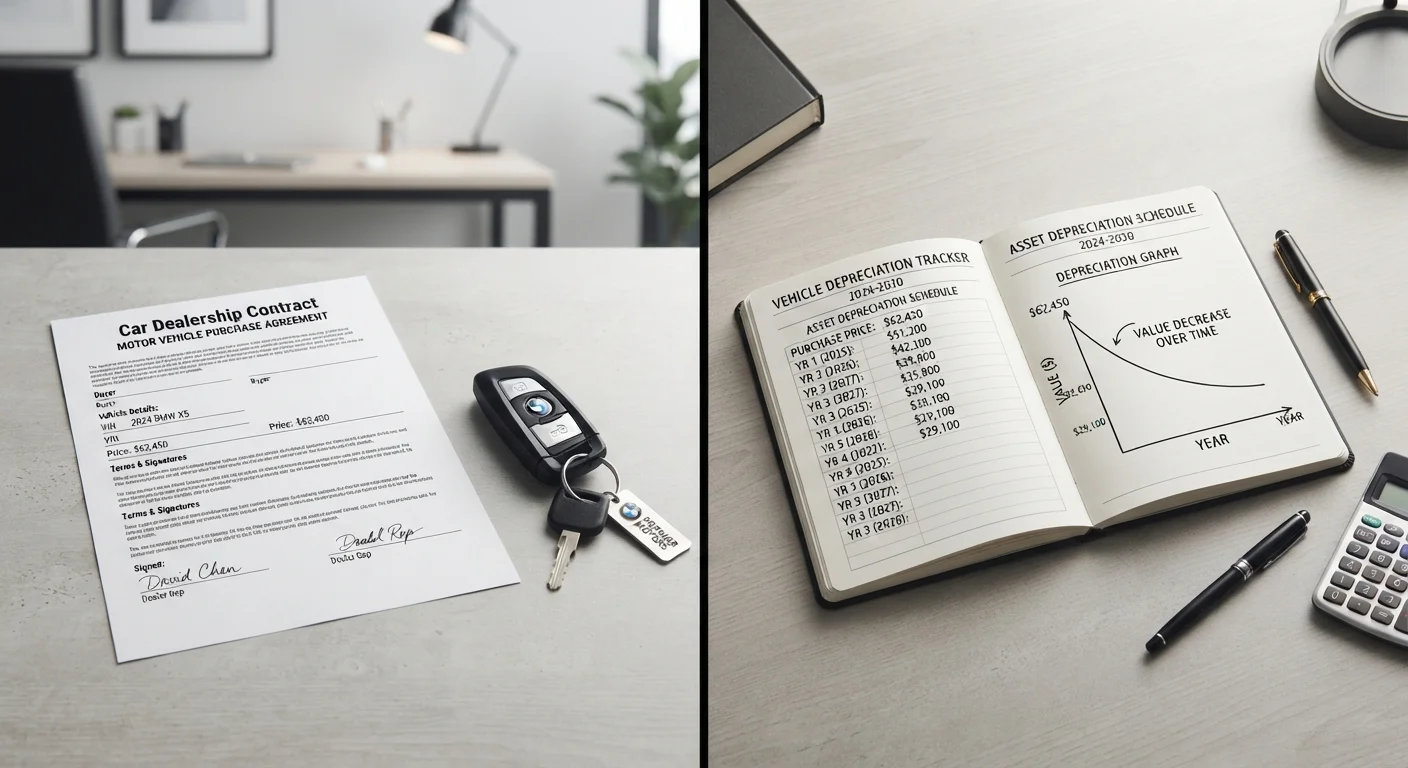
Understanding how depreciation works is essential here. New vehicles can lose 15-25% of their value in the first year. Lessees pay for this steep early depreciation through their monthly payments - but so do buyers who sell within a few years. The difference is that buyers who hold their vehicle long enough effectively spread that depreciation cost over more years, reducing its per-year impact.
| Leasing | Buying (Financed) | |
|---|---|---|
| Monthly payment | Lower - covers depreciation only | Higher - covers full vehicle price |
| Ownership at end of term | None - car returned | Full ownership, no more payments |
| Mileage flexibility | Capped; overage fees apply | Unlimited |
| Customization allowed | Generally not permitted | Fully at owner's discretion |
| Early exit flexibility | Limited; costly penalties | Can sell or trade in anytime |
| Long-term cost (7-10 years) | Higher - ongoing payments never stop | Lower once loan is paid off |
| Maintenance risk | Low - usually under warranty | Higher as vehicle ages |
Where Leasing Gets Expensive - and Where It Doesn't
Leasing has a reputation for being cheaper month-to-month, and on paper that's often true. But several contractual features can erode that apparent savings:
- Mileage caps: Most leases allow 10,000-15,000 miles per year. Overage fees - commonly $0.15-$0.30 per mile - can add up quickly for commuters or road-trippers.
- Wear-and-tear charges: Normal use is covered, but what counts as excessive varies by lender. Cracked windshields, tire wear, or interior scuffs may result in charges at turn-in.
- Early termination: Getting out of a lease early is expensive and complicated. Buyers with loans have more exit options, including private sales.
On the other hand, because leased vehicles are typically newer and still under manufacturer warranty, lessees rarely face unexpected repair bills during the lease period. That predictability has real value. For a full picture of what owning costs beyond the payment, see the hidden costs of car ownership.
Calculate Your True Per-Mile Cost
Before signing a lease, divide the total of all lease payments (including fees and the down payment) by the miles you'll actually drive. Do the same for a purchase scenario over your expected ownership period. That per-mile figure often tells a clearer story than the monthly payment alone. High-mileage drivers frequently find buying becomes more cost-effective once overage fees are factored in.
The Loan Route: Interest, Equity, and the Ownership Horizon
Financing a vehicle purchase means paying interest on top of the car's price, which raises the total cost. How much interest you pay depends heavily on your loan's APR and term length. Understanding what your APR actually costs over a 48-, 60-, or 72-month term can clarify whether a seemingly low monthly payment is actually a good deal.
The critical financial turning point for buyers comes after the loan is paid off. If you continue driving the vehicle for two, three, or more years beyond that point, you're covering only insurance, maintenance, and fuel - not a payment. Over a 10-year ownership window, that debt-free period can make buying significantly more economical than perpetual leasing.
Buyers also retain flexibility: you can sell privately or trade in whenever you choose, applying any equity toward the next vehicle. Lessees hand the car back with nothing to show for their payments.
~49%
New vehicles financed via loans in the US
According to Experian's State of the Automotive Finance Market reports, roughly half of new vehicle transactions are financed through loans rather than leased or paid in cash.
~8 years
Average age of a vehicle in the US
S&P Global Mobility data indicates the average age of light vehicles in the US has risen steadily, suggesting many owners hold their cars well past typical lease cycles.
Which Financial Profile Fits Each Choice?
There is no universally correct answer. The better question is: which choice fits your actual situation?
Leasing may make sense if:
- You consistently drive under 12,000-13,000 miles per year
- You prefer always having a vehicle under warranty
- Lower monthly cash outflow is a priority right now
- You want to change vehicles every 2-3 years without the hassle of selling
Buying may make sense if:
- You drive heavily or unpredictably, making mileage caps a real constraint
- You plan to keep the vehicle at least 7-10 years
- You want the ability to modify the vehicle
- You're building a long-term vehicle asset as part of a broader personal budget
For anyone building a realistic yearly transportation budget, it helps to account for all the variables - payments, insurance, fuel, and maintenance. A comprehensive annual vehicle ownership budget can make the comparison far more concrete than monthly payments alone.
This article is for general informational purposes only and does not constitute financial or legal advice. Your individual financial situation, credit profile, and local market conditions will affect any comparison. Consult a qualified financial professional before making major financial decisions.