

Key Takeaways
The Stock Market
The stock market is a network of exchanges and platforms where shares of publicly traded companies are bought and sold. When you buy a share, you acquire a small ownership stake in that company. Prices shift constantly based on how much buyers are willing to pay and how much sellers are willing to accept.
In the US, the primary exchanges are the New York Stock Exchange (NYSE) and Nasdaq; both are regulated by the Securities and Exchange Commission (SEC).
What the Stock Market Actually Is
Strip away the financial media noise and the stock market is straightforward: it is a regulated marketplace where buyers and sellers agree on prices for ownership stakes in companies. When a business wants to raise capital from the public, it issues shares through a process called an initial public offering (IPO). After that point, those shares trade freely on an exchange.
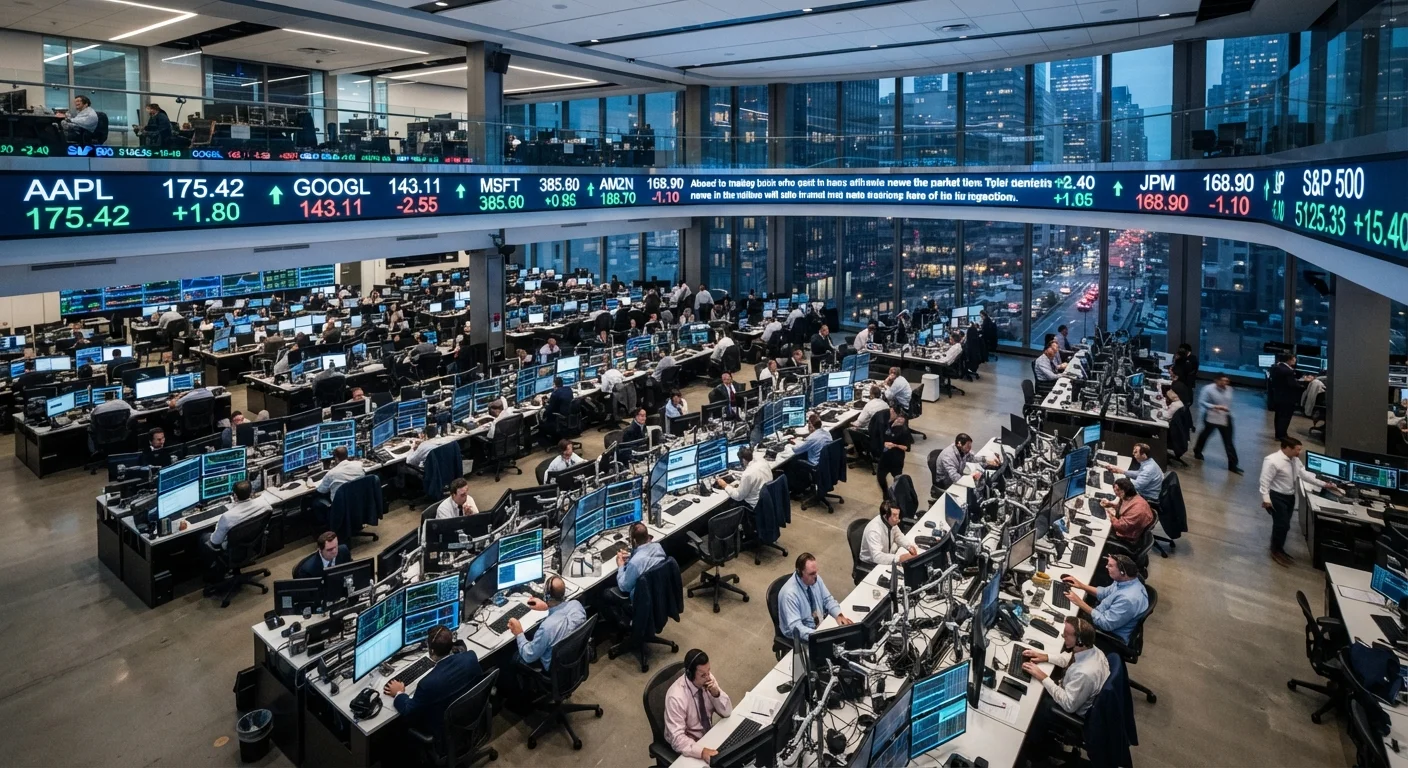
In the US, the two dominant exchanges are the New York Stock Exchange (NYSE) and Nasdaq. Neither is a single room full of shouting traders anymore - most modern trading is electronic. What they provide is a structured, transparent, and legally overseen environment where transactions settle reliably.
The phrase "the market went up today" refers to broad indexes - like the S&P 500 or the Dow Jones Industrial Average - which track the combined price movements of selected groups of stocks. These indexes are snapshots, not the full picture. Thousands of individual stocks move in all directions on any given day.
The Market Is Not One Place
Many people picture the stock market as a single location, but it is actually a network of exchanges, electronic platforms, and over-the-counter markets. Trades can be routed through the NYSE, Nasdaq, or alternative trading systems - all interconnected and regulated under SEC oversight.
Who Participates - and Why
The stock market has two broad categories of participants: companies and investors.
- Companies list shares to raise money for operations, expansion, or paying down debt. Listing on a major exchange also raises a company's public profile and gives early investors and employees a liquid way to realize gains.
- Investors range from individual retail participants - everyday people like you - to massive institutional investors such as pension funds, mutual funds, and insurance companies. Institutional investors account for the majority of daily trading volume.
Between these two groups sit brokers and brokerage platforms, which execute trades on behalf of investors for a fee (or, increasingly, at no direct commission). Market makers - often large financial firms - stand ready to buy or sell shares at quoted prices, ensuring there is always a counterparty for a trade and keeping markets liquid.
Understanding the full landscape of asset classes beyond stocks is also essential. See our guide to stocks, bonds, and cash for a plain-language breakdown of how each fits into a portfolio.
~6,000
Publicly traded companies on US exchanges
The NYSE and Nasdaq together list roughly 6,000 publicly traded companies, though the number fluctuates as companies list, delist, or merge.
$40T+
Total US stock market capitalization
The combined market value of all US-listed stocks has exceeded $40 trillion, making the US home to the world's largest equity market.
T+1
Standard US equity settlement cycle
As of May 2024, the SEC moved US equity markets to a T+1 settlement cycle, meaning trades settle one business day after execution.
How Buying and Selling Actually Works
When you place an order to buy 10 shares of a company, your brokerage routes that order to an exchange or an alternative trading system. The exchange matches your order with a seller willing to accept the same price. This happens in milliseconds.
There are two basic order types every investor should understand:
- Market order: You buy or sell immediately at whatever the current price is. Fast, but you accept the going rate.
- Limit order: You specify the maximum price you will pay (or minimum you will accept). The trade only executes if the market reaches that price.
Once a trade executes, settlement occurs - in the US, standard equity trades settle on a T+1 basis, meaning the exchange of shares and cash is finalized one business day after the trade date.
Start With a Clear Purpose
Before placing any trade, know your time horizon and why you are investing. Money you may need within one to three years is generally not suited to stock market exposure, given the potential for short-term volatility. Align your investment approach with your actual financial goals and consult a licensed financial adviser if you are uncertain.
For a deeper look at the risks that come with individual stock ownership once you understand how trades work, our article on the pros and cons of investing in individual stocks offers a balanced assessment.
Price Movement, Risk, and the Long View
Stock prices fluctuate because the future is uncertain. Earnings reports, interest rate decisions, geopolitical events, and simple changes in investor sentiment all shift the balance between buyers and sellers. This constant movement is called volatility, and it is a normal feature of markets - not a malfunction.
Historically, broad US stock market indexes have produced positive returns over long periods, but past performance does not guarantee future results. Short-term price swings can be severe and unpredictable, and individual stocks can - and do - lose most or all of their value. Understanding what volatility actually signals can prevent costly reactions; see common mistakes new investors make about market volatility for a fuller picture.
The stock market is a tool for building long-term wealth when approached with realistic expectations, appropriate diversification, and a clear understanding of personal risk tolerance. It is not a guaranteed path to profit, and it is not appropriate for money needed in the short term.
This article is for general informational and educational purposes only and does not constitute personalized investment, financial, or legal advice. All investing involves risk, including the potential loss of principal. Consult a qualified financial adviser before making investment decisions based on your individual circumstances.