

Key Takeaways
Needs vs. Wants
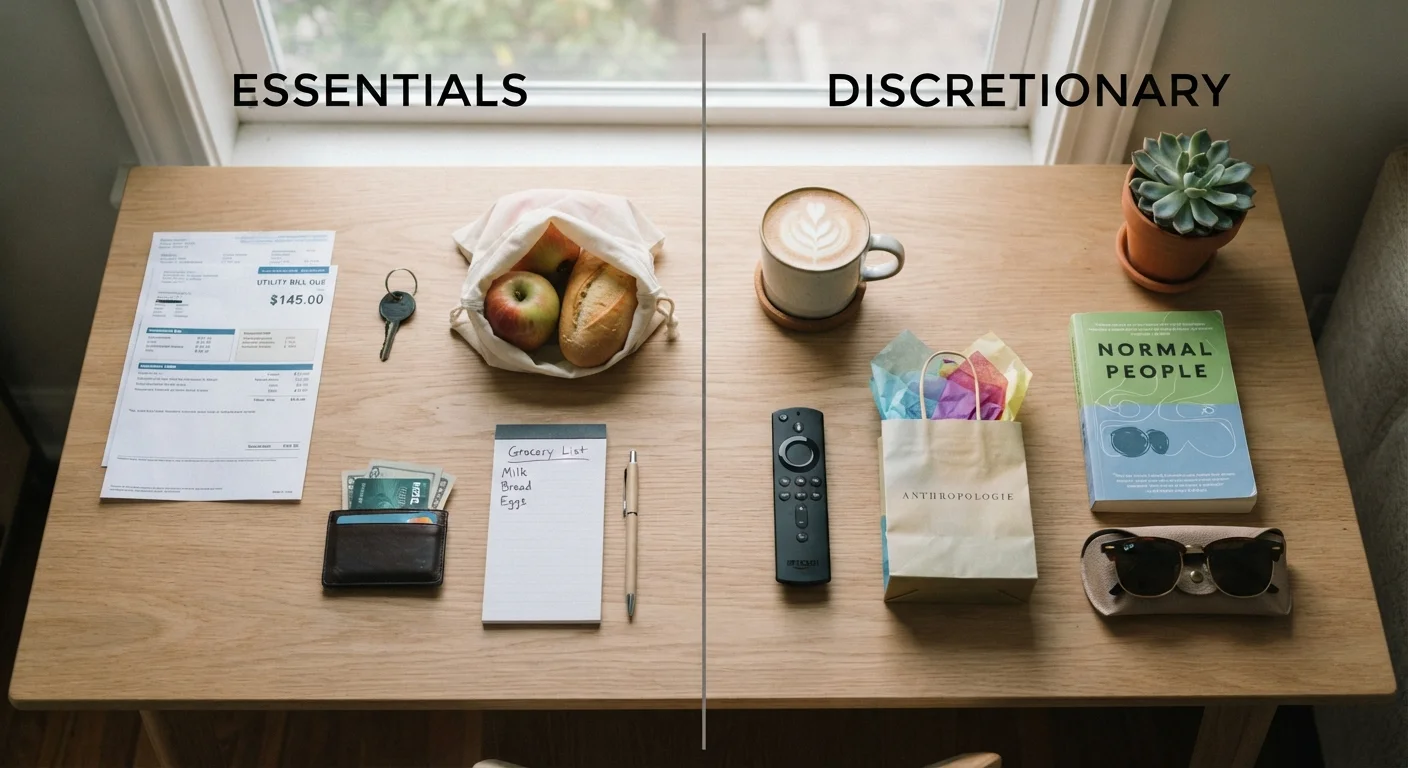
In personal finance, a "need" is an expense required for basic survival, safety, or employment - think housing, food, utilities, and transportation to work. A "want" is anything beyond that baseline: a preference that improves comfort or enjoyment but isn't strictly necessary. The distinction matters because it forms the foundation of almost every budgeting framework.
The 50/30/20 budgeting rule, popularized in Elizabeth Warren and Amelia Warren Tyagi's book "All Your Worth," allocates 50% of after-tax income to needs, 30% to wants, and 20% to savings and debt repayment - but it explicitly acknowledges that categorization is context-dependent.
Why the Distinction Matters - and Why It's Genuinely Hard
Every budgeting guide will tell you to separate needs from wants. Far fewer will admit how often the categories bleed into each other. That ambiguity isn't a sign of weak willpower or poor financial literacy - it reflects the real complexity of modern expenses.
Getting this distinction right matters because it's load-bearing. Frameworks like the 50/30/20 rule literally partition your income along this line. If you consistently over-classify wants as needs, your "needs" bucket swells and your savings never quite materialize. Understanding where the line actually sits - and why it moves - is more useful than memorizing a fixed list.
No Universal List Exists
Many financial resources publish fixed lists of needs vs. wants, but these lists always embed assumptions about income level, geography, family structure, and employment type. Use such lists as starting points, not definitive answers. The categorization that matters is the one that accurately reflects your life.
The Core Framework: Survival, Function, and Preference
A practical way to classify expenses is to ask three layered questions:
- Survival: Would going without this create genuine hardship - loss of housing, inability to eat, a health crisis?
- Function: Does this enable me to work, meet legal obligations, or maintain basic safety?
- Preference: Does this improve my comfort, convenience, or enjoyment beyond those baselines?
Expenses that clear the first two thresholds are needs. Expenses that only satisfy the third are wants. But here's where it gets nuanced: many expenses partially clear the function threshold. A reliable used car for a rural commuter is a need. A newer model with heated seats is a want layered on top of that need. The base level of the expense belongs in one bucket; the upgrade belongs in another.
34%
Americans with no emergency savings
A Bankrate survey found roughly one-third of U.S. adults have no emergency fund, often because discretionary spending crowds out savings before the distinction is examined.
~$219/mo
Average U.S. household subscription spend
Research by C+R Research estimated average Americans spend over $200 per month on subscription services, many of which began as discretionary wants and became habitual fixed costs.
When Context Shifts the Category
Geography, employment, and life stage all move the line. Consider these real-world tensions:
- Internet access: A luxury a generation ago; now a functional necessity for remote workers, students, and job seekers.
- Housing costs: Rent or a mortgage is clearly a need - but choosing a more expensive neighborhood for proximity to good schools involves a want component too.
- Childcare: For a single working parent, childcare is as essential as food. For a dual-income household with a stay-at-home partner, it's optional.
This is why building a budget from scratch works better when you define your own categories rather than importing someone else's fixed list. Honest self-assessment - not category orthodoxy - is what makes a budget functional.
The Lifestyle Creep Problem
One of the sneakiest financial challenges is the slow reclassification of wants into needs - not through deliberate choice, but through habituation. A streaming subscription feels optional when you sign up; two years later, canceling it feels like a genuine loss. This phenomenon, often called lifestyle creep, is explored in depth in our look at spending patterns that quietly derail savings goals.
The antidote isn't austerity - it's periodic review. Once or twice a year, walk through your recurring expenses and ask whether each one still clears the function threshold or has drifted into preference territory. Awareness alone often shifts behavior.
“A budget is telling your money where to go instead of wondering where it went. The first step in that process is being ruthlessly honest about what you actually need versus what you've simply gotten used to.”
— Dave Ramsey, Personal finance author and radio host
Making Peace With Wants - Deliberately
Sustainable budgeting isn't about eliminating wants. It's about being deliberate: knowing which wants you're choosing and at what cost to other priorities. If you've covered your needs and are on track with savings and debt obligations, spending on wants is entirely reasonable. The problem emerges when wants crowd out needs or savings without conscious acknowledgment.
For bigger financial decisions - like whether housing costs represent a need or a significant lifestyle choice - it helps to use a structured framework. Our buying vs. renting comparison is one example of applying this kind of honest analysis to a major expense category.
This article is for general informational and educational purposes only and does not constitute personalized financial advice. For guidance specific to your situation, consult a qualified financial professional.