

Key Takeaways
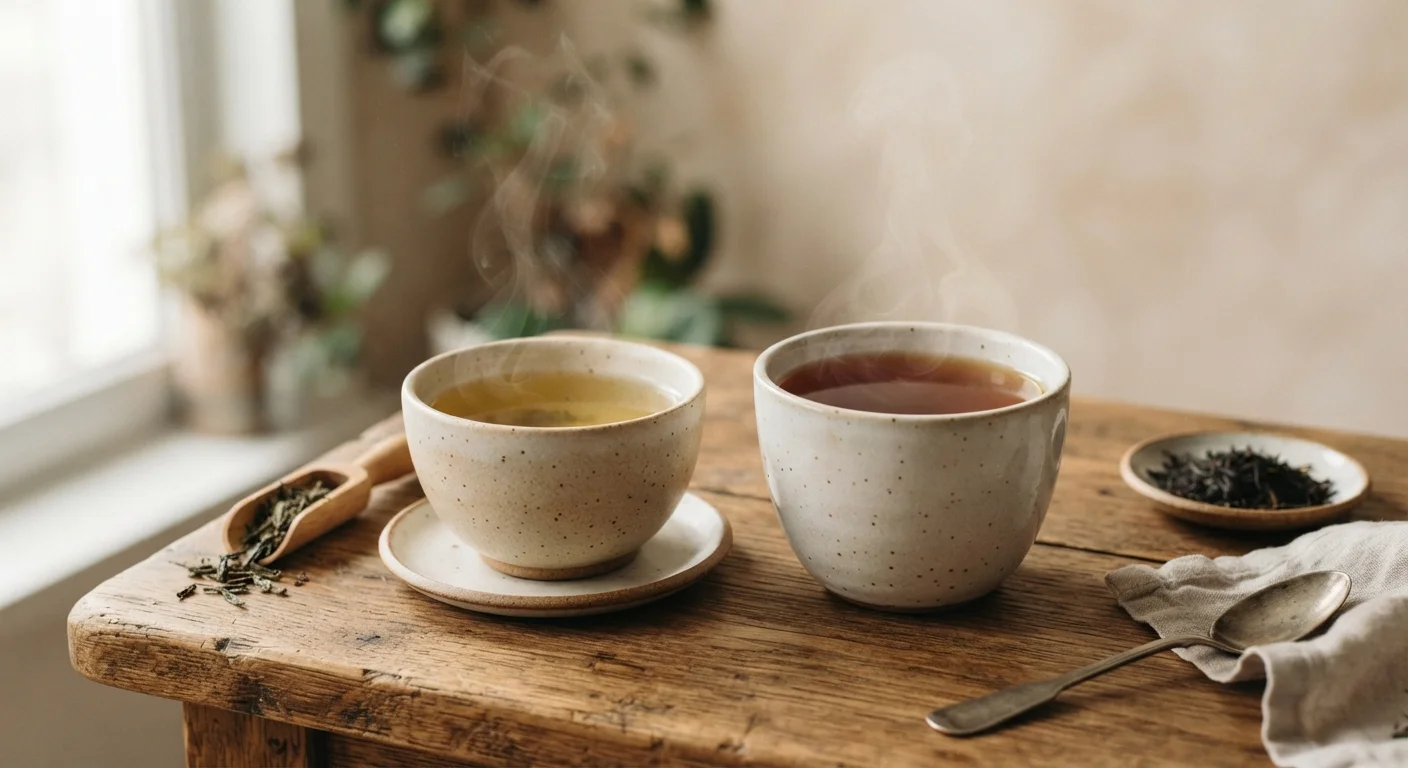
Option A
Green Tea
The minimally processed, antioxidant-rich option.
Best for: Drinkers who prefer a lighter, more delicate flavor and want to minimize caffeine intake.
Option B
Black Tea
The fully oxidized, bold, and energizing classic.
Best for: Those who want a robust, full-bodied cup with a stronger caffeine kick to start the day.
If you want a gentler caffeine lift and milder flavor
Green Tea
Green tea's lower caffeine content and lighter taste make it well suited to afternoon drinking or those sensitive to stimulants.
If you need a stronger morning energy boost
Black Tea
Black tea's higher caffeine content and bold flavor profile provide a more pronounced alertness effect to start the day.
If you are focused on maximizing catechin antioxidant intake
Green Tea
The minimal oxidation process preserves a higher concentration of EGCG and related catechins compared to black tea.
If you prefer tea with milk or as a base for blended drinks
Black Tea
Black tea's robust, tannic flavor holds up well alongside milk, sugar, or spice in drinks like chai, in a way green tea typically does not.
Same Leaf, Completely Different Journey
Green tea and black tea both begin as leaves from Camellia sinensis, the same evergreen shrub cultivated across Asia and parts of Africa. What makes them dramatically different is what happens after harvest. The key variable is oxidation - the enzymatic process that occurs when leaf cells are broken down and exposed to oxygen.
Green tea producers halt oxidation almost immediately after picking, using heat - either pan-firing (common in Chinese styles) or steaming (standard in Japanese production). This step deactivates the enzymes responsible for oxidation and locks in the leaf's original chemical composition. Black tea, by contrast, undergoes full oxidation. After withering, the leaves are rolled or crushed to rupture cell walls, then left to oxidize fully before drying. This transforms both color and chemistry in fundamental ways.
Understanding this distinction helps explain nearly every difference you'll notice in the cup - from taste and color to caffeine content and antioxidant makeup. It also clarifies why water quality affects each tea differently, since their distinct compound profiles interact uniquely with mineral content and pH.
Flavor, Color, and Aroma: What Oxidation Does to the Senses
Oxidation reshapes the chemical landscape of a tea leaf, and those changes show up immediately in flavor. Green tea retains high levels of catechins - particularly epigallocatechin gallate (EGCG) - which contribute its characteristic grassy, vegetal, or sometimes nutty taste depending on variety. The liquor ranges from pale yellow to bright green, and aromas can include fresh-cut grass, seaweed (especially in Japanese styles like sencha or gyokuro), or toasty, chestnut notes.
During full oxidation, catechins convert into a different class of antioxidants: theaflavins and thearubigins. These compounds produce the deep amber-to-mahogany color of black tea and create its characteristic astringency, malty undertones, and fuller body. Varieties like Assam tend toward bold and malty; Darjeeling produces a lighter, more floral cup. Both are distinctly more robust than any green tea.
| Criterion | Green Tea | Black Tea |
|---|---|---|
| Oxidation level | Minimal (halted by heat) | Full oxidation |
| Primary antioxidants | Catechins (EGCG) | Theaflavins, thearubigins |
| Typical caffeine (8 oz) | 20-45 mg | 40-70 mg |
| Liquor color | Pale yellow to green | Amber to deep mahogany |
| Flavor profile | Grassy, vegetal, delicate | Bold, malty, astringent |
| Ideal brew temperature | 160-180°F | 200-212°F |
| Pairs well with | Light foods, sushi, salads | Milk, spices, hearty foods |
Brewing temperature matters considerably for both. Green tea is typically brewed at 160-180°F to avoid extracting bitter compounds; black tea performs best at a full 200-212°F. Temperature also affects how you perceive taste, making this more than just an extraction question.
Caffeine and Antioxidants: Reading the Chemistry
Caffeine levels in tea vary more than most people realize - affected by leaf grade, steep time, and water temperature as much as by tea type. That said, as a general pattern, an 8-oz cup of black tea typically delivers 40-70 mg of caffeine, while green tea averages 20-45 mg. These are estimates, not guarantees; some high-grade green teas like matcha (a powdered green tea where you consume the whole leaf) can exceed typical black tea caffeine levels.
20-45 mg
Caffeine per 8-oz cup of green tea
Estimates from the USDA and tea research literature; actual levels vary by variety, steep time, and water temperature.
40-70 mg
Caffeine per 8-oz cup of black tea
Published ranges from multiple food composition databases; high-grade or long-steeped teas may fall outside this range.
~30%
Catechins remaining after full oxidation
Research indicates that full oxidation converts the majority of green tea catechins into theaflavins and thearubigins in black tea.
On the antioxidant side, both teas offer meaningful compounds, but of different types. Green tea's catechin EGCG has been studied extensively for its anti-inflammatory properties, though most findings are preliminary and should not be read as clinical recommendations. Black tea's theaflavins have shown antioxidant activity in research settings as well - neither profile is objectively superior, just different.
If you're thinking about switching your daily drink based on these differences, it's worth reviewing a broader set of factors. See what to consider before changing your morning beverage routine for a practical checklist.
This article is for general informational purposes only and does not constitute medical or dietary advice. Consult a qualified healthcare professional for guidance specific to your health needs.