

Key Takeaways
Our Verdict
Depression and anxiety share biological roots and symptom overlap, but they pull the mind in different directions - depression toward withdrawal and numbness, anxiety toward hypervigilance and dread. Distinguishing them matters because treatment approaches, while sometimes overlapping, are not identical. Anyone experiencing symptoms of either condition should consult a licensed mental health professional for a proper evaluation.
| Best for | Recommended |
|---|---|
| Understanding persistent sadness, low energy, and loss of interest | Depression framework |
| Understanding chronic worry, physical tension, and fear-driven avoidance | Anxiety framework |
| Experiencing symptoms of both simultaneously | Comorbid anxiety-depression - professional evaluation essential |
What Depression and Anxiety Actually Are
Depression (formally MDD) and anxiety disorders are among the most common mental health conditions in the United States, each affecting tens of millions of adults. Despite being distinct diagnoses, they are frequently discussed together - and for good reason: research consistently shows that roughly 45-60% of people with one condition also meet criteria for the other at some point in their lives.
Depression is defined primarily by a persistently low or empty mood, markedly diminished interest or pleasure in activities (anhedonia), and a range of cognitive and physical changes that last at least two weeks. Anxiety disorders - which include Generalized Anxiety Disorder (GAD), panic disorder, and social anxiety disorder - center on excessive, difficult-to-control fear or worry that is out of proportion to actual circumstances.
Understanding how they differ - and where they converge - helps people seek the right kind of support rather than assuming one label covers everything they're experiencing.
~50%
Co-occurrence rate
Research estimates that roughly half of people diagnosed with major depression also meet criteria for an anxiety disorder, according to findings published in psychiatric epidemiology literature.
1 in 5
US adults affected annually
The National Institute of Mental Health estimates approximately 1 in 5 U.S. adults experiences a mental illness in a given year, with mood and anxiety disorders among the most prevalent.
Shared Symptoms: The Overlap Zone
The two conditions share a meaningful cluster of symptoms, which is one reason misidentification is common without professional assessment:
- Sleep disturbances - insomnia or hypersomnia occur in both, though the patterns can differ.
- Fatigue and low energy - depression produces a heavy, pervasive exhaustion; anxiety can deplete energy through constant physiological arousal.
- Difficulty concentrating - depression blunts cognitive processing; anxiety floods it with intrusive worry.
- Irritability - particularly common in both, and often the first sign noticed by others.
- Physical complaints - headaches, digestive upset, and muscle tension are reported in both conditions.
Neuroscientifically, both involve dysregulation of overlapping brain circuits and neurotransmitter systems, including serotonin, norepinephrine, and the HPA stress axis. This shared biology is part of why certain treatments - particularly SSRIs and cognitive-behavioral therapy (CBT) - show efficacy for both.
Track Your Symptoms Before a Clinical Visit
Because depression and anxiety share many surface-level symptoms, the details matter. Before seeing a provider, try noting the timing, triggers, and quality of your mood and physical sensations for a week or two. For example, does your low energy feel heavy and constant, or does it spike with specific worries? This kind of detail helps a clinician distinguish between conditions far more accurately than a snapshot description.
Key Differences: Direction of the Mind
Despite the overlap, the directionality of each condition is distinct.
| Feature | Depression | Anxiety | |
|---|---|---|---|
| Core emotional state | Persistent sadness, emptiness, numbness | Excessive worry, fear, dread | |
| Orientation of mind | Backward - regret, hopelessness | Forward - anticipated threat | |
| Energy & arousal | Low arousal, psychomotor slowing | High arousal, physical tension | |
| Motivation | Markedly reduced or absent | Variable; often driven by fear | |
| Key distinguishing symptom | Anhedonia (loss of pleasure) | Hypervigilance and avoidance | |
| Sleep pattern | Hypersomnia or early waking | Difficulty falling or staying asleep | |
| Evidence-based therapies | CBT, behavioral activation, medication | CBT, exposure therapy, medication |
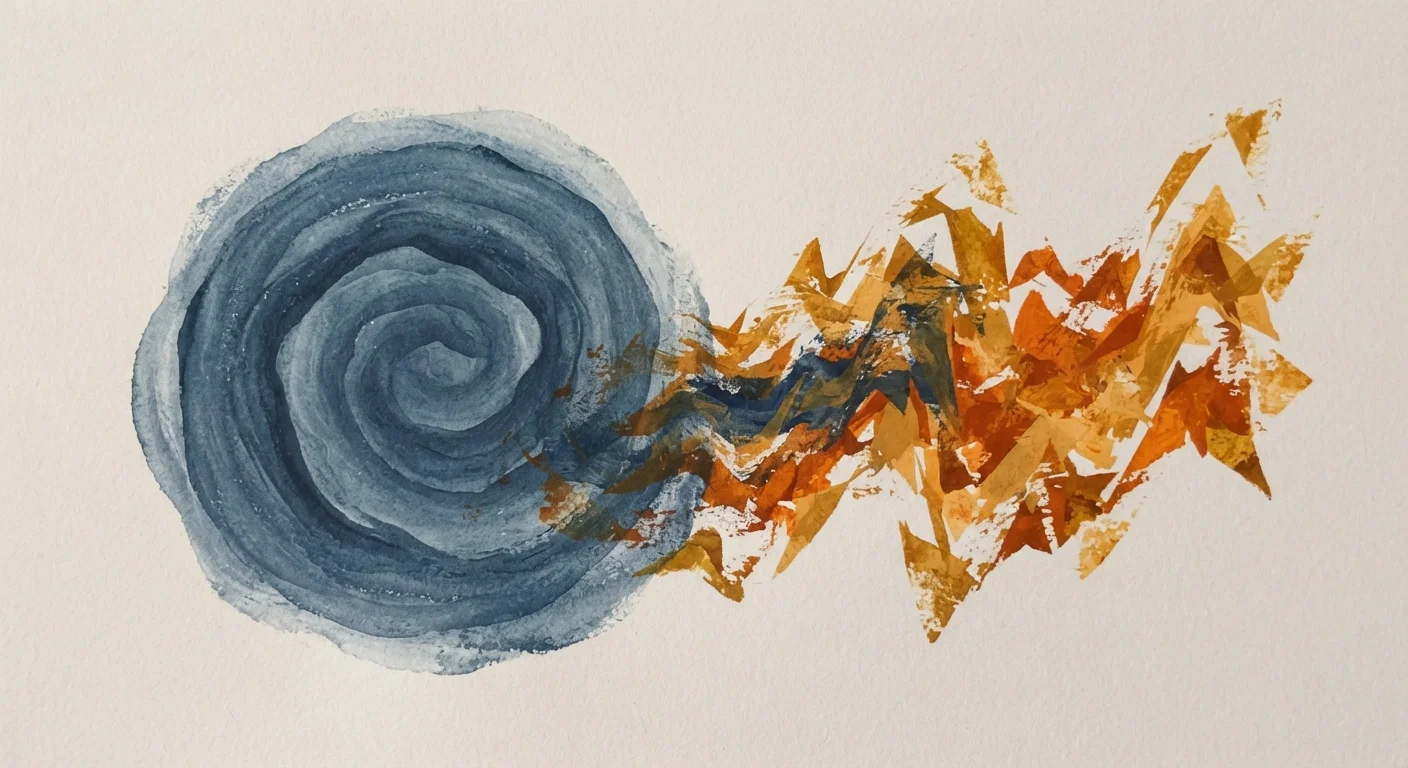
Depression tends to orient the mind backward - toward regret, hopelessness, and a sense that effort is pointless. It often involves psychomotor slowing, where both thinking and physical movement feel labored. The future feels empty rather than threatening.
Anxiety, by contrast, orients the mind forward - toward anticipated threat, worst-case scenarios, and a hypervigilant scanning of the environment. The nervous system stays in a state of elevated arousal even when no immediate danger is present. Paradoxically, this can coexist with normal or even elevated motivation in some cases, unlike depression's characteristic loss of drive.
These differences matter clinically. For example, certain therapeutic techniques used in anxiety treatment - such as gradual exposure - require a baseline level of motivation and engagement that depression may undermine, making sequencing and pacing of treatment an important clinical consideration.
When Both Are Present: Comorbid Anxiety-Depression
When both conditions occur simultaneously, clinicians use the term comorbid anxiety-depression. This combination is associated with greater functional impairment, longer episodes, and somewhat lower treatment response rates compared to either condition alone - not because it's untreatable, but because treatment typically needs to address both dimensions.
People with comorbid presentations often describe feeling simultaneously numb and on edge - a disorienting experience that can make it harder to articulate symptoms to a provider. Keeping a simple symptom journal before a clinical appointment can help capture the full picture.
This article is for general informational and educational purposes only and does not constitute medical or mental health advice. If you are experiencing symptoms of depression, anxiety, or any mental health condition, please consult a licensed mental health professional or your primary care provider. If you are in crisis, contact the 988 Suicide and Crisis Lifeline by calling or texting 988.