

Key Takeaways
Why Cultural Missteps Happen More Than Travelers Expect
Most international travelers don't set out to offend anyone. Cultural missteps typically happen because behavior that feels completely neutral — or even polite — at home carries different meaning elsewhere. The reflexes travelers rely on domestically don't always translate, and without specific preparation, even well-intentioned visitors can leave a poor impression or damage a meaningful experience.
The good news is that the most common errors are well-documented and entirely avoidable. Understanding them before you depart is one of the highest-return investments a traveler can make. As the trip planning myths guide notes, preparation goes far beyond logistics — cultural context is part of any well-planned trip.
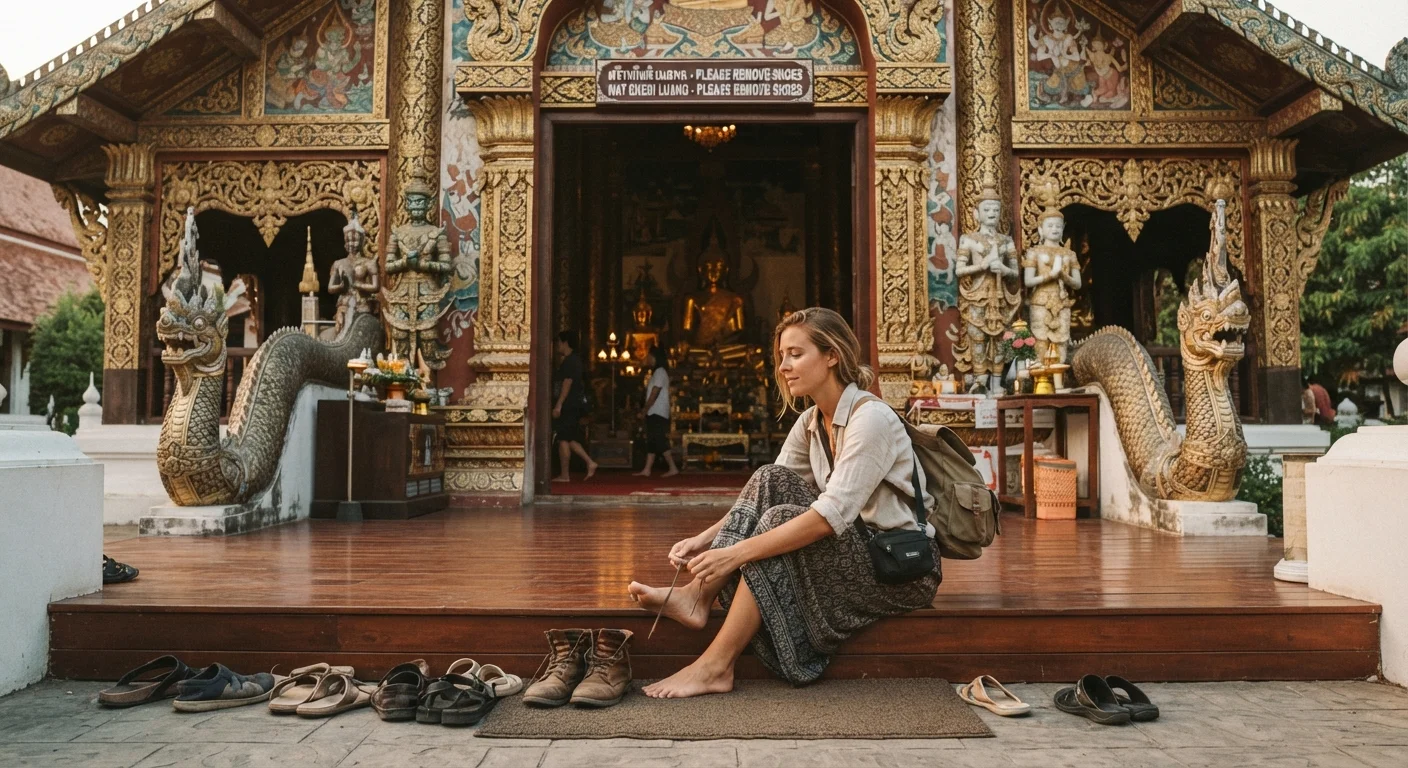
Ignoring dress codes at religious and cultural sites.
Why it happens: Travelers often underestimate how seriously dress codes are enforced at temples, mosques, shrines, and churches. What reads as casual attire at home — bare shoulders, shorts, sleeveless tops — is considered disrespectful in many sacred spaces across Asia, the Middle East, and parts of Europe.
Using hand gestures without knowing their local meaning.
Why it happens: The thumbs-up, the OK sign, and the beckoning gesture all have positive or neutral meanings in the US. In Greece, parts of the Middle East, Brazil, and several Asian countries, these same gestures carry offensive or rude connotations.
Misreading tipping culture and either over- or under-tipping.
Why it happens: American travelers in particular carry a strong default toward tipping, which is appropriate at home. But in Japan, tipping can be interpreted as insulting to service workers. In other countries, service charges are already included or tipping in cash versus card matters.
Photographing people, ceremonies, or sacred objects without asking.
Why it happens: Tourism has normalized the idea that public spaces are freely photographable, but this doesn't hold across all cultures. Indigenous communities, religious ceremonies, and local markets may have strong objections — sometimes enforced legally — to unauthorized photography.
Speaking at high volume in settings where quiet is expected.
Why it happens: Conversational volume norms differ meaningfully across cultures. What registers as enthusiastic in the US can read as rude or aggressive in quieter social contexts — on public transit in Japan, inside European churches, or at traditional dining establishments.
Assuming English will always be available and sufficient.
Why it happens: English is widely used in tourist hubs, which can create false confidence that it's universally accessible. Outside major cities or tourist corridors, English fluency drops sharply, and the expectation that locals will accommodate can come across as dismissive.
How to Build Cultural Awareness Into Your Trip Planning
Avoiding these missteps doesn't require an anthropology degree. A few deliberate steps before departure cover most of the ground:
- Research dress expectations for each site type on your itinerary — temples, mosques, churches, and government buildings often have different standards within the same country.
- Learn two or three phrases in the local language. A sincere attempt at a greeting is consistently well-received even when imperfect.
- Ask before photographing anyone or anything in a ceremonial or religious context. When in doubt, put the camera away.
- Look up tipping norms specifically for your destination. Travel forums and country-specific guides are more reliable than general rules.
Laws Can Reinforce Cultural Expectations
In some destinations, what seems like a cultural preference is actually backed by law. Photographing government buildings, military installations, or certain religious sites without permission can result in fines or detention in countries including Egypt, the UAE, and India. Dress code violations at religious sites in countries like Sri Lanka or Iran can also carry legal consequences, not just social ones. Always verify local laws through official government travel advisories before your trip.
For a broader look at planning gaps that go beyond cultural awareness, the overlooked logistics guide covers the practical details most itineraries miss. And if you're still forming your international travel framework, common assumptions about international travel is worth reviewing before you book.
74%
Travelers who don't research local customs
A survey by Expedia found that nearly three in four travelers admit they do not research cultural norms and etiquette before an international trip.
195+
Countries with distinct tipping customs
Tipping expectations range from mandatory to actively discouraged depending on destination, making destination-specific research essential before travel.