

Key Takeaways
Option A
Comprehensive Coverage
Protection against events outside your control.
Best for: Drivers concerned about theft, weather events, animal strikes, or vandalism affecting their vehicle.
Option B
Collision Coverage
Protection for damage caused by impact on the road.
Best for: Drivers who want repair coverage after their vehicle strikes another car or object, regardless of fault.
If you're financing or leasing a vehicle
Both Comprehensive and Collision Coverage
Most lenders and lease agreements contractually require both coverages to protect their financial interest in the vehicle.
If you own an older vehicle outright with low market value
Evaluate dropping one or both
When combined annual premiums approach or exceed the vehicle's actual cash value, the financial return from a claim diminishes significantly.
If you live in an area prone to hail, flooding, or high vehicle theft
Comprehensive Coverage
Comprehensive is the only standard auto coverage that addresses weather events, theft, and other non-collision losses.
If you frequently drive in high-traffic areas or have a long daily commute
Collision Coverage
More time on congested roads increases the statistical likelihood of an at-fault or disputed accident, making collision coverage especially practical.
What Each Coverage Actually Does
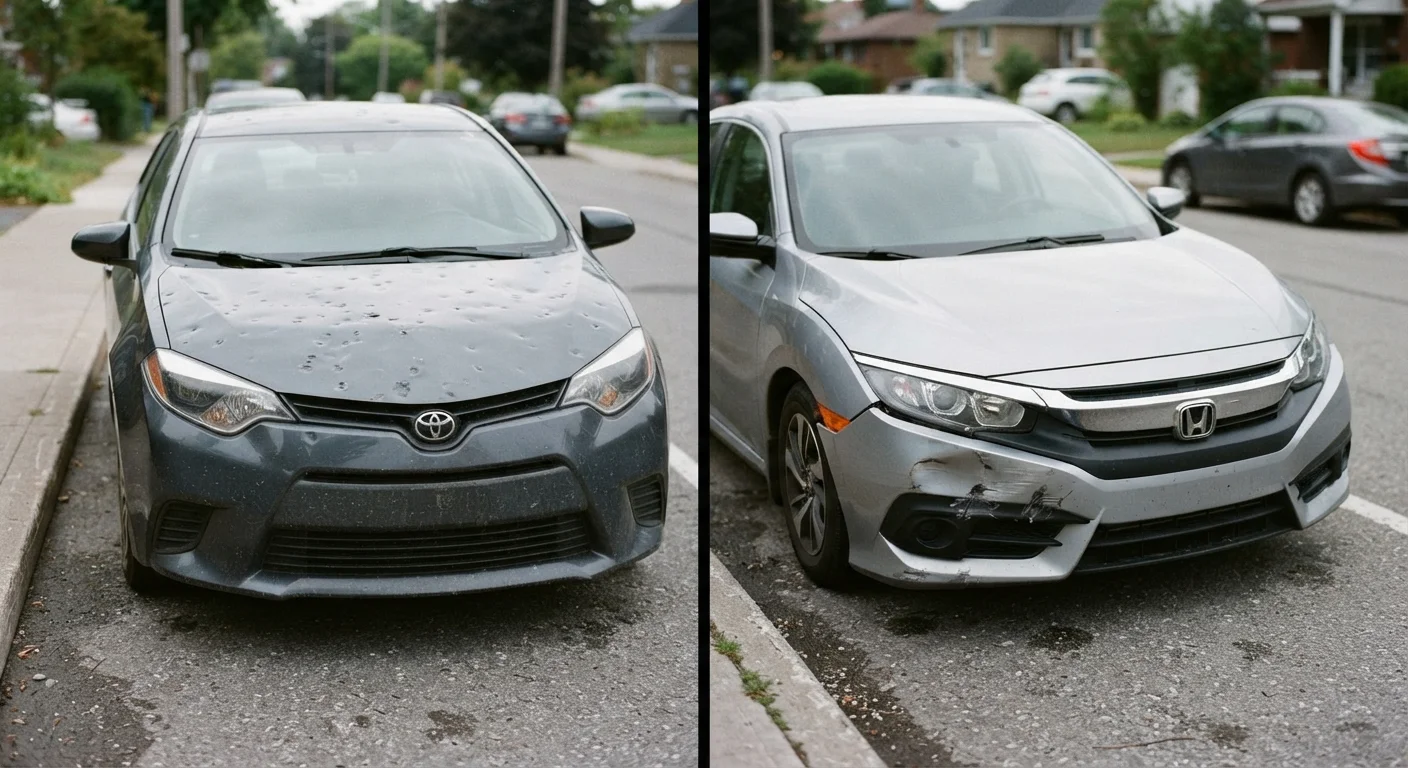
Comprehensive and collision are both physical damage coverages - they pay to repair or replace your own vehicle, not another driver's. But they respond to completely different triggering events, and understanding that distinction is what lets you know which policy applies when something goes wrong.
Comprehensive coverage - sometimes called "other than collision" - pays for damage caused by events largely outside your control while driving or parked. Common covered perils include theft, vandalism, fire, flooding, hail, falling objects (like tree branches), and strikes involving animals such as deer. If you wake up to find your windshield cracked by a hailstorm, that's a comprehensive claim.
Collision coverage pays for damage resulting from your vehicle making physical contact with another object. That includes hitting another car, backing into a pole, or rolling into a ditch. Fault is generally not a deciding factor - collision responds whether you caused the accident or another driver did, though your insurer may seek reimbursement from the at-fault party afterward through a process called subrogation. For a plain-language breakdown of terms like these, see our auto insurance glossary.
| Criterion | Comprehensive | Collision |
|---|---|---|
| What triggers a claim | Non-collision events (theft, weather, animals) | Vehicle impact with object or another car |
| Fault requirement | Not applicable | No - covers regardless of fault |
| Typical deductible | $100-$1,000 | $250-$1,000 |
| Required by law | No (most states) | No (most states) |
| Required by lenders | Usually yes | Usually yes |
| Covers theft | Yes | No |
| Covers hitting a deer | Yes | No |
| Covers hitting a guardrail | No | Yes |
When Coverage Applies - and When It Doesn't
A common source of confusion is the edge cases - situations where the triggering event isn't obviously one type or the other.
For example: if you swerve to avoid a deer and hit a guardrail, the damage is typically filed as a collision claim, not comprehensive, because your vehicle struck an object. If you actually hit the deer, that's comprehensive. The distinction matters because deductibles and premiums differ between the two coverages, and choosing the wrong one to file under can affect what you pay out of pocket.
Neither coverage addresses mechanical breakdowns, normal wear and tear, or custom equipment not listed on the policy. They also don't cover injuries to you or other parties - that falls under medical payments or liability coverage. For a complete picture of how these coverage types work together, the breakdown of auto insurance coverage types offers useful context.
Glass Claims: A Frequent Exception
Many comprehensive policies include glass coverage, and some insurers offer separate full-glass endorsements with no deductible for windshield claims specifically. If your windshield is cracked by road debris, it may qualify as a comprehensive claim - but whether a deductible applies depends on your policy terms. Check your declarations page or ask your insurer before filing to understand what you'll owe.
Cost Factors and When to Reconsider Coverage
Both coverages carry a deductible - the amount you pay before insurance kicks in. Common deductible amounts range from $250 to $1,000 per incident. Choosing a higher deductible typically lowers your monthly premium but increases your risk exposure on any single claim. Comprehensive and collision deductibles are set and applied independently.
~6%
Share of vehicles stolen annually in the US
Vehicle theft rates vary significantly by region, make, and model, according to the National Insurance Crime Bureau's annual reporting.
1 in 70
Odds of filing a comprehensive claim in a given year
Industry-wide loss data suggests comprehensive claims - particularly for weather and theft - are filed at roughly this frequency across insured vehicles.
Whether to carry both, one, or neither depends largely on your vehicle's actual cash value (ACV). Insurers pay up to the ACV of your vehicle, not its replacement cost. If your car's ACV is $4,000 and you're paying $900 a year in combined premiums with a $1,000 deductible, a total loss would net you only $3,000 - worth examining carefully. Many financial guidance sources suggest reconsidering physical damage coverage when annual premiums exceed roughly 10% of the vehicle's market value, though that threshold is a general guideline, not a universal rule.
For a broader look at policy gaps and potential blind spots - including what's often excluded from standard auto policies - see common insurance coverage gaps.
This article is for general informational purposes only and does not constitute personalized insurance or financial advice. Coverage terms, exclusions, and requirements vary by provider and state. Always review your specific policy documents and consult a licensed insurance professional for guidance suited to your situation.