

Key Takeaways
Why the Title Transfer Process Matters
A car title is the legal document that establishes who owns a vehicle. Transferring it correctly is not a formality - it's what makes a sale legally binding and protects both buyer and seller from liability. An improperly transferred title can leave the seller on the hook for traffic violations, accidents, or even criminal activity involving the vehicle long after they've parted with it. For the buyer, an unclear title can make it impossible to register the car, obtain financing, or resell it later.
Title transfer rules are set at the state level, which means the specific forms, fees, timelines, and notarization requirements vary depending on where you live. The walkthrough below reflects general US practice - always verify current requirements with your state's Department of Motor Vehicles (DMV) before completing a transaction.
Run a Title History Check First
Before handing over any money, use the vehicle's VIN to run a history report through your state DMV or a recognized vehicle history service. This can surface salvage designations, undisclosed accidents, odometer rollbacks, and open liens that the seller may not have disclosed.
What You'll Need Before You Start
Gathering the right documents before sitting down with a buyer or seller saves time and prevents the frustrating scenario of a deal falling through over a missing form. The core requirements are consistent across most states, though a few additional items may be needed depending on your location.
What you will need
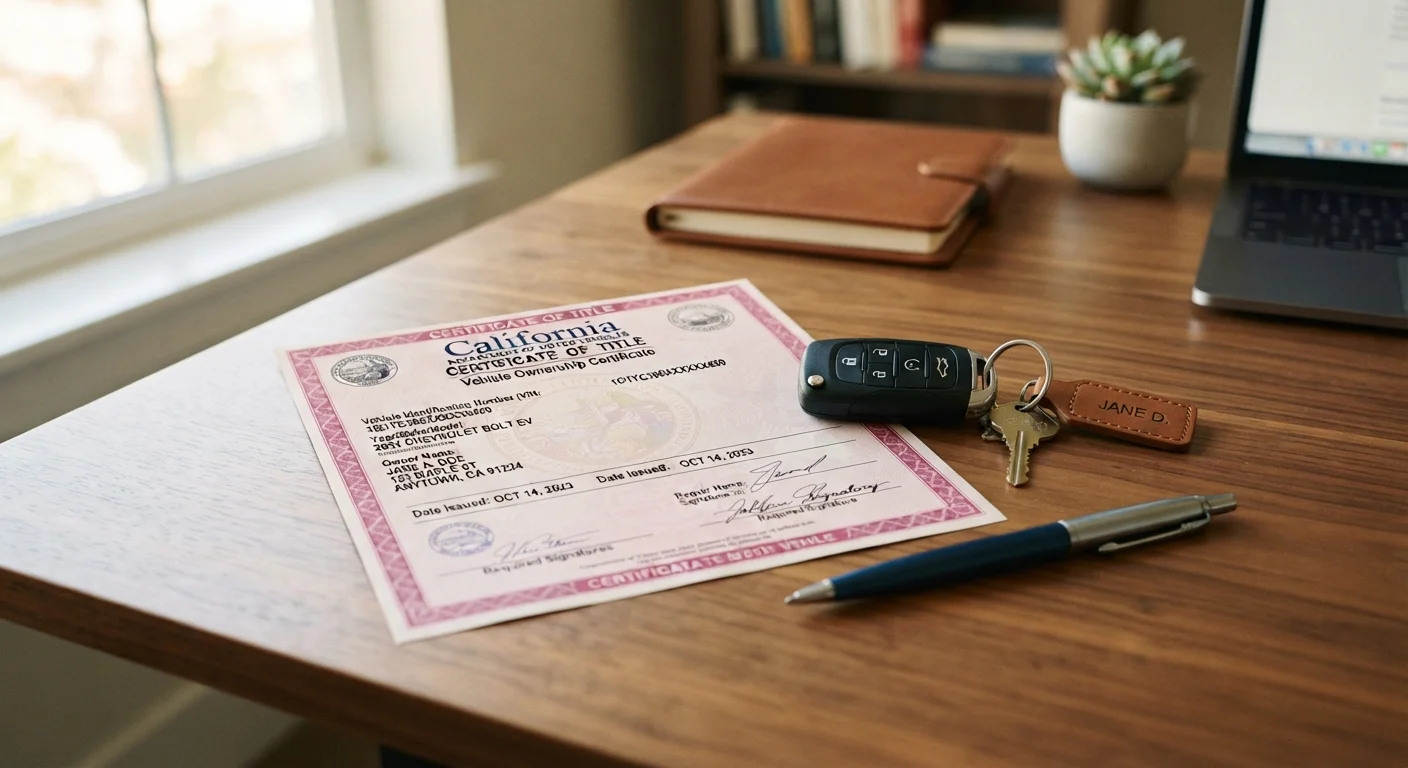
Current Vehicle Title
The primary legal document that must be signed over by the seller to transfer ownership.
Government-Issued Photo ID
Required by most state DMVs to verify the identity of both buyer and seller.
Bill of Sale
Documents the agreed sale price, date, and parties involved; required or strongly recommended in most states.
Odometer Disclosure Statement
Federal law requires this for most vehicles under ten years old; may be printed on the title itself.
Lien Release Letter
Confirms the previous loan has been paid off and the lender no longer holds interest in the vehicle.
State-Specific Transfer Form
Some states require an additional DMV form beyond the title itself; check your state's DMV website.
Outstanding Liens Block the Transfer
If the seller still owes money on the vehicle, the lender holds the title. The loan must be paid off and a lien release obtained before the title can legally transfer. Do not complete a purchase until you confirm the title is free and clear - or until the payoff is coordinated with the lender as part of closing.
Step-by-Step Title Transfer Instructions
Follow these steps in order to complete a private-party title transfer. Dealership transactions typically handle most paperwork on behalf of both parties, but private sales place this responsibility squarely on the buyer and seller.
Never Sign a Blank Title
Signing a title without filling in the buyer's name and sale details is known as 'title jumping' and is illegal in all US states. It exposes you to liability for the vehicle after the sale and can create serious ownership disputes. Always complete every required field before signing.
Verify the Title Is Clean and Matches the Vehicle
Before signing anything, physically compare the Vehicle Identification Number (VIN) on the title to the VIN plate on the dashboard and the sticker inside the driver's door jamb. Any mismatch is a red flag that requires resolution before proceeding. Also confirm there are no active liens listed on the title and that the seller's name matches their photo ID.
Complete the Seller's Section of the Title
The current owner must fill in the buyer's full legal name, the sale date, the odometer reading, and the agreed sale price in the designated fields on the back of the title. Every field should be completed before anyone signs. Use a pen with permanent ink and print clearly - DMVs may reject titles with corrections or white-out.
Obtain a Notarized Signature If Your State Requires It
A handful of states - including Maryland, Louisiana, and Montana - require that the seller's signature on the title be notarized by a licensed notary public. Check your specific state's DMV requirements before the transaction. Many banks, UPS stores, and AAA offices offer notary services, often free for account holders.
Prepare a Bill of Sale
A bill of sale documents the transaction for both parties and is required in many states. It should include the VIN, year, make, model, color, odometer reading at time of sale, agreed sale price, and full names and signatures of buyer and seller. Some states provide a standardized bill of sale form on their DMV website; using the official form is advisable when available.
Submit the Title and Required Documents to the DMV
The buyer is responsible for submitting the signed title, bill of sale, completed application for title (if required), proof of insurance, and payment for applicable fees to the state DMV - either in person or by mail, depending on the state. Most states impose a deadline of 10 to 30 days after the sale date. Missing this window typically results in late fees.
For related requirements that vary by state, see our guide on vehicle registration across the US.
Notify Your Insurer and Update Registration
As a seller, notify your insurance company that you no longer own the vehicle immediately after the sale. As a buyer, confirm coverage is in place before driving the vehicle. Once the new title is issued, you can complete registration and obtain new license plates. If you've recently relocated, moving to a new state with your car involves additional steps beyond the title transfer itself.
Once the new title arrives and registration is complete, review our overview of keeping your car street-legal to stay on top of renewal deadlines and inspection requirements going forward.
Common Pitfalls and How to Avoid Them
Even straightforward title transfers can run into problems. The most frequent issues include:
- Errors on the title: Crossed-out names, correction fluid, or illegible handwriting cause DMV rejections. If a mistake is made, the seller may need to apply for a duplicate title and start over.
- Buying a vehicle with an open recall: A title transfer doesn't resolve open safety recalls. Check the NHTSA database using the VIN before completing a purchase.
- Missing an odometer disclosure: Federal law (the Truth in Mileage Act) requires written odometer disclosure for most vehicles under ten years old. Skipping this step can create legal complications.
- Paying sales tax twice: Some states allow a credit against sales tax if the vehicle was recently taxed in another state. Keep records of what was paid.
If you've just taken ownership of a vehicle you haven't driven before, see our checklist on things to verify before driving an unfamiliar make or model before hitting the road.