

Key Takeaways
Start here
Why Registration and Inspections Matter
Next
How Vehicle Registration Works
Then
Safety and Emissions Inspections Explained
When you're ready
Renewing Your Registration on Time
Finally
Common Pitfalls and How to Avoid Them
Why Registration and Inspections Matter
Every vehicle operated on a public road in the United States must be legally registered with its state. Registration establishes that your car is tied to a legitimate owner, carries proper insurance, and has met whatever road-worthiness standards the state requires. Without it, you're technically operating an unregistered vehicle - a violation that can trigger fines or worse.
Beyond the legal obligation, the annual or biennial registration cycle also serves as a built-in prompt for owners to verify that their vehicle is safe and environmentally compliant. For new car owners especially, understanding this system early prevents costly surprises down the road. If you're also navigating a recent purchase, our guide on transferring a car title covers the related paperwork you'll need to sort out first.
Vehicle registration
The official process of recording your car with your state government, resulting in license plates and a registration certificate that must be renewed periodically.
Vehicle title
A legal document that identifies the owner of a vehicle. It must be transferred whenever ownership changes and is required for initial registration.
Safety inspection
A mandatory check of key vehicle systems - brakes, lights, tires, and more - to confirm the car is safe to operate on public roads.
Emissions test
A test that measures the exhaust gases your vehicle produces to ensure it meets air quality standards set by your state or county.
Registration renewal
The process of updating your vehicle's registration for a new period, typically done annually, and often tied to paying fees and passing required inspections.
How Vehicle Registration Works
Registration is managed at the state level, which means the exact process, required documents, and fees differ depending on where you live. That said, the core elements are consistent across most states.
- Title: Proof that you legally own the vehicle.
- Proof of insurance: Most states require minimum liability coverage to be active at the time of registration.
- Identification: A valid driver's license or government-issued ID.
- Applicable fees: These may be based on vehicle age, weight, value, or a flat rate depending on the state.
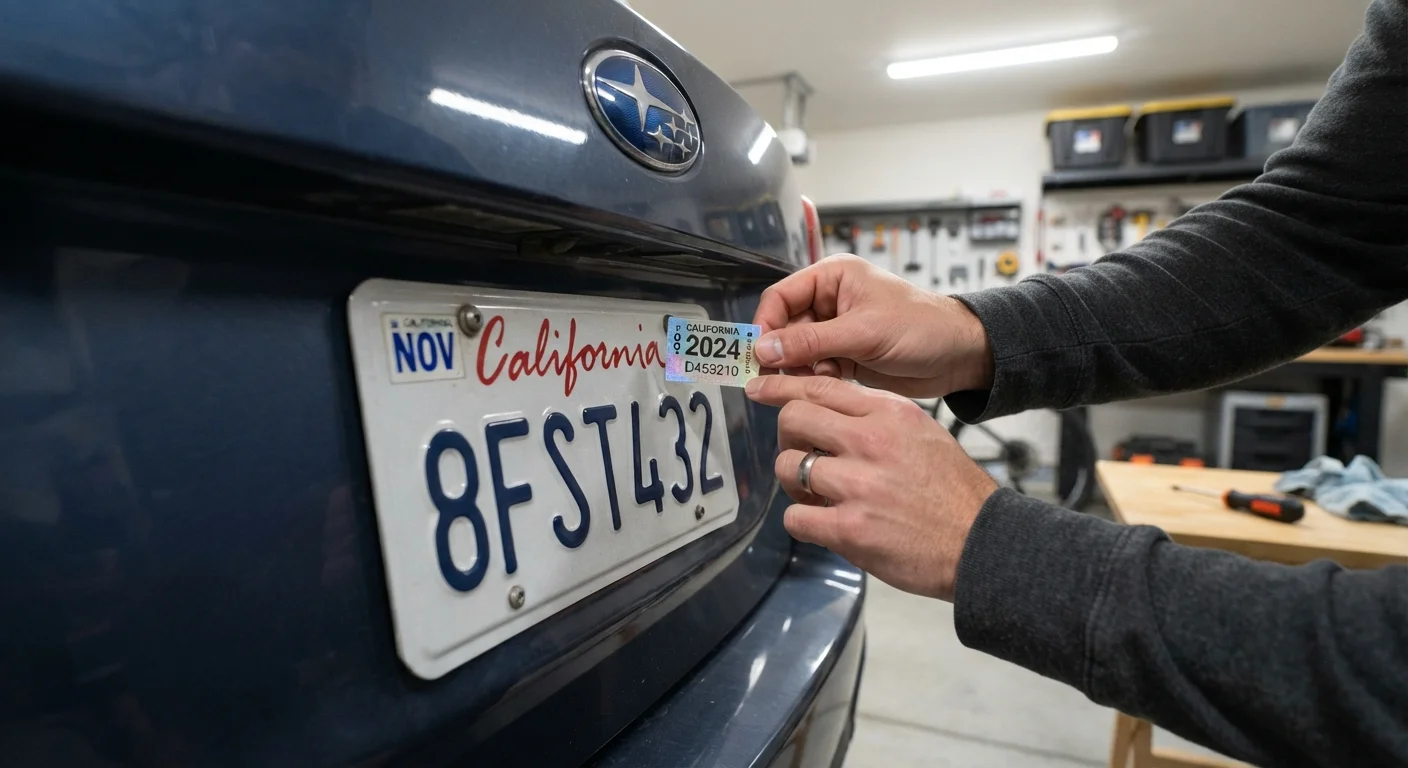
Once registered, you'll receive license plates (if new to the state) and a registration certificate to keep in the vehicle. A sticker or tab indicating the expiration date is typically affixed to the plate. For a detailed breakdown of what each state requires, see our overview of vehicle registration across the U.S..
Safety and Emissions Inspections Explained
Many states require one or both types of vehicle inspections as a condition of registration renewal. Understanding the difference helps you prepare appropriately.
Safety Inspections
A safety inspection checks that your vehicle's essential systems are functioning correctly. Inspectors typically evaluate brakes, tires, lights, steering, windshield wipers, mirrors, horn, and seatbelts. The goal is to confirm your car won't pose an undue risk to you, passengers, or other road users.
Emissions Inspections
An emissions test - sometimes called a smog check - measures the pollutants your vehicle's exhaust system produces. States or counties with significant air quality concerns are most likely to require this. Vehicles must meet established thresholds to pass. Keeping up with routine engine maintenance, including spark plugs, air filters, and the oxygen sensor, supports a cleaner-running engine and improves your odds of passing.
Check Your Check Engine Light Before Inspecting
An active check engine light will cause an automatic emissions failure in most states, even if the underlying issue is minor. If your light is on, have the diagnostic code read at an auto parts store or mechanic before booking your inspection. Addressing it ahead of time saves you the cost and hassle of a re-inspection.
If you want to reduce inspection surprises, our seasonal car care checklist walks through the maintenance items worth verifying before each inspection cycle.
Renewing Your Registration on Time
Registration renewal typically happens annually, and your state's DMV will usually mail a renewal notice to your address on file several weeks before the expiration date. Renewal options generally include:
- Online: The fastest method for most drivers. You'll need your renewal notice or plate number, current insurance info, and a payment method.
- By mail: Send the renewal notice with payment and any required documentation.
- In person: Visit your local DMV or an authorized third-party office, which may be necessary if your situation is complex (e.g., address change, lien release needed).
If your state requires a passed inspection before renewal, schedule that first - some inspection stations can take several days to book. Allow yourself at least three to four weeks before your expiration date to complete the full process comfortably.
Grace Periods Vary by State
Some states offer a short grace period after your registration expires during which you won't be penalized, while others begin issuing fines the day after expiration. Do not assume a grace period applies in your state - check your DMV's rules directly so you know exactly when your deadline is.
Common Pitfalls and How to Avoid Them
Even well-intentioned drivers run into avoidable problems with registration and inspections. Here are the most common ones:
- Outdated address on file: If you've moved, your renewal notice won't reach you. Update your address with the DMV promptly whenever you relocate. Our article on moving to a new state with your car covers what changes to make and when.
- Failing an inspection unexpectedly: A check engine light, worn brake pads, or a burned-out headlight can cause an instant failure. Do a quick walkaround before your inspection appointment and address any visible issues.
- Paying late fees: Most states charge penalties for late registration. Mark your expiration date on your calendar and set a reminder a month in advance.
- Assuming requirements haven't changed: Fees and inspection requirements can shift between renewal cycles. Always check your state's DMV website rather than relying on what you paid last year.
For drivers just getting started with vehicle ownership, car maintenance for new drivers offers a solid foundation for understanding what your car needs - and why staying current matters.
This article provides general information about vehicle registration and inspection processes in the United States. Requirements, fees, and procedures vary by state and can change over time. Always verify current requirements directly with your state's Department of Motor Vehicles or equivalent agency.