

Key Takeaways
What Aromatics Actually Do in a Dish
Aromatics are vegetables, roots, and herbs that, when heated in fat, release volatile compounds responsible for foundational savory flavor. They don't just add taste - they establish the base that everything else in the dish builds on. Without them, most soups, sauces, braises, and stir-fries taste flat no matter how well seasoned.
The mechanism is straightforward: heat triggers chemical reactions - including the Maillard reaction and enzymatic conversion - that transform raw, pungent compounds into mellow, complex flavor molecules. Onion sulfur compounds soften into sweetness. Garlic's sharpness rounds into a deep, nutty warmth. The fat carries these flavor compounds throughout the dish.
Before you begin, it helps to read through your recipe completely so you understand when aromatics appear and what role they're meant to play in the overall dish.
What you will need
How to Build an Aromatic Base Step by Step
The following steps apply to the vast majority of recipes that begin with aromatics - soups, stews, pasta sauces, curries, and braised dishes. Once you understand the logic, you can adapt it confidently across different recipes and cuisines.
Wide skillet or sauté pan
Provides even heat distribution and enough surface area for aromatics to cook without steaming.
Chef's knife
Used to mince, dice, or slice aromatics to the size the recipe requires.
Wooden spoon or silicone spatula
Stirs aromatics gently without scratching the pan surface.
Microplane or fine grater
Grates garlic or ginger into a near-paste for maximum flavor extraction.
Prep all aromatics before heating the pan
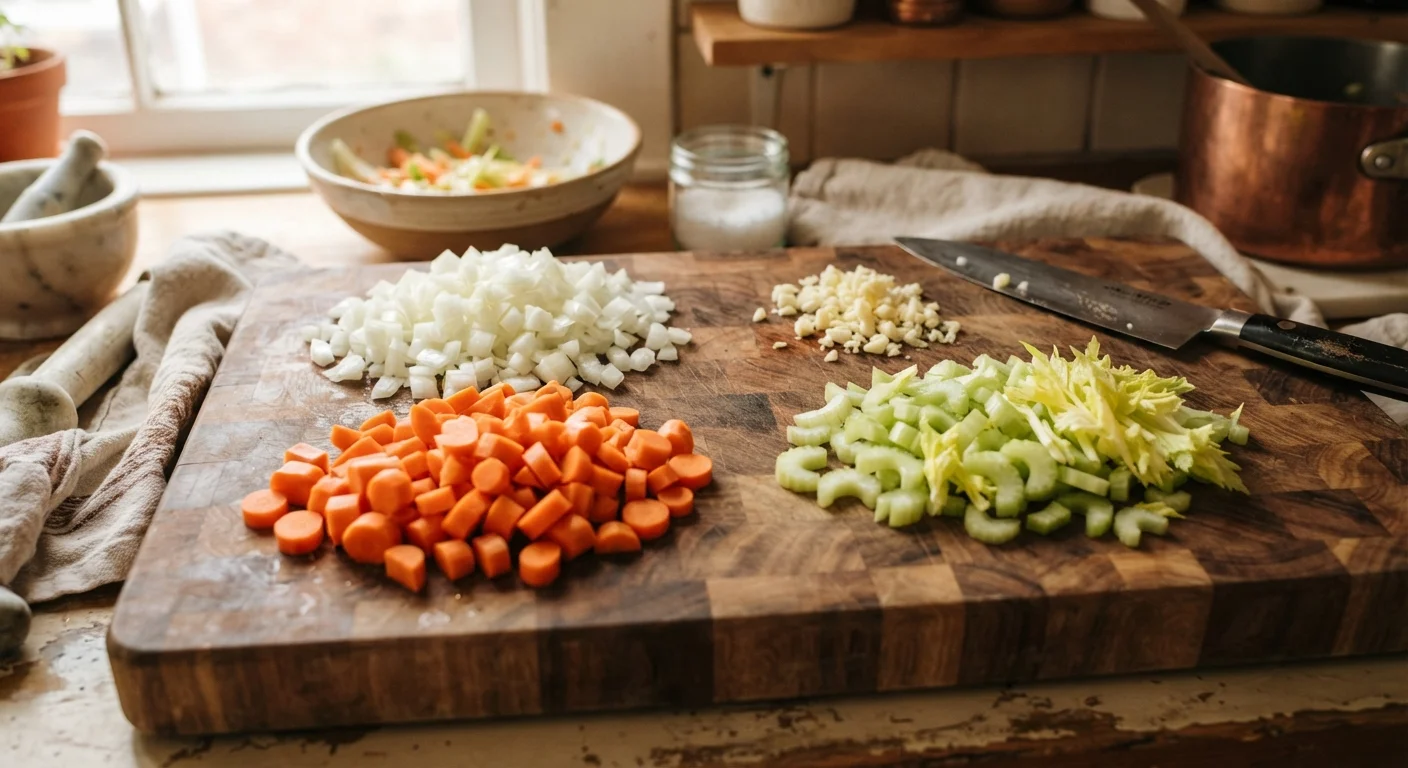
Dice your onion, mince your garlic, and prepare any additional aromatics - celery, carrot, leek, ginger - before you turn on the stove. Once heat is applied, timing becomes critical, and you won't want to be chopping mid-cook.
Consistent sizing matters. Finely diced aromatics will melt into the dish and disappear into the background flavor. Larger cuts remain present as texture. Choose based on the result you want.
Heat the pan and fat over medium-low heat
Add your cooking fat to a cold or just-warm pan, then bring it gently to medium-low heat. You want the fat shimmering, not smoking. A too-hot pan will scorch aromatics before they have time to soften, producing a bitter, acrid taste that carries through the entire dish.
Add onion first and cook until softened
Add your diced onion to the fat and stir to coat. Cook over medium-low heat, stirring occasionally, until the onion turns translucent and softens - typically 5 to 8 minutes. This process, called sweating, draws moisture out of the onion and concentrates its natural sugars without browning it.
If you want a deeper, nuttier flavor, continue cooking until the onion turns golden brown. This is caramelization - a slower process that builds a richer, sweeter base.
Add garlic and other fast-cooking aromatics
Once onion is softened, push it to the sides of the pan and add minced garlic to the center. Cook for 30 seconds to 1 minute, stirring constantly, until fragrant. Garlic cooks much faster than onion and will go from raw to burnt quickly - keep it moving.
Add other fast-cooking aromatics at this same stage: fresh ginger, minced chili, or tomato paste. These all benefit from brief direct contact with the hot fat before liquids are added.
Deglaze or add liquid to build the dish
Once aromatics are fragrant and cooked through, add your liquid - stock, wine, crushed tomatoes, or coconut milk - and scrape up any browned bits from the pan bottom. Those bits, called fond, carry concentrated flavor. The aromatics will continue to infuse the liquid as the dish cooks.
From here, the aromatic base does its job quietly in the background, giving every spoonful cohesion and depth that no spice blend added at the end can replicate.
Know Your Classic Aromatic Combinations
French cuisine starts with mirepoix - onion, carrot, and celery in a 2:1:1 ratio. Italian soffritto follows similar logic. Cajun and Creole cooking replaces carrot with bell pepper to form the 'holy trinity.' Many South and Southeast Asian dishes begin with garlic, ginger, and onion. Each combination produces a distinct flavor backbone - understanding them helps you recognize and reproduce the flavors of different cuisines.
Garlic Burns Fast - Watch Your Heat
Garlic contains more sugar and less water than onion, which means it goes from golden to scorched in under a minute at medium-high heat. Always add garlic after your onion has softened, keep the heat at medium-low, and stir continuously. If your garlic darkens quickly, remove the pan from heat immediately to stop cooking.
Order of Addition Is Not Arbitrary
Adding garlic at the same time as onion is one of the most common beginner mistakes. Onion needs 5-8 minutes to soften; garlic needs under a minute. Starting them together guarantees the garlic burns before the onion is ready. Always add garlic after the onion has become translucent - this single habit improvement will noticeably change the quality of your cooking.
After your aromatic base is built, tasting and adjusting as you go is the next skill that separates good home cooks from great ones. Aromatics lay the foundation, but your palate guides the final result. Pairing this technique with salting at every stage of cooking ensures that foundation is fully expressed in the finished dish.