

Key Takeaways
Seasoning Throughout Cooking
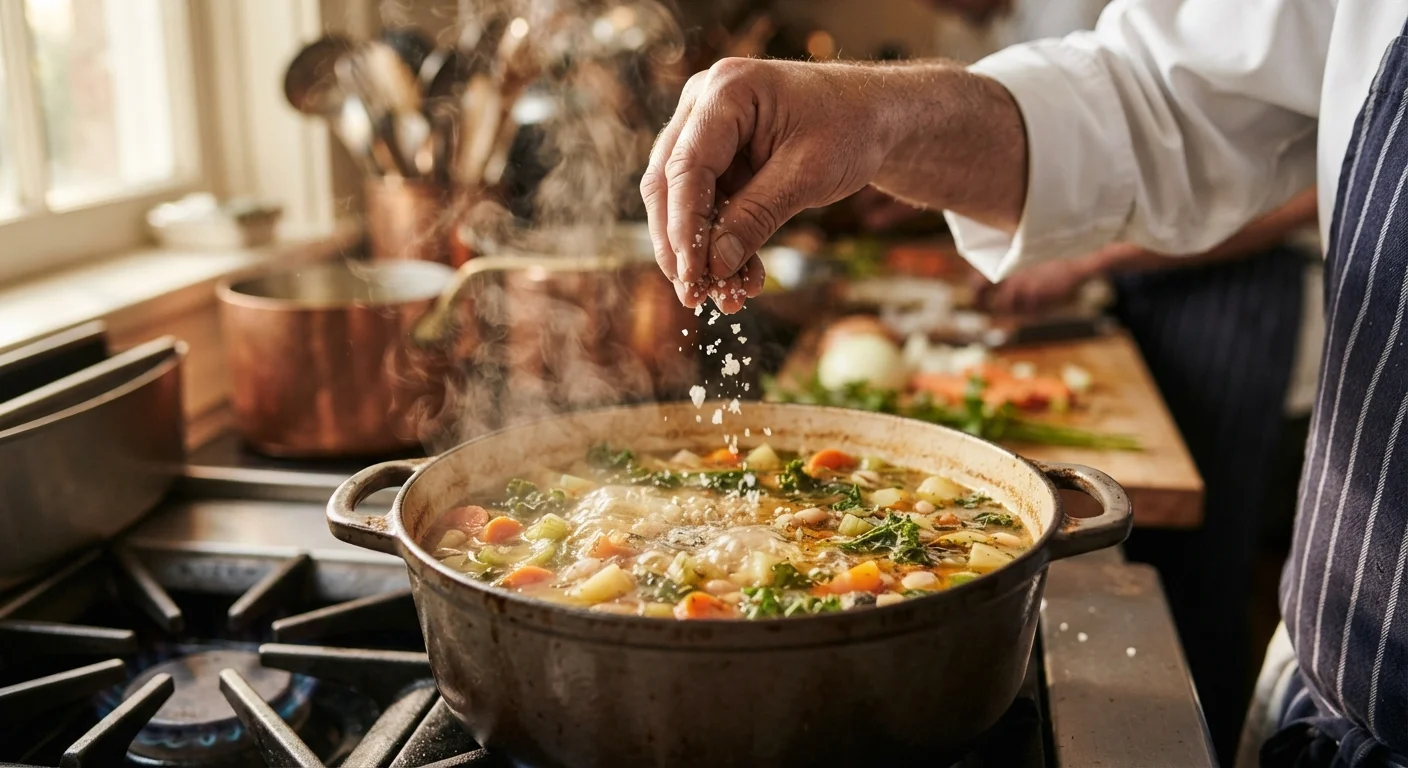
Seasoning throughout cooking means adding salt at multiple points during preparation - before, during, and after cooking - rather than only at the table. Each stage serves a different purpose: drawing out moisture, building flavor in layers, or balancing the final dish. The goal is not to make food taste salty, but to make each ingredient taste more fully like itself.
Salt (sodium chloride) enhances flavor by suppressing bitterness and amplifying other taste compounds through ion interactions at taste receptor sites - a mechanism distinct from simply adding a salty taste.
Why Timing Changes Everything
Most home cooks treat salt as a finishing touch - a few shakes at the table after the plate is set. But experienced cooks understand that salt behaves differently depending on when it's applied. Added early, it has time to dissolve, migrate into food, and interact with proteins and starches at a structural level. Added only at the end, it sits on the surface and delivers a sharp, one-dimensional hit of saltiness rather than depth.
This is the fundamental difference between food that tastes seasoned and food that merely tastes salty. The former has flavor woven through every element. The latter has an afterthought sprinkled on top.
Understanding this principle pairs naturally with other foundational skills - like building flavor with aromatics, where order and timing equally determine the quality of the result.
Salt in Small Increments
It's far easier to add more salt than to correct an over-salted dish. Get into the habit of adding salt in small pinches at each stage, tasting after each addition. This builds your palate's sensitivity over time and virtually eliminates the risk of over-seasoning.
Salting at Each Stage: What's Actually Happening
Before Cooking: Building a Foundation
Salting proteins - whether chicken, steak, or fish - well ahead of cooking allows salt to draw out a small amount of surface moisture, dissolve into it, and then be reabsorbed into the muscle tissue. This dry-brining effect seasons meat from within and can improve moisture retention during high-heat cooking. Even a 30-to-45-minute rest makes a measurable difference in flavor.
Vegetables like cucumber and zucchini benefit from pre-salting when you want to remove excess water before roasting or sautéing, preventing a watery, steamed texture in the pan. This connects directly to why pan temperature matters: a wet pan won't sear, no matter how hot it is.
During Cooking: Layer by Layer
Each time you add a new ingredient to a pan - onions, then garlic, then greens - a small pinch of salt at each stage encourages even seasoning and, in some cases, speeds moisture release. Pasta water should be salted generously before the pasta goes in, because it's the only opportunity to season the pasta from the inside as it absorbs liquid while cooking.
At the End: Balance, Not Rescue
A final taste and adjustment is about precision, not correction. By this point, the dish should already be flavorful. A small addition of salt at the end - or a pinch of flaky finishing salt on a roasted vegetable - brightens and sharpens what's already there. Tasting critically as you cook is the skill that makes this stage reliable rather than guesswork.
~80%
Of dietary sodium from processed foods, not home cooking
According to the U.S. Centers for Disease Control and Prevention, the vast majority of sodium Americans consume comes from packaged and restaurant foods, not salt added at home during cooking.
45+ min
Minimum dry-brine time for noticeable moisture reabsorption
Food science sources including Harold McGee's foundational work on cooking chemistry indicate that meaningful salt migration into proteins requires at least 45 minutes, with overnight brining producing the most even results.
Choosing the Right Salt for the Job
Not all salt is interchangeable by volume. Kosher salt - with its open, flaky structure - is the everyday workhorse for most cooking because it's easy to pinch, distribute, and control. Fine table salt is denser and dissolves faster, making it suitable for baking where precision matters. Flaky sea salts, with their delicate texture and mild flavor, work best as a finishing element on top of a dish where their texture can be appreciated.
The key practical rule: if a recipe specifies one type of salt and you substitute another, adjust quantities. Using the same volume of table salt in place of kosher salt will result in a significantly saltier dish.
Sodium Intake and Health Context
This article addresses salt as a culinary technique, not as a dietary recommendation. Individual sodium needs vary based on health status, activity level, and medical history. If you have concerns about sodium consumption - particularly for conditions like hypertension - consult a qualified healthcare professional. For more on reading sodium information on food packaging, see our overview on sodium on nutrition labels.