

Key Takeaways
Alcohol as a Diuretic
Alcohol is a diuretic, meaning it causes your kidneys to produce more urine than usual. This happens because alcohol suppresses a hormone called vasopressin (also known as antidiuretic hormone, or ADH), which normally signals the kidneys to retain water. When ADH is inhibited, the body excretes more fluid than it takes in from the drink itself, leading to a net loss of water.
Ethanol's diuretic effect is dose-dependent: the more alcohol consumed, the more strongly ADH secretion is suppressed, and the greater the resulting fluid loss relative to intake.
How Alcohol Disrupts Your Body's Water Regulation
Your body maintains fluid balance through a tightly controlled hormonal system. A key player is vasopressin (antidiuretic hormone, or ADH), released by the brain to signal the kidneys to reabsorb water rather than excrete it. Alcohol directly interferes with this signal.
When you drink, ethanol suppresses ADH secretion. Without adequate ADH, the kidneys stop conserving water and begin flushing significantly more fluid into urine. Research generally estimates that for every standard drink consumed, the body may excrete roughly 100-150 mL more urine than the volume of fluid consumed - though this varies considerably by individual, drink type, and drinking rate. The result is a negative fluid balance that accumulates as the evening progresses.
This effect is dose-dependent: a single glass of wine produces a modest response, while several shots of spirits over a few hours can cause a substantial fluid deficit. The diuretic effect is most pronounced in the first hour or two after drinking, when blood alcohol concentration is rising most rapidly.
Not All Drinks Dehydrate Equally
The diuretic effect of alcohol is strongly tied to ABV (alcohol by volume). A standard light beer (around 3.5-4% ABV) has a much smaller effect on ADH than a 40% ABV spirit. Drinks with very low alcohol content - such as many dealcoholized wines - may produce little to no measurable diuretic response, though they are not hydration-neutral either.
What This Means for How You Feel
The fluid and electrolyte losses caused by alcohol are a primary driver of hangover symptoms. Dehydration contributes to:
- Headache - reduced fluid volume can lower blood pressure to the brain and cause vessels to contract or dilate in compensatory ways.
- Fatigue and brain fog - even mild dehydration impairs cognitive function and energy levels.
- Dry mouth and intense thirst - the body's direct signal that fluid levels are low.
- Dizziness or lightheadedness - particularly when standing quickly, as reduced blood volume affects circulation.
Alcohol also depletes electrolytes - especially sodium, potassium, and magnesium - through increased urination. These minerals regulate muscle function, nerve signaling, and fluid distribution inside cells, so their loss amplifies the physical impact of dehydration.
~100-150 mL
Extra urine produced per standard drink
Estimates from physiology research suggest each alcoholic drink can prompt the kidneys to excrete more fluid than the drink itself provides, though individual variation is significant.
1-2%
Body water loss considered mild dehydration
Research in hydration physiology links even mild dehydration of 1-2% body weight to measurable declines in mood, concentration, and physical performance.
Practical Habits for Better Hydration When Drinking
Understanding the mechanism makes the remedies straightforward, if imperfect. No single strategy fully cancels alcohol's diuretic effect, but several practices can meaningfully reduce its impact.
Start With a Full Glass of Water
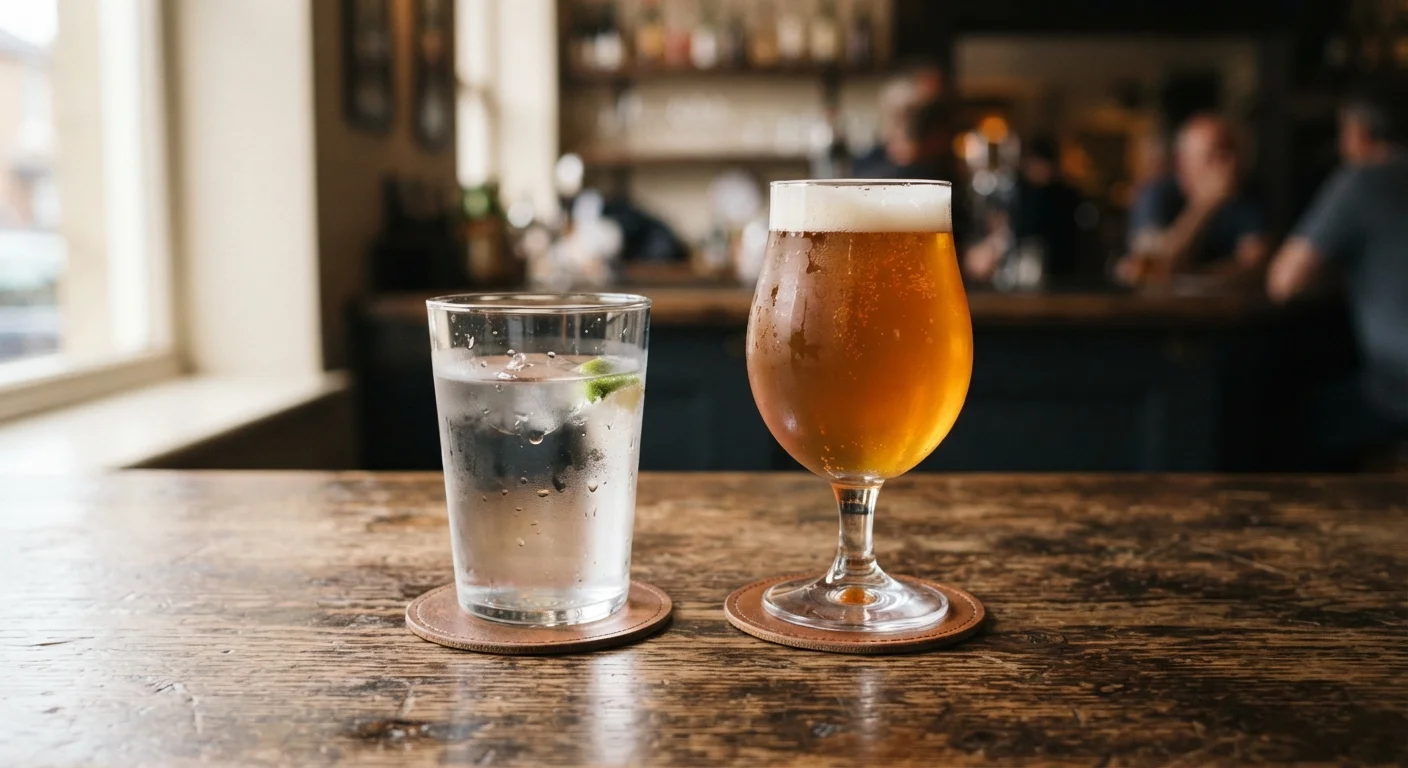
Before your first alcoholic drink of the evening, drink a full glass of water. This simple habit sets a better baseline fluid level and can noticeably reduce how dehydrated you feel by the end of the night. Making it a routine - rather than an afterthought - is the most reliable way to stick with it.
Alternate alcoholic and non-alcoholic drinks. Ordering a glass of water between each alcoholic drink is one of the most effective ways to partially offset fluid losses. It also naturally slows your overall alcohol consumption rate, reducing peak blood alcohol concentration and therefore the severity of ADH suppression.
Choose lower-ABV options when possible. The diuretic response scales with alcohol concentration. Opting for a lower-ABV beer or a wine spritzer over a high-ABV cocktail reduces the hormonal disruption per serving. If you're curious about social-setting drink alternatives, non-alcoholic beverages have expanded considerably in quality and variety.
Hydrate well before drinking. Starting the evening already well-hydrated gives your body a better buffer. Arriving at a deficit makes the diuretic effect hit harder and faster.
Replenish electrolytes, not just water. Drinking plain water helps, but pairing it with sodium-containing foods or an electrolyte drink addresses the mineral losses that water alone doesn't replace. This is especially relevant for recovery the morning after. For broader context on how common hydration beliefs hold up, see hydration myths and the science behind them.
Drink water before bed. Consuming 1-2 glasses of water before sleeping can reduce the intensity of morning dehydration, since the body continues processing alcohol - and losing fluid - during sleep.
This article is for general informational purposes only and is not medical advice. If you have concerns about alcohol consumption or its effects on your health, consult a qualified healthcare professional.