

Key Takeaways
Start here
Why Non-Alcoholic Options Matter at Social Events
Next
The Main Categories of Non-Alcoholic Beverages
Go deeper
Dealcoholized and Low-Alcohol Drinks Explained
Explore options
Mocktails and Craft Sodas: What Sets Them Apart
Apply it
Choosing the Right Drink for the Occasion
Why Non-Alcoholic Options Matter at Social Events
Social settings have long centered on shared drinks, but not everyone present wants or can consume alcohol. Designated drivers, people in recovery, pregnant individuals, and those simply preferring to skip alcohol all benefit from having genuine choices - not just a glass of water or a can of soda.
The market has responded. Non-alcoholic beverages have grown in complexity and variety, moving well beyond ginger ale or orange juice. Understanding what's available lets you make confident choices without feeling out of place or settling for something you don't enjoy.
It's also worth noting that choosing non-alcoholic options has no hydration downside - unlike alcohol, which acts as a diuretic and can disrupt your fluid balance. For a closer look at that contrast, see our article on how alcohol affects hydration.
The Main Categories of Non-Alcoholic Beverages
Non-alcoholic drinks for social settings generally fall into several broad categories:
ABV
Alcohol by volume - a standard measure of how much alcohol is in a beverage, expressed as a percentage. In the US, drinks below 0.5% ABV are classified as non-alcoholic.
Dealcoholized
A drink that was originally fermented (producing alcohol) but then had most of its alcohol removed through a secondary process like vacuum distillation or reverse osmosis.
Mocktail
A mixed non-alcoholic drink crafted to have the complexity and presentation of a cocktail, using juices, syrups, bitters, herbs, and carbonation.
Shrub
A drinking vinegar - a syrup made from fruit, sugar, and vinegar - used as a tart, complex flavoring agent in mocktails and non-alcoholic mixed drinks.
Kombucha
A fermented tea beverage made by culturing sweetened tea with a symbiotic colony of bacteria and yeast. Commercial versions are regulated to stay under 0.5% ABV in the US.
Reverse osmosis
A filtration process that forces liquid through a semi-permeable membrane. In beverage production, it's one method used to separate alcohol from wine or beer.
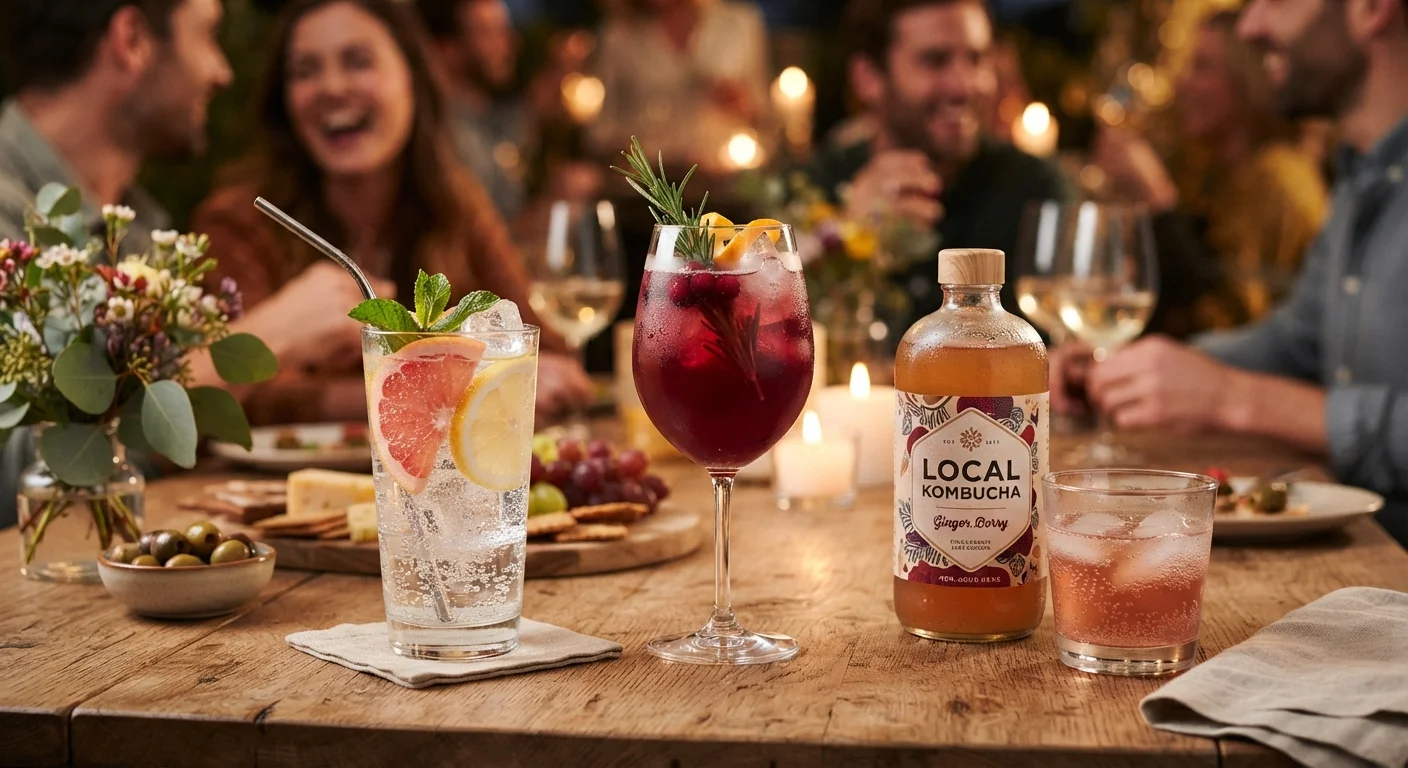
- Sparkling waters and mineral waters - carbonated options ranging from plain to heavily flavored, often served with a slice of citrus for visual effect. These are universally appropriate and pair well with food.
- Sparkling and still juices - pressed or blended fruit and vegetable juices, some bottled with carbonation to mimic wine's effervescence.
- Fermented beverages - drinks like kombucha and water kefir that go through fermentation but remain low in alcohol under typical commercial production. These offer complexity not found in plain juice. Our overview of fermented drinks from around the world explores this category in depth.
- Dealcoholized wines and beers - products made from actual fermented bases with the alcohol subsequently removed.
- Mocktails and craft sodas - mixed drinks or artisan carbonated beverages designed specifically for the non-alcoholic drinker.
Dealcoholized and Low-Alcohol Drinks Explained
Dealcoholized beverages begin as real wine or beer, then undergo a secondary process - most commonly vacuum distillation or reverse osmosis - to strip out most of the alcohol. The result typically contains under 0.5% ABV (ABV), the threshold used in the US to classify a product as non-alcoholic.
Dealcoholized Does Not Always Mean Zero Alcohol
Dealcoholized wines and beers typically retain trace alcohol below 0.5% ABV, which is the US legal threshold for non-alcoholic classification. For individuals who must avoid all alcohol - due to medication interactions, pregnancy, or personal recovery - this distinction matters. Always read product labels and consult a healthcare professional if you have specific medical or health concerns about alcohol consumption.
The flavor profile of dealcoholized wine differs from its full-alcohol counterpart. Alcohol carries aroma compounds and contributes to mouthfeel, so removal changes the drink's texture and finish. Some producers add natural grape concentrate or other ingredients to compensate. The quality varies considerably by product and production method.
Low-alcohol wines (typically 0.5-1.2% ABV) represent a middle category - they retain more of the original flavor characteristics but still contain some alcohol. These are not the same as non-alcoholic options and may not be appropriate for everyone avoiding alcohol entirely.
Mocktails and Craft Sodas: What Sets Them Apart
A mocktail is not simply juice in a fancy glass. It's a deliberate construction - combining base liquids (juices, teas, coconut water), acid elements (citrus, shrubs, vinegar-based syrups), sweeteners, and often aromatic additions like fresh herbs, bitters, or spiced syrups. The goal is layered flavor that holds up across a full drink, not just the first sip.
Building Mocktails With More Depth
The key to a satisfying mocktail is balancing sweetness, acidity, and bitterness - the same principles behind good cocktail design. Start with a flavorful base (fresh juice, cold brew tea, or coconut water), add a citrus element for brightness, and finish with an herbal or bitter note. Alcohol-free aromatic bitters are widely available online and in specialty grocery stores, and a few dashes make a significant difference.
Non-alcoholic bitters deserve special mention. Traditional cocktail bitters do contain alcohol as a carrier, but several producers now make alcohol-free aromatic bitters that deliver the same bitter-herbal complexity. These are worth knowing about if you're building mocktails at home.
Craft sodas occupy a different space - they're carbonated, often sweetened, and flavored with real botanicals or fruit extracts rather than artificial flavors. They're more casual than mocktails but more interesting than standard soft drinks. Carbonation itself is generally safe for most people; for an evidence-based look at the differences between sparkling and still water, see our piece on sparkling versus still water.
Choosing the Right Drink for the Occasion
Matching a non-alcoholic drink to the setting makes the experience more enjoyable and socially comfortable. A few practical considerations:
- Formal dinners: Dealcoholized wine or sparkling water with citrus fits naturally alongside food courses without drawing attention.
- Casual parties: Mocktails or craft sodas work well - they're visually engaging and hold their own in a crowd.
- Outdoor or daytime events: Sparkling water, lightly sweetened iced teas, or coconut water offer refreshment without heaviness.
- Celebrations: Sparkling grape juice or dealcoholized sparkling wine allow you to participate in toasts without compromise.
Sugar content is worth checking, especially if you're drinking several glasses over an event. Many sparkling juices and craft sodas contain added sugar that adds up quickly. Flavor complexity doesn't require sweetness - botanicals, acids, and carbonation can all contribute depth without loading a drink with sugar.
If you're thinking about shifting your everyday drink habits more broadly, our guide on what to consider before switching your morning drink offers a useful framework for thinking through routine changes.