

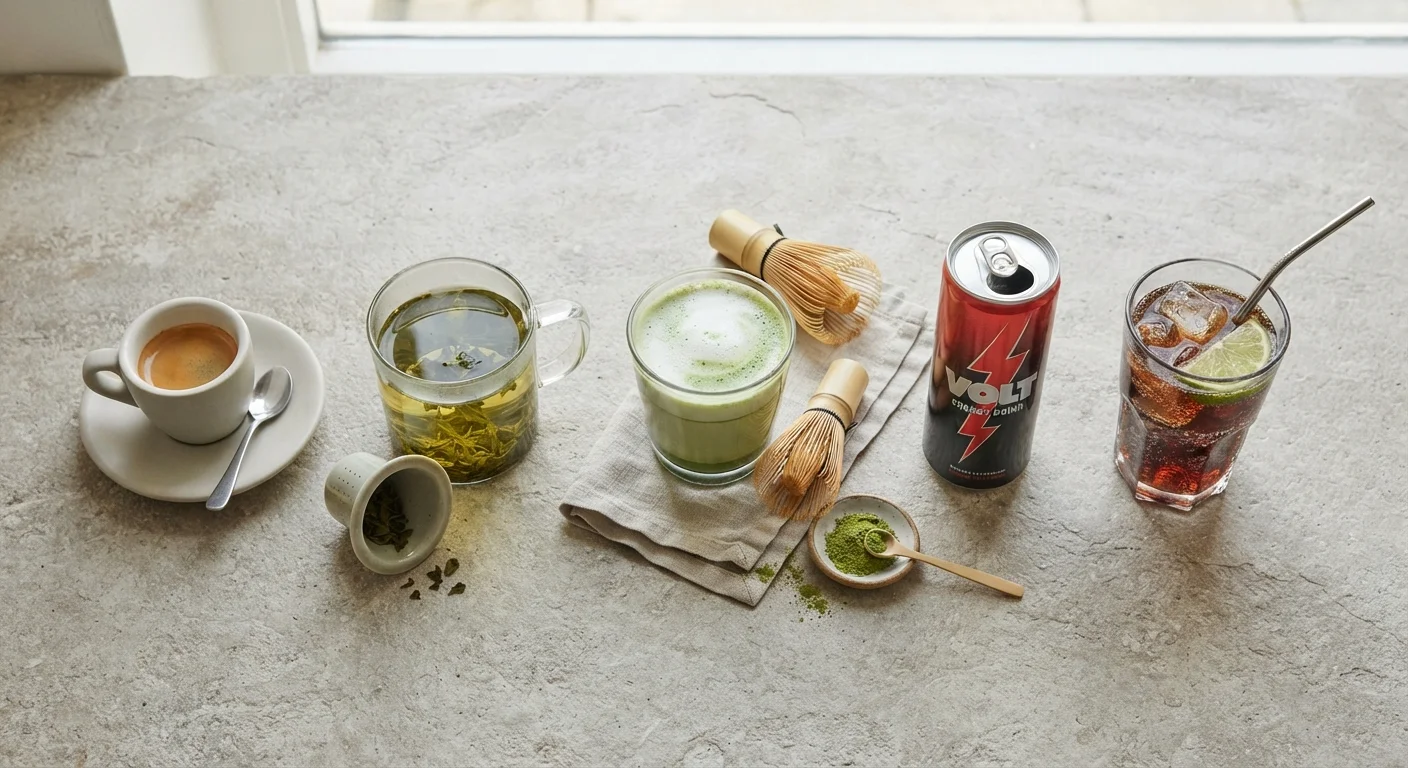
Why Caffeine Amounts Vary So Much
Two cups of coffee sitting side by side can contain very different amounts of caffeine. Brew method, bean type, steep time, and serving size all influence the final milligram count - which is why a rough figure is more practical than a precise one for most everyday purposes. The values in this reference reflect ranges commonly reported in peer-reviewed nutritional research and data published by the U.S. Food and Drug Administration (FDA).
Understanding where caffeine comes from in a given drink - whether it's naturally occurring or added during manufacturing - can also help you read labels more accurately. Our guide to reading beverage nutrition labels covers how caffeine is (and isn't) disclosed on packaging.
Caffeine by Drink Category
Coffee
Coffee is the most concentrated source of caffeine among everyday beverages. A standard 8 oz brewed cup typically contains 80-100 mg, though this rises sharply with stronger preparations. A single 1 oz shot of espresso generally delivers 60-75 mg; because espresso is consumed in small volumes, the concentration per ounce is high, but the total per serving is often lower than a full mug of drip coffee. Instant coffee tends to run 30-90 mg per 8 oz depending on the amount dissolved.
Tea
Brewed black tea averages 40-70 mg per 8 oz, while green tea typically falls in the 20-45 mg range. White tea and oolong sit between green and black. Herbal teas made from plants like chamomile, peppermint, or rooibos contain no measurable caffeine - they are not derived from the Camellia sinensis plant that produces caffeinated tea.
Matcha
Matcha is powdered green tea leaf, so the entire leaf is consumed rather than steeped and discarded. A standard 1-teaspoon serving prepared in 6-8 oz of water delivers roughly 40-70 mg of caffeine - comparable to a cup of green tea but with a different absorption profile due to the presence of the amino acid L-theanine. If you're considering switching from coffee to matcha, our checklist for changing your morning drink is a useful starting point.
Energy Drinks
Caffeine in energy drinks ranges widely. Standard 8-16 oz cans commonly contain 80-160 mg, though some products marketed for high performance exceed 200 mg per can. Energy drinks often also include guarana, a plant extract that naturally contains caffeine, meaning the actual caffeine load may be higher than the label's standalone figure suggests. For a full breakdown of what else is typically inside these products, see our ingredient-by-ingredient look at energy drinks.
Soda
Cola-style sodas are the most caffeinated soft drinks, ranging from 30-55 mg per 12 oz can. Most lemon-lime and fruit sodas contain no caffeine at all. Diet versions of cola sodas tend to fall within the same range as their regular counterparts.
400 mg
Daily caffeine level not generally associated with harm in healthy adults
According to guidance from the U.S. Food and Drug Administration (FDA) for the general healthy adult population.
200+ mg
Caffeine in some high-performance energy drinks per can
Products marketed for athletic or high-stimulant use can significantly exceed standard energy drink amounts.
80-100 mg
Typical caffeine in an 8 oz brewed coffee
Range reported across peer-reviewed nutritional studies and USDA FoodData Central records.
Reference Guidelines and Practical Context
The FDA has cited 400 mg per day as an amount not generally associated with dangerous negative effects in healthy adults. This is a general population figure - not a personal recommendation. Individual sensitivity to caffeine varies considerably based on body weight, genetics, medication use, and tolerance developed over time.
These Are General Figures, Not Personal Limits
The 400 mg daily figure is a population-level reference point from the FDA, not a ceiling that applies equally to every individual. Caffeine sensitivity varies considerably from person to person. If you have questions about how much caffeine is appropriate for your specific health situation, a qualified healthcare professional is the right source for guidance.
Pregnant individuals, people with certain heart conditions, and those taking specific medications are typically advised to keep caffeine intake lower. Consulting a qualified healthcare professional is the right step for anyone in these groups or anyone managing a health condition that may be affected by stimulant intake.
Tracking your daily total is straightforward once you know approximate values by drink type. If you're curious about the broader physiological effects of regular coffee consumption specifically, our article on what daily coffee does to your body covers the research in plain language.
Caffeine
A naturally occurring stimulant found in the leaves, seeds, and fruits of certain plants. It works by blocking adenosine receptors in the brain, temporarily reducing the sensation of fatigue.
Camellia sinensis
The plant species from which all true caffeinated teas - black, green, white, and oolong - are derived. Herbal teas are not made from this plant and are naturally caffeine-free.
Guarana
A plant native to South America whose seeds naturally contain caffeine. It is commonly added to energy drinks and may contribute to total caffeine content beyond what is listed separately on a label.
L-theanine
An amino acid found naturally in tea leaves and matcha. It is often studied alongside caffeine for its potential to moderate the stimulant's effects, though research is ongoing.
Serving size
The standardized portion used to express nutritional values on a label. Caffeine figures are only meaningful when matched to the actual serving size being consumed.