

Key Takeaways
Why Beverage Labels Deserve a Second Look
Most people spend more time reading a text message than the label on a drink they consume daily. That habit is worth revisiting. A single bottled beverage can contain a full day's worth of added sugars or more sodium than a bag of pretzels - facts that are all right there on the label, written in a standardized format regulated by the U.S. Food and Drug Administration (FDA).
Beverages follow the same Nutrition Facts panel rules as solid foods, but they present a few unique challenges: containers are often larger than one serving, liquid calories are easy to underestimate, and marketing claims on the front of the bottle - "natural," "enhanced," "zero calories" - can create impressions that the back label quietly contradicts. For a broader walkthrough of the full panel, see our introduction to Nutrition Facts panels.
Front-of-Package Claims vs. the Back Label
Phrases like "low calorie," "naturally flavored," or "with electrolytes" on the front of a bottle are marketing statements governed by specific FDA definitions - but they tell only part of the story. Always flip to the Nutrition Facts panel to verify what the numbers actually show. For a checklist of label claims worth scrutinizing, see our guide on nutrition label red flags.
Step-by-Step: Reading the Label on Any Drink
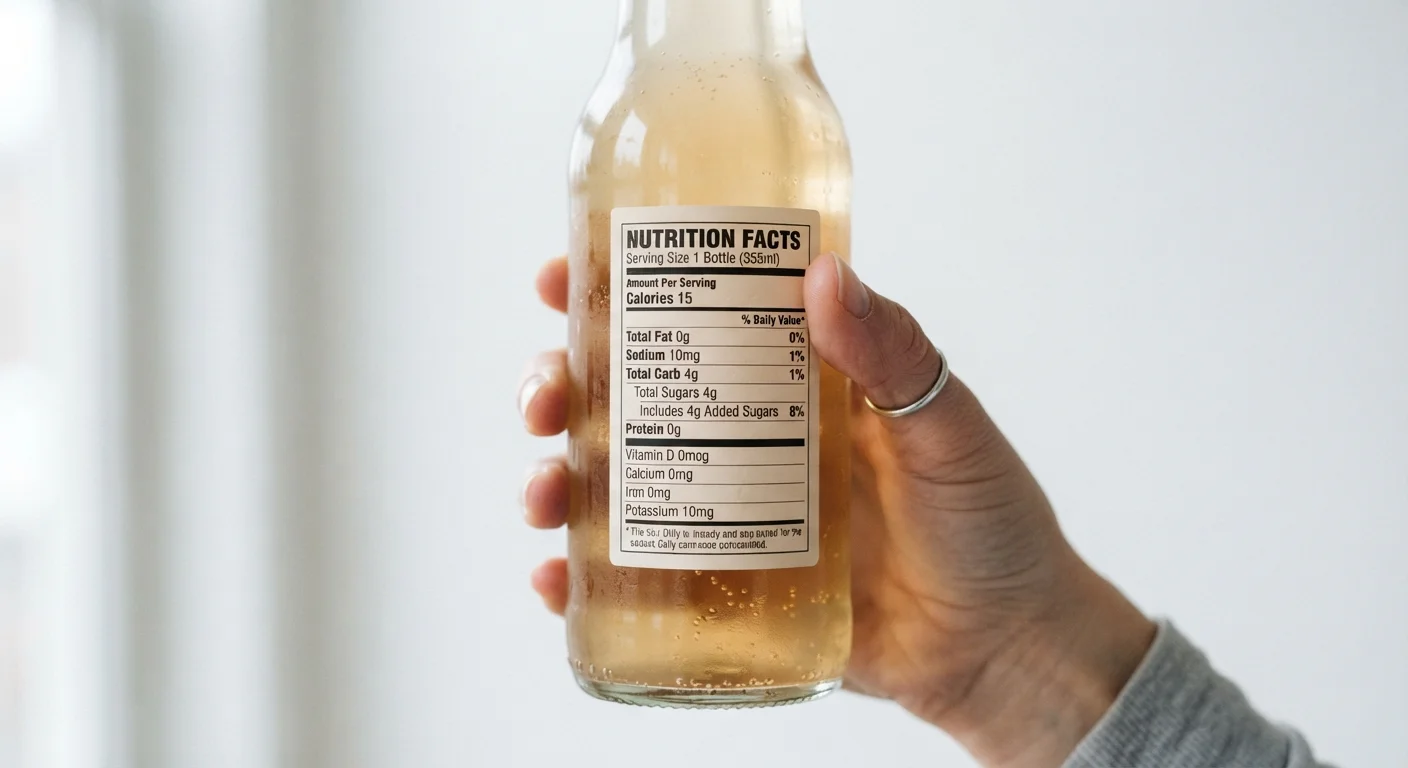
Follow these steps every time you pick up an unfamiliar beverage. With practice, the whole process takes under a minute.
Find the serving size and servings per container
These two lines sit at the very top of the panel - and they govern everything below. Serving size is stated in common household measures (e.g., 8 fl oz) alongside a metric equivalent. Servings per container tells you how many of those units are in the whole bottle. A 20 oz bottle listed as having 2.5 servings means every calorie and nutrient figure on the label must be multiplied by 2.5 if you drink the whole thing.
Check the calories
The calorie count is displayed in large bold type directly below serving size. This number reflects one serving only. If the bottle contains two servings, double the number. Liquid calories from sweetened beverages can add up quickly because drinks are less likely than solid food to trigger a strong sense of fullness.
Read the Total Sugars and Added Sugars lines
Total Sugars includes all sugars - both naturally occurring (like lactose in milk or fructose in juice) and those added during processing. Directly beneath it, indented, is the Added Sugars line, which shows only the sugars introduced by the manufacturer. Focus on the Added Sugars % Daily Value: the FDA's Daily Value reference amount is 50 grams for a 2,000-calorie diet.
Review sodium
Scan the Sodium row and its % Daily Value. Sports drinks are designed to replace electrolytes lost through sweat, so sodium is intentional - but for someone not engaged in prolonged physical activity, that sodium may not be necessary. Flavored waters and some "wellness" drinks can contain surprising sodium levels.
Glance at vitamins and minerals
Many beverages are fortified with vitamins (B vitamins, vitamin C, vitamin D) or electrolytes. These are listed in the lower section of the panel. The % Daily Value tells you how much of the recommended daily intake one serving provides. A beverage marketing itself on vitamin content may deliver meaningful amounts - or it may deliver trace percentages that have little practical impact on daily nutrition.
Check the ingredient list
The ingredient list appears below the Nutrition Facts panel and is ordered by weight - the ingredient present in the greatest amount by weight is listed first. For beverages, water is typically first. The position of sweeteners (sugar, high-fructose corn syrup, cane juice, etc.) in the list tells you how much they contribute relative to other ingredients. Multiple forms of added sugar listed separately can make the total sugar content appear lower at first glance.
Nutrients That Matter Most in Beverages
Once you understand the structure of the label, it helps to know which rows deserve the closest attention for drinks specifically.
Added Sugars
This is often the most consequential line on a beverage label. The FDA requires added sugars to be listed separately from total sugars, so you can distinguish sweeteners added during production from naturally occurring sugars (such as fructose in 100% juice). A 12 oz sweetened beverage can easily carry 30-40 grams of added sugars - well over half the 50-gram Daily Value reference amount. Learn more about the added sugars vs. total sugars distinction and why that line changes how you compare drinks. For a deeper look at why different sugar types behave differently, see The Sugar in Your Drink Is Not All the Same.
Sodium
Sports drinks, vegetable juices, and even some flavored waters contain meaningful sodium levels. The % Daily Value column is your fastest tool here - 5% DV or less per serving is considered low, 20% DV or more is considered high. Understand what sodium numbers really tell you before comparing drinks side by side.
Caffeine
Unlike most nutrients, caffeine is not currently required on FDA Nutrition Facts panels for most beverages. Energy drinks and coffee products may list it voluntarily. If you are monitoring intake, check the manufacturer's website or look for a voluntary disclosure on the label. Our caffeine content reference guide covers typical ranges across common drink categories.
Energy Drinks Require Extra Attention
Energy drinks often combine added sugars, caffeine, and functional ingredients (taurine, guarana, B vitamins) in amounts that may warrant careful consideration - especially for young people, people who are pregnant, and those sensitive to caffeine. Because caffeine is not required on the Nutrition Facts panel, the label alone may not give you the full picture. Learn what common energy drink ingredients actually do before making them a regular habit.
This article is for general informational purposes only and does not constitute medical or dietary advice. Consult a qualified healthcare professional or registered dietitian for guidance specific to your health situation.