

Key Takeaways
What All Fermented Drinks Share - and Where They Diverge
Fermentation is one of humanity's oldest food preservation and flavor-development techniques. At its core, it involves microorganisms - bacteria, yeast, or both - consuming sugars and producing byproducts like lactic acid, acetic acid, carbon dioxide, or ethanol. The base ingredient, the specific microbes involved, the temperature, and the fermentation duration all combine to create wildly different results: sour, effervescent, earthy, funky, or mildly sweet.
What distinguishes one fermented drink from another isn't just taste - it's the entire biological and cultural context behind it. Understanding these differences helps you make more confident, informed choices about what you're actually drinking. For readers thinking about how sugar behaves differently in these beverages, our piece on sugar in your drink is a useful companion read.
Kombucha - Fermented Tea, United States and East Asia
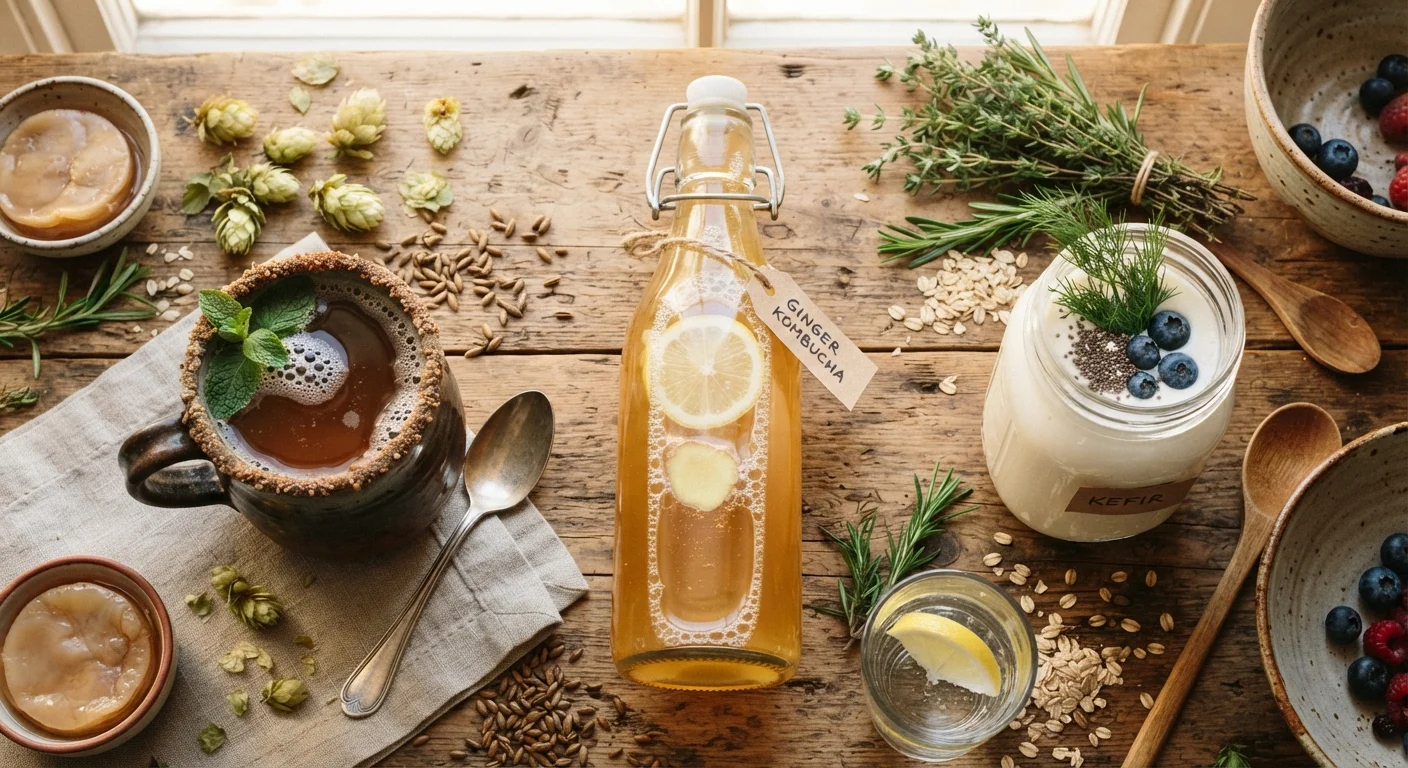
Kombucha is made by fermenting sweetened tea using a SCOBY - a rubbery disc of co-existing bacteria and yeast. The culture consumes most of the sugar during fermentation, producing organic acids (primarily acetic and gluconic acid), trace alcohol, and carbonation. The result is a tart, lightly effervescent drink with a vinegary edge.
Though popular in the contemporary US wellness market, kombucha has documented roots in Northeast China dating back centuries before it spread through Russia and Eastern Europe. Commercial versions typically contain 0.5% ABV or less, qualifying them as non-alcoholic in the US, though home-brewed batches can exceed that threshold depending on fermentation length.
Kombucha's tartness comes from organic acids, not added vinegar - the SCOBY produces them directly.
Kefir - Fermented Milk, the Caucasus Region
Kefir originates in the North Caucasus and is produced by culturing milk - cow, goat, or sheep - with kefir grains, which are clusters of lactic acid bacteria and yeasts bound in a polysaccharide matrix. The fermentation produces lactic acid (lending a yogurt-like tang), a small amount of carbon dioxide, and typically less than 1-2% alcohol.
Unlike yogurt, which uses a limited bacterial culture, kefir grains host a far more diverse microbial ecosystem. Water kefir exists as a dairy-free variant, using water, sugar, and dried fruit as the fermentation substrate. Kefir's consistency ranges from pourable to thick depending on milk fat content and fermentation time.
Kefir grains host a more diverse microbial community than standard yogurt cultures, making it distinct in character.
Kvass - Fermented Bread, Eastern Europe
Kvass is a traditional Eastern European beverage - particularly prominent in Russia, Ukraine, and the Baltic states - made by fermenting stale rye bread with water, yeast, and sometimes malt. The bread's starches are broken down into fermentable sugars, then converted by yeast into carbon dioxide and a very low level of alcohol, usually under 1.5% ABV.
The flavor profile is earthy, slightly sour, and bread-forward, with a malty depth that sets it entirely apart from fruit- or tea-based fermented drinks. Kvass is consumed widely as a refreshing everyday drink rather than an alcoholic beverage. Regional variations exist - some incorporate beets, berries, or herbs - each altering the base flavor considerably.
Kvass is fermented from bread, giving it an earthy, malty character unlike any other fermented beverage.
Tepache - Fermented Pineapple, Mexico
Tepache is a lightly fermented Mexican drink made from pineapple rinds and cores, brown sugar (piloncillo), water, and spices such as cinnamon and clove. Because it uses the peel rather than the fruit flesh, the wild yeasts naturally present on the pineapple skin drive the fermentation - no added culture is needed. Fermentation typically takes two to three days at room temperature.
The result is a gently sweet, slightly tangy, lightly fizzy drink with tropical and spiced notes. Tepache usually falls below 2% ABV when consumed fresh, though longer fermentation can push that higher. It is traditionally served over ice as a street drink throughout Mexico and has gained wider recognition in recent years.
Tepache ferments using wild yeasts on the pineapple skin itself - no commercial culture or starter required.
Amazake - Fermented Rice, Japan
Amazake is a traditional Japanese drink made by fermenting cooked rice with koji mold (Aspergillus oryzae), the same organism used in sake, miso, and soy sauce production. Unlike sake, which undergoes a full alcoholic fermentation, amazake is typically consumed after a short fermentation that converts starches to glucose - the process is saccharification rather than full alcoholic conversion.
The result is naturally sweet, thick, and milky, with an almost porridge-like consistency in traditional preparations. Alcohol content in koji-made amazake is negligible - often near zero - distinguishing it meaningfully from sake. A sake-lees version of amazake does exist and contains residual alcohol, so the preparation method matters when assessing content.
Traditional amazake derives its sweetness from enzymatic starch conversion, not added sugar - alcohol content is near zero.
Tibicos (Water Kefir) - Fermented Sugar Water, Global
Tibicos, commonly called water kefir, uses water kefir grains - a distinct culture from dairy kefir grains - to ferment a solution of water, sugar, and often dried fruit or molasses. The grains harbor lactic acid bacteria, yeasts, and acetic acid bacteria in a mineral-rich polysaccharide matrix. Fermentation typically runs 24-48 hours and produces a lightly carbonated, mildly sour, and subtly fruity drink.
The grain structure requires minerals to thrive, which is why dried fruit (a source of trace minerals) or mineral-rich water is often included. Water kefir is a fully dairy-free option for those interested in live-culture beverages, though it should be noted that its microbial composition differs from dairy kefir and the two are not interchangeable as fermentation cultures.
Water kefir grains need minerals to remain active - dried fruit or mineral-rich water keeps the culture healthy.
Choosing and Storing Fermented Drinks Wisely
Each of the beverages above can be found commercially or made at home, but the product you pick up at a store may differ significantly from a traditionally prepared version. Commercial kombucha, for instance, is often pasteurized and may have added flavoring, which alters the microbial profile. Labels are worth reading carefully, particularly for sugar content - some fermented drinks that sound healthful carry as much added sugar as a soft drink.
Read Labels for Live Culture Status
Not all commercially sold fermented drinks still contain active microorganisms at the time of purchase. Pasteurization - applied to extend shelf life - kills the microbial cultures that define fermented beverages. If the live-culture aspect is important to you, look for products labeled 'raw,' 'unpasteurized,' or 'contains live cultures,' and check that they require refrigeration. Room-temperature shelf-stable versions have generally been heat-treated.
Storage matters too. Live-culture drinks like kefir and fresh kvass are perishable and need refrigeration; exposure to heat accelerates over-fermentation. Our guide on storing beverages at home covers the practical principles that apply across all drink categories. And if you're considering swapping one of these into your daily routine, what to consider before switching your morning drink offers a useful framework for making that decision thoughtfully.
This article is for general informational purposes only and is not a substitute for medical or nutritional advice. If you have a health condition, are pregnant, or have a compromised immune system, consult a qualified healthcare professional before adding unpasteurized fermented beverages to your diet.