

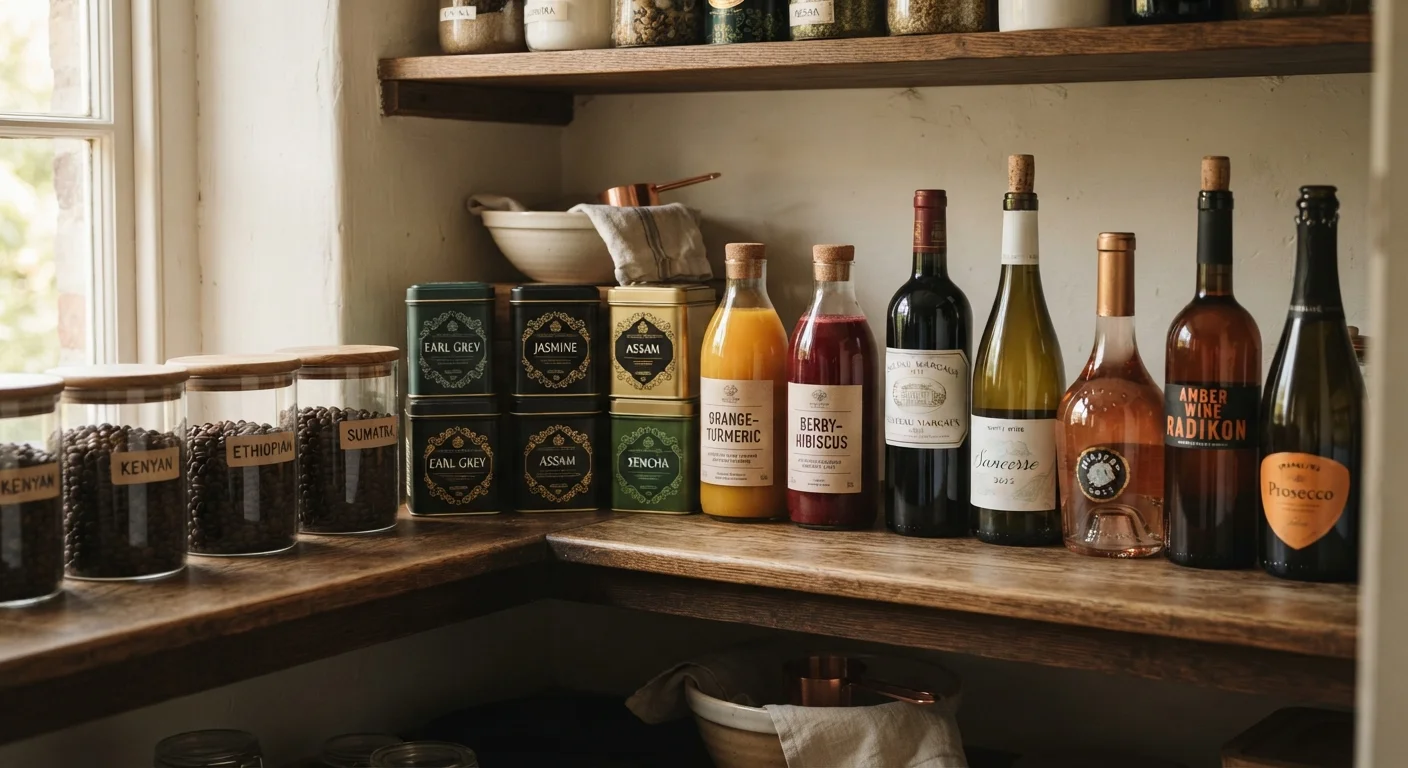
Key Takeaways
Why Storage Conditions Change What's in Your Glass
Most flavor degradation in beverages happens through three core mechanisms: oxidation, heat exposure, and light damage. These processes break down aromatic compounds, acids, and other molecules responsible for the taste characteristics you paid for. Understanding them applies whether you're storing a bag of ground coffee, a bottle of wine, or a carton of cold-pressed juice.
Container choice compounds the issue. Porous materials, clear glass in direct sunlight, and loosely sealed lids all accelerate degradation. The good news is that simple, low-cost adjustments - a better container, a cooler shelf, a tighter seal - can meaningfully extend quality for nearly every beverage category.
Storage Affects Taste, Not Just Safety
A beverage that has been stored poorly may still be safe to consume but taste noticeably flat, stale, or off. Oxidation and heat exposure primarily degrade aromatic compounds and flavor, not necessarily food safety. Understanding this distinction helps you prioritize what to store carefully based on how much flavor quality matters to you.
For readers interested in how water chemistry interacts with what you brew, see how water quality affects the taste of tea and coffee.
Best Practices for Storing Common Beverages
The following practices cover the beverages most commonly stored at home, from dry goods like coffee and tea to perishables like fresh juice and opened wine. Each practice addresses the specific vulnerabilities of that category.
Store coffee beans in an airtight, opaque container at room temperature - not in the freezer or fridge.
Coffee is highly susceptible to oxidation, moisture, and odor absorption. Repeated freezer-to-room-temperature cycling causes condensation that accelerates staling. A sealed, opaque container on a cool pantry shelf keeps beans fresh for up to two to four weeks after roasting.
Keep loose-leaf tea and bagged tea in sealed, light-proof tins away from strong-smelling pantry items.
Tea leaves readily absorb ambient odors and lose volatile aromatic compounds when exposed to light and air. Storing tea near spices or coffee can permanently alter its flavor profile. Metal tins with tight-fitting lids are widely regarded as the most effective everyday storage format.
Refrigerate fresh-pressed and pasteurized juices promptly, and consume opened containers within three to five days.
Juice - particularly cold-pressed - begins oxidizing and losing nutritional compounds from the moment it's exposed to air. Refrigeration slows microbial growth and enzymatic breakdown but does not halt them. Tightly recapping the container after each pour reduces air exposure between uses.
Store opened wine with a tight stopper and refrigerate it, regardless of whether it's red or white.
Oxygen rapidly breaks down wine's flavor compounds after a bottle is opened, causing it to taste flat or vinegary within days. Chilling slows oxidation even in red wines - simply remove the bottle 20-30 minutes before serving to return it to a suitable drinking temperature.
Keep fermented beverages such as kombucha refrigerated and away from strong light once bottled.
Live-culture fermented drinks continue to ferment at room temperature, which can build carbonation to excess and create overly sour flavors. Cold storage slows active fermentation and preserves the intended taste profile. Opaque or dark containers also protect light-sensitive cultures and organic acids.
Avoid storing any beverages near appliances that generate heat, such as the refrigerator motor side, oven, or dishwasher.
Heat accelerates the chemical reactions that break down flavor compounds in virtually every beverage category. Even moderate warmth from nearby appliances can noticeably shorten the usable life of coffee, tea, wine, and juice. A pantry or cabinet on an interior wall is generally the most stable thermal environment.
For those who keep fermented drinks on hand, our overview of fermented drinks from around the world provides useful context on how live cultures behave during storage.
Quick Adjustments You Can Make Today
Not every storage improvement requires a cabinet reorganization. Several of the most impactful changes take under a minute and require nothing beyond what most households already have on hand.
If you brew cold coffee at home, storage is only one part of the quality equation - why your homemade cold brew keeps tasting bitter walks through the extraction variables that affect flavor before it ever reaches the fridge.
“Flavor is chemistry. Everything that degrades taste - light, heat, oxygen, time - is accelerating a chemical reaction. Slow those reactions down, and you preserve what the producer worked to create.”
— Harold McGee, Author of On Food and Cooking, widely cited food science writer