

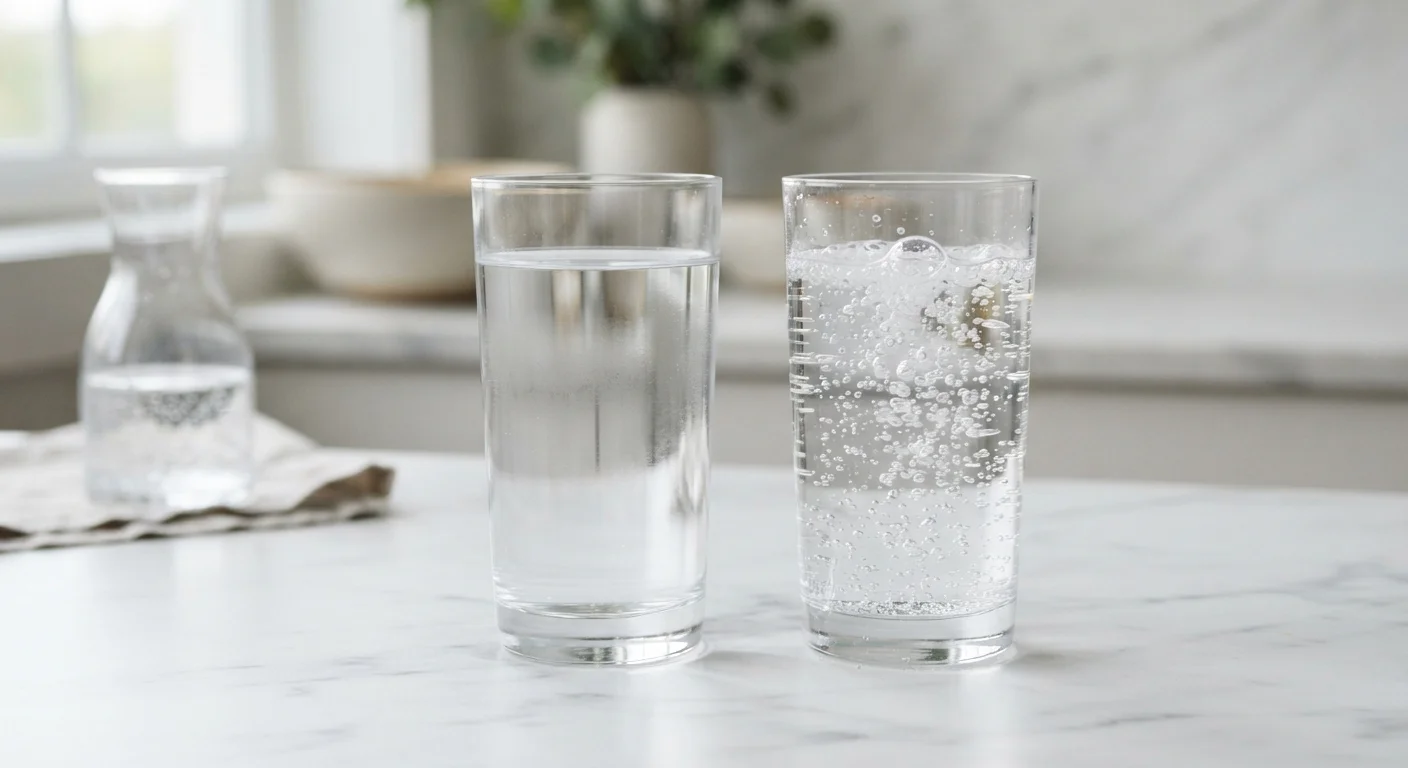
Key Takeaways
Option A
Still Water
The timeless, universally accessible hydration standard.
Best for: Everyday hydration, meals, exercise recovery, and anyone with sensitive teeth or digestive concerns.
Option B
Sparkling Water
The bubbly alternative that delivers the same core hydration with added sensory appeal.
Best for: People who struggle to drink enough plain water, social occasions, and those reducing soda consumption.
If you want the most universally compatible daily hydration option
Still Water
Still water suits every situation - meals, exercise, medications - without any considerations around acidity or carbonation-related discomfort.
If plain water feels boring and you're trying to ditch soda
Sparkling Water
The carbonation provides enough sensory satisfaction to make drinking adequate fluids easier, without introducing sugar or calories.
If you have acid reflux, GERD, or frequent bloating
Still Water
Carbonation can worsen reflux symptoms and cause bloating in sensitive individuals, making still water the more comfortable choice.
If you're concerned about dental health and already drink sparkling water
Sparkling Water
Plain, unflavored sparkling water poses minimal erosion risk - just avoid sipping it slowly all day and rinse with still water after.
What Actually Separates Them
At their core, still and sparkling water share the same purpose: delivering water to your body. The difference is dissolved carbon dioxide gas (CO₂). When CO₂ is pressurized into water, it forms carbonic acid - a weak acid that gives sparkling water its characteristic tingle and a pH typically between 3.0 and 5.0, compared to still water's near-neutral pH of around 7.0.
That shift in acidity is the foundation of nearly every health debate around sparkling water. It's real, but context matters enormously. Plain sparkling water with no added flavors or sweeteners sits at the milder end of the acidity scale - well above the acidity of sodas, juices, and most flavored beverages. For a deeper look at how added ingredients change what's in your glass, see how sugars and additives vary across drinks.
| Criterion | Still Water | Sparkling Water |
|---|---|---|
| pH level | ~7.0 (neutral) | ~3.0-5.0 (mildly acidic) |
| Hydration effectiveness | Fully effective | Equally effective |
| Calories & sugar | None | None (plain varieties) |
| Tooth enamel risk | Minimal | Low (plain); higher if citric acid added |
| Digestive comfort | Neutral for most people | May worsen reflux or bloating |
| Palatability for reluctant drinkers | Variable | Often higher due to fizz |
| Suitable during exercise | Yes, widely preferred | Yes, though carbonation may feel uncomfortable |
The Tooth Enamel Question
Dental erosion concern is the most frequently cited reason to avoid sparkling water, and it deserves a straight answer. Enamel erosion requires prolonged acid exposure. Studies comparing plain sparkling water to still water have generally found that plain carbonated water is only marginally more erosive than still water - and dramatically less erosive than sodas, sports drinks, or citrus juices.
The meaningful risk factor isn't carbonation itself - it's the addition of citric acid, found in many flavored sparkling waters. If you're choosing between an unflavored sparkling water and a citrus-flavored variety, that distinction matters far more than whether there are bubbles at all.
Flavored Sparkling Waters: Read the Label
Not all sparkling waters are nutritionally equal. Unflavored varieties contain no additives beyond CO₂. Many flavored sparkling waters, however, include citric acid as a preservative or flavor enhancer - this significantly increases their erosive potential compared to plain sparkling water. Some also contain natural sweeteners or sodium. Checking the ingredient list takes seconds and gives you a much clearer picture of what you're actually drinking.
Practical habits also reduce any marginal risk: drinking sparkling water with meals rather than sipping it continuously throughout the day, and rinsing with plain water afterward, are simple steps that limit acid contact time with enamel.
Hydration, Digestion, and Who Should Pay Attention
On the hydration front, the science is clear: carbonated water contributes to fluid intake just as effectively as still water. The body absorbs water from both sources comparably, and carbonation does not meaningfully impair hydration. For more on hydration evidence versus popular myth, see what the research actually supports.
~3.0-5.0
Typical pH range of plain sparkling water
For reference, cola beverages typically measure between pH 2.3 and 2.5 - considerably more acidic than unflavored carbonated water.
No difference
Hydration outcome vs. still water
Research published in peer-reviewed nutrition journals has consistently found no clinically meaningful difference in hydration between still and sparkling water in healthy adults.
Digestion is where individual differences become relevant. Some research suggests carbonated water may mildly improve swallowing ability and reduce constipation in some people. However, the CO₂ gas can increase stomach distension and worsen symptoms in people with acid reflux (GERD), irritable bowel syndrome (IBS), or chronic bloating. If you experience any of these conditions regularly, still water is the simpler, lower-risk daily choice - though individual responses vary, and it's worth discussing ongoing digestive symptoms with a healthcare provider.
For those who find plain still water unappealing, sparkling water is a genuinely useful bridge. It provides the sensory satisfaction of fizz without the sugar or acidity of soda, making it easier for some people to meet daily fluid needs. If you're navigating social settings where beverage choices feel limited, a practical overview of non-alcoholic options offers broader context.