

Key Takeaways
Why Eggs Deserve More Than Breakfast Duty
Eggs are a nutritional workhorse - rich in complete protein, fat-soluble vitamins, and choline - yet most home cooks use them in only one or two ways. The reality is that a dozen eggs in your refrigerator is the foundation for a week's worth of genuinely different weeknight meals, none of which require advanced technique or specialty equipment.
The techniques below represent some of the most practical and reliable egg-cooking methods across global cuisines. Each produces a distinct texture and flavor profile, and each is genuinely approachable - even on a Tuesday night when energy is low. If you're working on building broader kitchen confidence, the fundamentals of cooking from scratch are a strong complement to these techniques.
Shakshuka: Poaching Eggs in a Seasoned Sauce
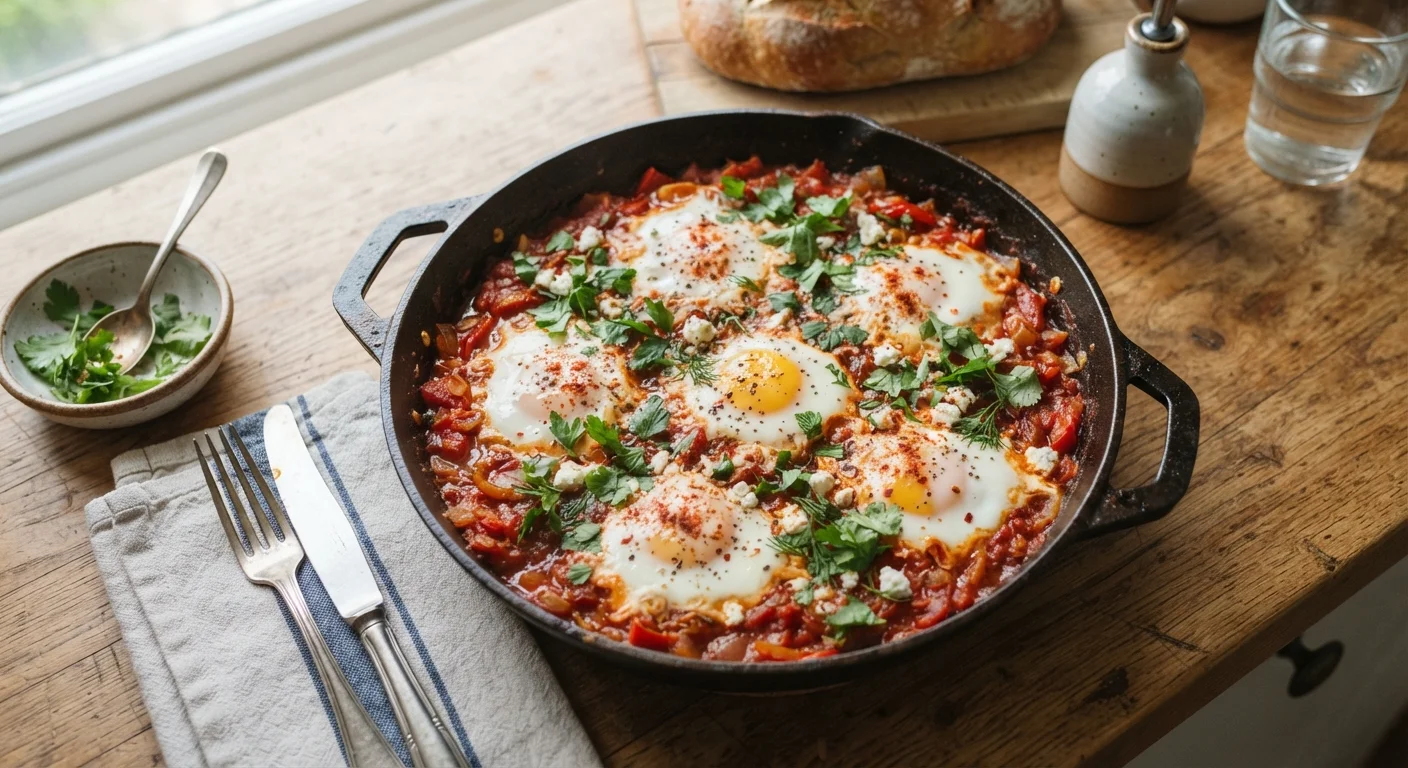
Shakshuka is a North African and Middle Eastern dish in which eggs are gently poached directly in a simmering tomato and pepper sauce. The technique is straightforward: build a flavorful base of sautéed onions, garlic, bell peppers, and crushed tomatoes seasoned with cumin and paprika, then create small wells in the sauce and crack eggs directly into them. Cover the pan and cook on low heat until the whites are set but yolks remain slightly runny.
The key variable is heat. Too high and the bottoms of the eggs will seize before the tops cook through. A gentle simmer - just barely bubbling - gives you control. Use a wide, lidded skillet and check doneness by gently nudging the pan: whites should be opaque and firm, yolks should jiggle slightly.
A barely simmering sauce gives you precise control over egg doneness in shakshuka.
Frittata: The Oven-Finished Open-Face Omelette
A frittata starts on the stovetop and finishes in the oven, producing a thick, firm egg dish that holds its shape when sliced. Whisk eggs with a splash of whole milk or cream, season well, and pour over any sautéed vegetables, cooked proteins, or cheese already in an oven-safe skillet. Cook on medium-low until the edges set, then transfer the entire pan to a 375°F oven for 8-12 minutes until the center is just set.
Unlike a folded French omelette, a frittata is forgiving - it's nearly impossible to overcook the exterior while the center finishes. It serves equally well at dinner, sliced cold from the refrigerator the next day, or packed for lunch. Sturdy add-ins like roasted vegetables, cooked sausage, or wilted greens all work well.
Frittatas are forgiving by design - the oven does the finishing work without risk of burning.
Baked Eggs (Eggs en Cocotte): Individual Oven Portions
Baked eggs - sometimes called oeufs en cocotte in French cooking - involve cracking eggs into small ramekins over a bed of cream, tomato sauce, or sautéed greens, then baking in a water bath until barely set. The water bath (placing ramekins in a baking dish filled with hot water halfway up the sides) moderates the oven's heat and prevents the eggs from turning rubbery.
Bake at 325°F for approximately 12-15 minutes, checking early. The whites should be opaque while the yolk surface appears barely set - carryover heat will finish the job after the ramekins come out. This method is particularly well-suited to single-serving meals and requires almost no active cooking once the oven is hot.
A water bath is the single technique that separates silky baked eggs from rubbery ones.
Egg Fried Rice: High-Heat Technique for Leftover Grains
Egg fried rice works best with day-old cooked rice that has dried out slightly in the refrigerator - fresh rice is too moist and will clump and steam rather than fry. Heat a wide pan or wok over high heat until it begins to smoke lightly, add oil, then add rice and spread it in a single layer. Let it sit undisturbed for 30-45 seconds to develop some crust, then stir.
Push the rice to the edges and scramble eggs in the center, then fold them into the rice before they fully set. Season with soy sauce or tamari, add scallions or any quick-cooking vegetable, and serve immediately. High heat throughout is essential - lowering it at any stage produces a soggy result. This is one of the most efficient uses of leftover grains and takes under 10 minutes from start to finish.
Day-old rice and a genuinely hot pan are the two non-negotiable requirements for good fried rice.
Spanish-Style Tortilla: Slow-Cooked Potato and Egg
The Spanish tortilla (tortilla española) is distinct from both a Mexican tortilla and a frittata. It consists of thinly sliced potatoes and onion cooked slowly in olive oil until completely tender, then combined with beaten eggs and cooked in a skillet over low heat. The defining step is the flip: once the bottom sets, a plate is placed over the pan and the tortilla is inverted, then slid back into the pan to cook the other side.
The slow cooking of the potato filling - which can take 20-25 minutes - is where most of the active work happens. The egg portion cooks in about 5 minutes per side on low heat. The result is dense, creamy, and sliceable at any temperature. Many Spanish households serve it at room temperature, making it useful for meals prepared slightly in advance.
The Spanish tortilla's creamy texture comes from slow-cooked potatoes, not from technique shortcuts.
Steamed Eggs (Chinese-Style): Silken Texture Through Gentle Heat
Chinese steamed eggs (蒸水蛋) are among the most texturally distinctive egg preparations in any cuisine. Eggs are whisked with warm water or stock at roughly a 1:1.5 ratio, strained to remove bubbles, then steamed covered over low to medium-low heat for 10-12 minutes. The result is a silky, custard-like surface that is almost impossibly smooth.
Two details are critical: the liquid temperature should be warm (not cold) before mixing to help proteins relax, and the heat during steaming must stay gentle - boiling steam creates pitting and a spongy texture. A finished dish is seasoned with a small amount of soy sauce and sesame oil drizzled on top. This method is quiet, largely hands-off, and produces something genuinely different from any Western egg preparation.
Gentle steam and warm liquid are what give Chinese steamed eggs their signature silky surface.
Putting It All Together on a Weeknight
The best egg dishes share a common trait: they reward attention to heat more than they reward complex technique. A pan that's too hot will turn a silky baked egg rubbery; a pan that's too cool will leave a frittata pale and dense. Before you begin any of these preparations, it's worth doing a quick kitchen readiness check - having your tools ready and your workspace clear makes the difference between a smooth execution and a stressful one.
Egg-based meals also integrate naturally into a broader meal planning approach. Many of the dishes here - shakshuka, frittatas, egg fried rice - store reasonably well and reheat without major quality loss, making them sensible candidates if you practice sustainable meal prepping habits. And if you're ever tempted to add more steps than necessary, it's worth remembering that egg dishes are exactly the kind of recipe discussed in when home cooks overcomplicate simple dishes - restraint is usually the better instinct.
Start With One Technique, Not Six
Rather than attempting all of these methods at once, pick one dish that matches what's already in your refrigerator and cook it twice in one week. Repetition within a single technique builds more useful skill than variety does. Shakshuka and frittatas are generally the most forgiving starting points for cooks unfamiliar with egg-based main dishes.