

Key Takeaways
Why Most Meal Prep Routines Fail
The most common meal prep failure isn't laziness - it's an unsustainable system built on unrealistic expectations. Many households attempt ambitious all-day cooking sessions after watching highly produced social media content, then find the experience exhausting and quit within a few weeks.
Effective meal prep isn't about filling 30 identical containers every Sunday. It's about reducing decision fatigue and friction on the days when you're least equipped to handle either. The goal is a lighter cognitive load at 6 p.m. on a Tuesday, not culinary achievement on a Sunday afternoon.
Understanding what actually causes burnout - overly complex plans, rigid menus that ignore taste preferences, or sessions that take too long - is the first step toward building something repeatable. See our cooking fundamentals hub for foundational context that supports any prep system.
Meal Prep vs. Batch Cooking
These terms are often used interchangeably, but they describe different approaches. Batch cooking means making large quantities of a single recipe. Meal prepping focuses on preparing individual components - grains, proteins, vegetables - that can be mixed and matched across multiple meals. For busy households, component-based prep typically offers more flexibility and less waste.
The Component Method: Flexibility Over Full Meals
Prepping complete, plated meals in advance sounds efficient but often backfires. Meals that taste good freshly assembled can become soggy, dry, or unappealing after two days in a container. More importantly, the monotony of identical dinners is one of the leading reasons households abandon meal prep entirely.
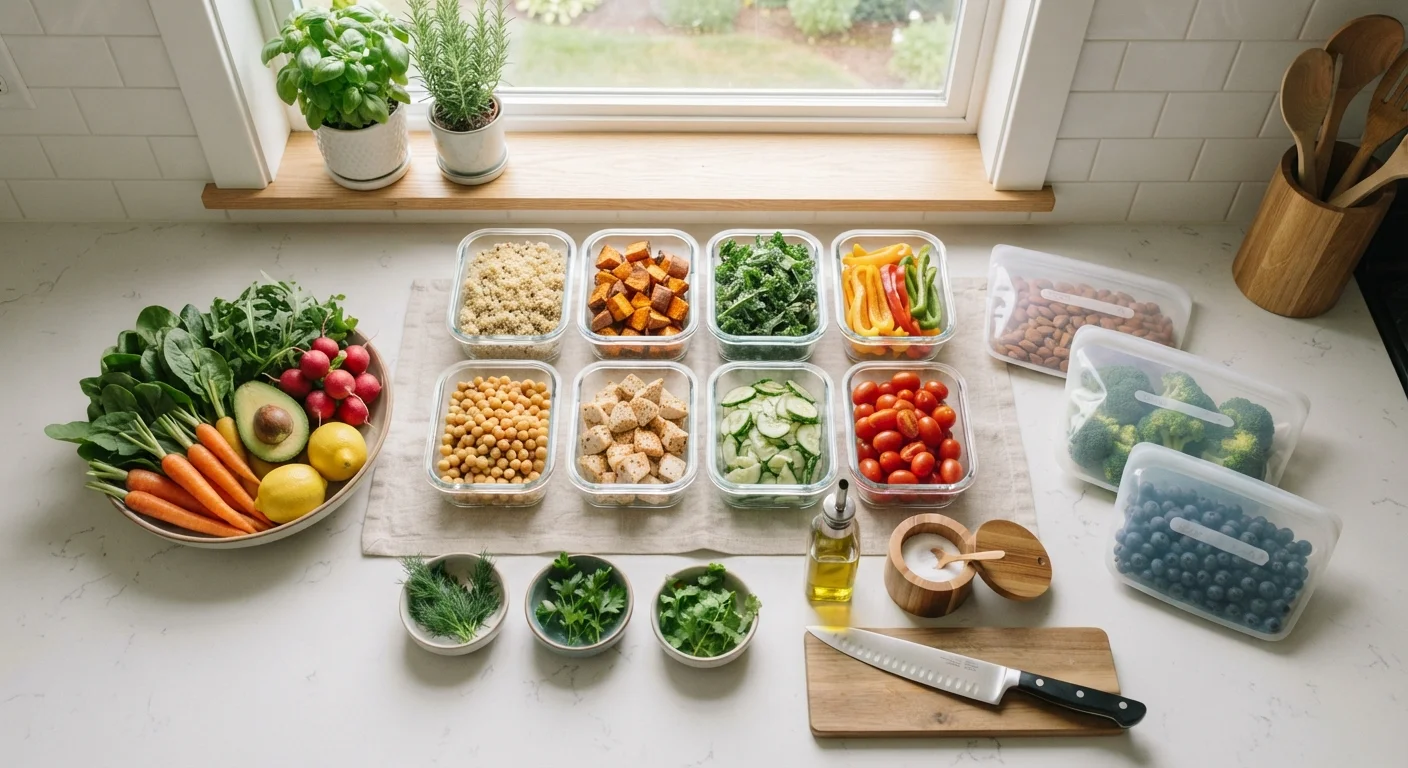
The component approach - cooking proteins, grains, and vegetables separately - solves both problems. It preserves texture, expands variety, and makes it easy to assemble different meals throughout the week without additional cooking. For grain preparation specifically, one-pot grain cooking techniques can handle the bulk of this work with minimal hands-on time.
Prep components, not complete meals, to avoid flavor fatigue.
Eating the same fully assembled dish four nights in a row is a fast path to burnout. When you prep building blocks - a batch of grains, roasted vegetables, a cooked protein - you can mix and match combinations all week. This keeps meals feeling varied without requiring extra cooking time.
Limit your weekly prep session to 60-90 minutes maximum.
Long all-day cooking sessions create a high barrier to entry. A tight time window forces prioritization and keeps the habit approachable enough to repeat. Shorter sessions also fit realistically into family schedules with competing demands.
Label every container with contents and the prep date.
Unlabeled containers contribute directly to food waste: when people cannot identify leftovers quickly, they default to discarding them. A simple label also helps you use older items first, which is a core principle of effective food rotation.
Maintain a core pantry buffer so missed prep days are low-stakes.
Meal prep only works as a sustainable habit when imperfection is survivable. A well-stocked pantry means a skipped prep session doesn't force expensive takeout or a stressful last-minute grocery run. Shelf-stable staples bridge the gap.
Sync your prep complexity to your actual calendar each week.
Treating every week identically ignores reality. A hectic week calls for minimal prep - perhaps just washing produce and hard-boiling eggs. A slower week can support more involved cooking. Matching effort to available time prevents the feast-or-famine cycle that leads to abandoning the habit.
Storage, Labeling, and Reducing Waste
Even well-prepped food gets wasted when storage is disorganized. The refrigerator shelf becomes an archaeological site of mystery containers, and anything unidentifiable gets tossed. A consistent labeling habit - date and contents on every container - costs about ten seconds per item and meaningfully reduces both waste and weeknight hesitation.
Storage order matters too. Keep prepped components at eye level rather than buried behind condiments. Visibility drives use. Airtight glass containers generally maintain food quality better than loosely sealed plastic for most prepped ingredients, though both can work effectively when properly sealed.
For households that want to build prep into a broader routine, the mise en place organizational approach translates naturally from restaurant kitchens to home refrigerators.
Building in Flexibility and Preventing the All-or-Nothing Trap
Sustainable meal prep accommodates the weeks when prep simply doesn't happen. Life intervenes - travel, illness, a packed schedule - and the system needs to survive those gaps without the whole routine collapsing.
Two things protect against this: a stocked pantry and flexible planning. A well-organized pantry of shelf-stable staples functions as a safety net that turns a skipped prep session into a minor inconvenience rather than a meal-planning crisis. Flexible planning means building a loose weekly menu from available components rather than rigid day-by-day assignments that fail the moment one variable changes.
For those connecting meal prep to broader health goals, building nutritionally balanced meals without overcomplicating it offers a practical framework for assembling what you've prepped into genuinely nourishing meals - without rigid rules or calorie-counting.
“The goal of meal preparation should never be perfection - it should be reducing the number of decisions you have to make at the end of a hard day.”
— Food Systems Researcher, University of Minnesota Extension, Extension Food Educator and Researcher
This article provides general food preparation guidance only and is not a substitute for personalized nutritional advice. Consult a registered dietitian for guidance specific to your health needs.