

Key Takeaways
Type 2 Diabetes
Type 2 diabetes is a chronic condition in which the body either doesn't produce enough insulin or doesn't use insulin effectively, causing blood sugar (glucose) levels to remain elevated. Unlike type 1 diabetes, the pancreas still produces insulin - but the body's cells gradually stop responding to it normally. Over time, persistently high blood sugar can damage blood vessels, nerves, and organs.
Type 2 diabetes is characterized by progressive beta-cell dysfunction combined with insulin resistance in peripheral tissues, particularly skeletal muscle, liver, and adipose tissue.
How Healthy Blood Sugar Regulation Works
To understand type 2 diabetes, it helps to first understand what happens in a body without it. When you eat carbohydrates, your digestive system breaks them down into glucose - the primary fuel your cells use for energy. That glucose enters the bloodstream, causing blood sugar levels to rise.
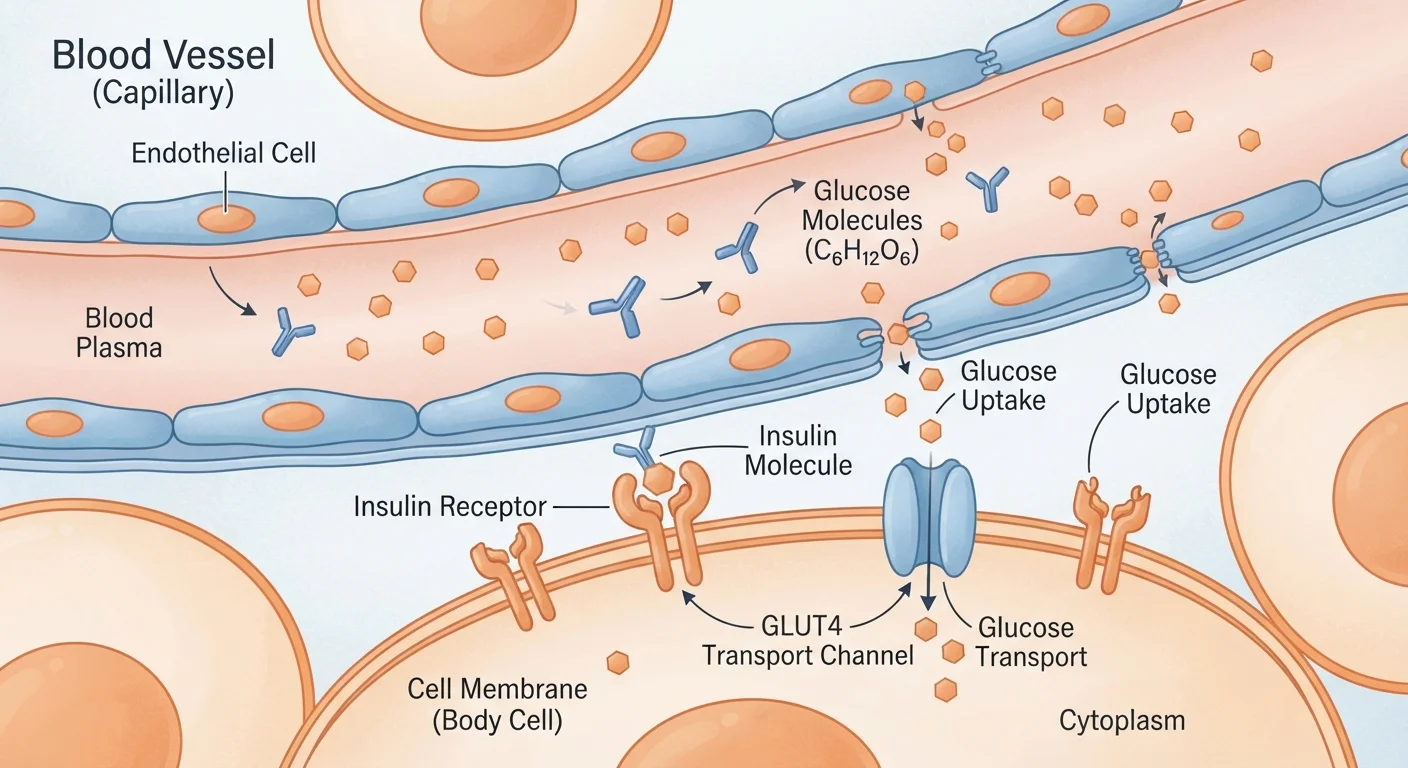
In response, the pancreas releases insulin, a hormone that acts like a key. Insulin binds to receptors on the surface of cells - particularly in muscle, fat, and liver tissue - and signals them to open up and absorb glucose from the blood. As glucose moves into cells, blood sugar levels return to a stable range.
This feedback loop is remarkably precise in a healthy body, keeping blood sugar within a relatively narrow window throughout the day regardless of meals or fasting.
What Goes Wrong: The Development of Insulin Resistance
In type 2 diabetes, this system breaks down - but usually not all at once. The central problem is insulin resistance, a state in which cells become less responsive to insulin's signal. The locks, so to speak, stop working as well as they should.
When cells resist insulin's signal, glucose stays in the bloodstream instead of being absorbed. The pancreas detects this and responds by producing more insulin to compensate. For a period - sometimes years - this overproduction keeps blood sugar relatively normal. But the underlying problem is still worsening.
~38 million
Americans estimated to have diabetes
According to the CDC's National Diabetes Statistics Report, the vast majority of those cases are type 2 diabetes.
~96 million
U.S. adults estimated to have prediabetes
The CDC estimates that more than 1 in 3 American adults have prediabetes, and most are unaware of it.
10-15 years
Typical silent progression before diagnosis
Research suggests insulin resistance can be present for a decade or more before blood sugar rises enough to meet diagnostic criteria for type 2 diabetes.
Eventually, the insulin-producing beta cells of the pancreas can't maintain that compensatory output. Insulin production falls short, and blood sugar begins to rise persistently - which is when type 2 diabetes is typically diagnosed. Understanding how the immune system can affect related processes is explored further in our piece on autoimmune conditions.
Why Persistently High Blood Sugar Is a Problem
Chronically elevated blood glucose affects the body in several interconnected ways. Glucose in excess acts almost like an abrasive in blood vessels - over time, high levels damage the walls of arteries and the tiny capillaries that supply nerves and organs.
This explains why poorly managed type 2 diabetes is associated with complications affecting the kidneys (nephropathy), eyes (retinopathy), nerves (neuropathy), and cardiovascular system. These complications develop gradually and often silently, which is why consistent monitoring and management matter even when someone feels fine.
Early Detection Makes a Difference
Prediabetes - elevated blood sugar that hasn't yet reached diabetic levels - is often reversible with lifestyle changes. Routine fasting glucose or HbA1c testing can detect it years before type 2 diabetes develops. Ask your healthcare provider if screening is appropriate for you, especially if you have risk factors such as a family history of diabetes, excess abdominal weight, or a sedentary lifestyle.
It's also worth noting that high blood sugar impairs immune function, wound healing, and energy metabolism - effects that compound over time when glucose regulation remains disrupted.
Key Factors That Influence Insulin Sensitivity
Insulin sensitivity - how well cells respond to insulin - is not fixed. Several factors meaningfully affect it:
- Physical activity: Muscle contractions increase glucose uptake independently of insulin, and regular exercise improves cells' long-term insulin responsiveness.
- Body fat distribution: Excess fat stored around the abdomen and in the liver is particularly linked to insulin resistance, likely due to the release of inflammatory signaling molecules.
- Diet composition: Diets high in refined carbohydrates and ultra-processed foods can contribute to repeated blood sugar spikes and, over time, worsening resistance.
- Sleep and stress: Poor sleep and chronic stress elevate cortisol, a hormone that raises blood sugar and reduces insulin effectiveness.
- Genetics and family history: Inherited factors influence beta-cell function and how efficiently tissues respond to insulin.
None of these factors alone determines whether someone develops type 2 diabetes, and their interaction is complex. This is why the condition can emerge in people across a wide range of body types and lifestyles.
This article is for general informational and educational purposes only and does not constitute medical advice. If you have concerns about blood sugar, diabetes risk, or any health condition, please consult a qualified healthcare provider.