

Key Takeaways
Start here
What Is an Autoimmune Condition?
Build context
How the Immune System Normally Works
See the range
Common Autoimmune Diseases and Their Targets
Understand why
Causes and Risk Factors
Take action
Diagnosis and Living with an Autoimmune Condition
What Is an Autoimmune Condition?
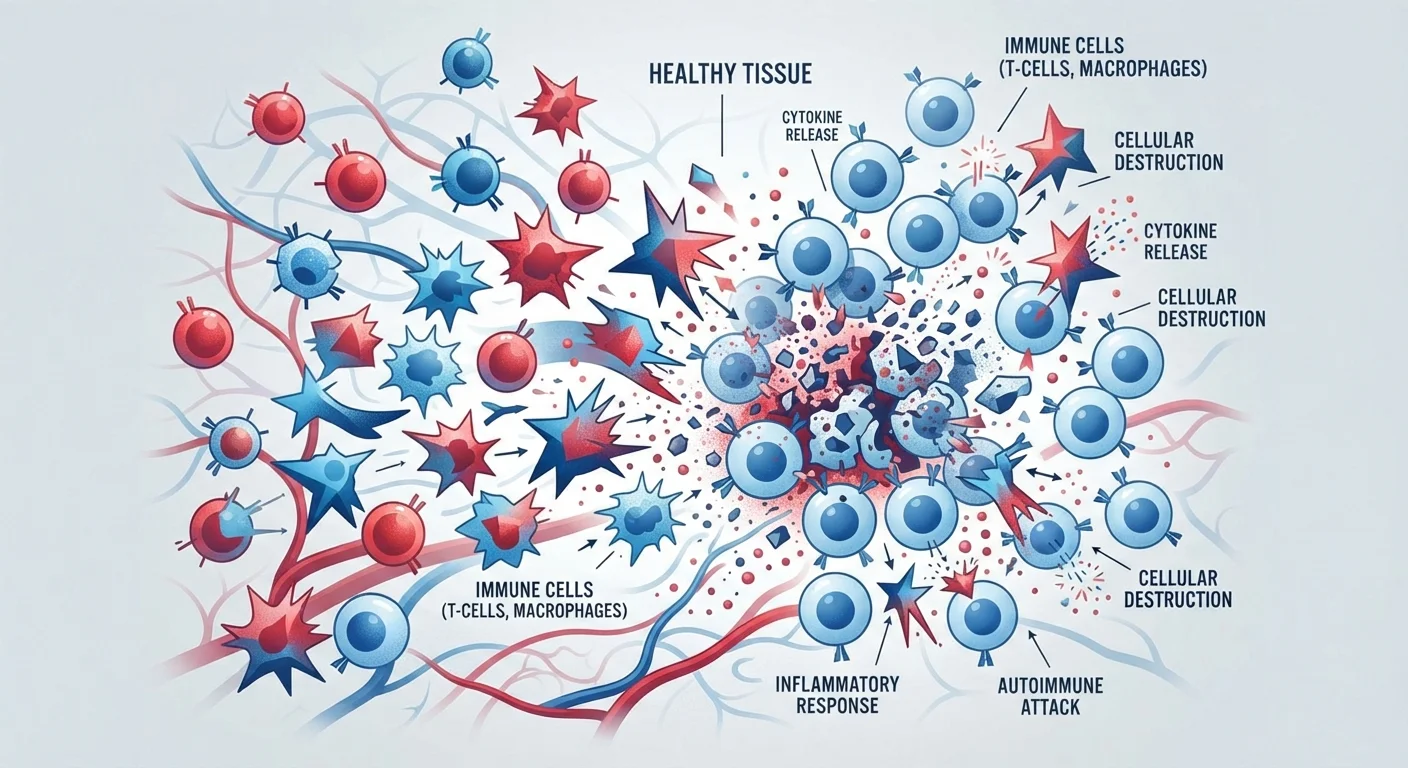
The immune system's primary job is to protect you - identifying threats like bacteria, viruses, and damaged cells, then neutralizing them. In an autoimmune condition, this surveillance system misfires. Instead of targeting genuine threats, it mounts an attack against healthy tissue, organs, or cells that belong to the body itself.
More than 80 distinct autoimmune diseases have been identified, ranging from well-known conditions like rheumatoid arthritis and type 1 diabetes to less familiar ones like myasthenia gravis and primary biliary cholangitis. Despite their differences in symptoms and affected organs, they share this fundamental mechanism: the immune system confuses self with non-self.
Chronic inflammation is almost always involved, as the immune system's sustained attack generates ongoing inflammatory responses in affected tissues.
Autoimmunity
A state in which the immune system mistakenly recognizes the body's own cells or tissues as foreign threats and attacks them.
Self-tolerance
The immune system's learned ability to distinguish the body's own proteins from foreign ones, preventing it from attacking healthy tissue.
Antigen
Any molecule that the immune system can recognize and respond to. In autoimmune disease, self-antigens - the body's own proteins - trigger an unwarranted immune response.
Autoantibody
An antibody produced by the immune system that mistakenly targets the body's own proteins or tissues instead of foreign invaders.
Flare
A period during which autoimmune symptoms worsen or become more active, often alternating with periods of reduced symptoms called remission.
Immunosuppressant
A category of medication that reduces or dampens immune system activity, commonly used to manage autoimmune conditions and prevent further tissue damage.
How the Immune System Normally Works
To understand what goes wrong in autoimmune disease, it helps to understand what goes right. The immune system has two main branches: the innate immune system, which responds rapidly and non-specifically to threats, and the adaptive immune system, which learns to recognize specific pathogens and builds targeted responses over time.
Central to the adaptive system are T cells and B cells - white blood cells that learn to distinguish the body's own proteins (called self-antigens) from foreign ones. During development, the immune system undergoes a kind of editing process to eliminate cells that react strongly to self-antigens. This self-tolerance mechanism is what breaks down in autoimmune disease.
When self-tolerance fails, immune cells that should have been deactivated remain active and begin attacking healthy tissue. The result is persistent inflammation, tissue damage, and the range of symptoms that characterize each specific condition. Rheumatoid arthritis, for example, results from immune cells attacking the lining of joints.
Keep a Symptom Journal Early On
If you're in the process of seeking a diagnosis, tracking your symptoms - including timing, severity, and potential triggers - can be invaluable for your healthcare provider. Many autoimmune conditions fluctuate, and a written record helps paint a clearer picture than memory alone. Note energy levels, joint changes, skin reactions, and anything that seems to precede flares.
Common Autoimmune Diseases and Their Targets
Autoimmune conditions are often categorized by the tissue or organ system they primarily affect:
- Joints and connective tissue: Rheumatoid arthritis, lupus (systemic lupus erythematosus), Sjögren's syndrome
- Thyroid gland: Hashimoto's thyroiditis, Graves' disease - for a closer look, see thyroid conditions explained
- Gastrointestinal tract: Crohn's disease, ulcerative colitis, celiac disease
- Nervous system: Multiple sclerosis, Guillain-Barré syndrome
- Skin: Psoriasis, vitiligo, dermatomyositis
- Pancreas and metabolism: Type 1 diabetes, where immune cells destroy insulin-producing beta cells
It's worth noting that some conditions, like type 2 diabetes, involve immune and inflammatory pathways but are not classified as autoimmune. See what's actually happening in type 2 diabetes for a clear comparison.
Systemic vs. Organ-Specific Conditions
Some autoimmune conditions, like systemic lupus erythematosus (SLE), affect multiple organ systems simultaneously. Others, like Hashimoto's thyroiditis, target a single organ. This distinction influences how conditions are diagnosed and which specialists are typically involved in care. Neither type is inherently more serious - severity depends on the individual case and how it is managed.
Causes and Risk Factors
No single cause explains autoimmune disease. Current research points to a combination of genetic predisposition and environmental or lifestyle triggers that together push the immune system past a threshold.
Established risk factors include:
- Sex: Approximately 80% of autoimmune disease diagnoses occur in women. Hormonal differences, particularly estrogen's influence on immune cell behavior, are thought to play a role.
- Genetics: Many autoimmune conditions cluster in families, suggesting inherited susceptibility genes. However, genes alone are rarely sufficient - environmental factors are also needed.
- Infections: Certain viral or bacterial infections may trigger autoimmune responses in genetically susceptible people, a phenomenon sometimes called molecular mimicry, where immune cells trained against a pathogen mistakenly attack similar-looking self-proteins.
- Gut microbiome health: Emerging research links gut microbiome diversity to immune regulation, with dysbiosis (microbial imbalance) appearing in several autoimmune conditions.
- Environmental exposures: Smoking, UV light, and certain chemical exposures have been associated with increased risk for specific conditions like lupus and rheumatoid arthritis.
Stress is also recognized as a potential contributor to flares once a condition is established, though its role in initial disease development is less clear.
Don't Self-Diagnose Based on Symptoms Alone
Autoimmune symptoms like fatigue, joint pain, and brain fog overlap with dozens of other conditions, many of which are not autoimmune. Attempting to self-diagnose - or self-treat - based on online information alone can delay accurate care and, in some cases, cause harm. A structured evaluation by a healthcare provider is the necessary first step.
Diagnosis and Living with an Autoimmune Condition
Diagnosing autoimmune conditions can be a lengthy process. Many share overlapping symptoms - fatigue, joint pain, skin changes, and brain fog - and standard lab tests don't always give clear answers early on. Blood panels such as the antinuclear antibody (ANA) test, erythrocyte sedimentation rate (ESR), and C-reactive protein (CRP) provide clues, but results must be interpreted alongside clinical history and specialist evaluation.
Rheumatologists, neurologists, endocrinologists, and gastroenterologists are among the specialists who manage different autoimmune conditions. Reaching the right specialist is a critical step toward accurate diagnosis and effective treatment.
Treatment approaches vary widely depending on the condition but commonly include medications that modulate or suppress immune activity, physical therapy, and lifestyle strategies. For many people, understanding personal triggers - stress, sleep disruption, certain foods - becomes part of sustainable long-term management. Consistent movement, adequate rest, and a nutritious diet are frequently emphasized as supportive habits, though they complement rather than replace medical treatment.
Living with a chronic autoimmune condition is demanding, but many people achieve meaningful symptom control with proper care. The key is ongoing collaboration with a qualified healthcare team and a willingness to adapt as the condition evolves.
This article is intended for general health education only and does not constitute medical advice. If you have concerns about autoimmune symptoms or a related diagnosis, consult a licensed healthcare provider for guidance tailored to your situation.
American Autoimmune Related Diseases Association (AARDA)
AARDA is a nonprofit organization providing patient education, research updates, and community resources across more than 100 autoimmune conditions. A reliable starting point for newly diagnosed individuals and caregivers.
National Institute of Allergy and Infectious Diseases (NIAID) - Autoimmune Research
The NIAID publishes accessible, evidence-based overviews of autoimmune disease mechanisms, ongoing research, and clinical trials. Useful for readers who want a deeper scientific grounding.