

Key Takeaways
The Stress-Sleep Loop
The stress-sleep loop is a self-reinforcing cycle in which psychological or physiological stress disrupts sleep quality, and poor sleep in turn lowers the body's ability to regulate stress hormones and emotional responses. Each night of insufficient sleep makes the next stressful day harder to manage, which then makes the following night harder to sleep through. The cycle can persist and deepen without deliberate intervention.
At its core, the loop involves the hypothalamic-pituitary-adrenal (HPA) axis — the system governing cortisol release — and sleep architecture, particularly the slow-wave and REM stages most important for emotional memory consolidation and hormonal recovery.
How Stress Keeps the Brain Awake
When the brain perceives a threat — whether it's a looming work deadline or an unresolved conflict — the hypothalamic-pituitary-adrenal (HPA) axis activates and releases cortisol. Cortisol is not inherently harmful; it's an essential alerting hormone that mobilizes energy and sharpens focus. The problem arises when cortisol levels remain elevated into the evening, overriding the natural decline in core body temperature and the rise in melatonin that signal the body it's time to sleep.
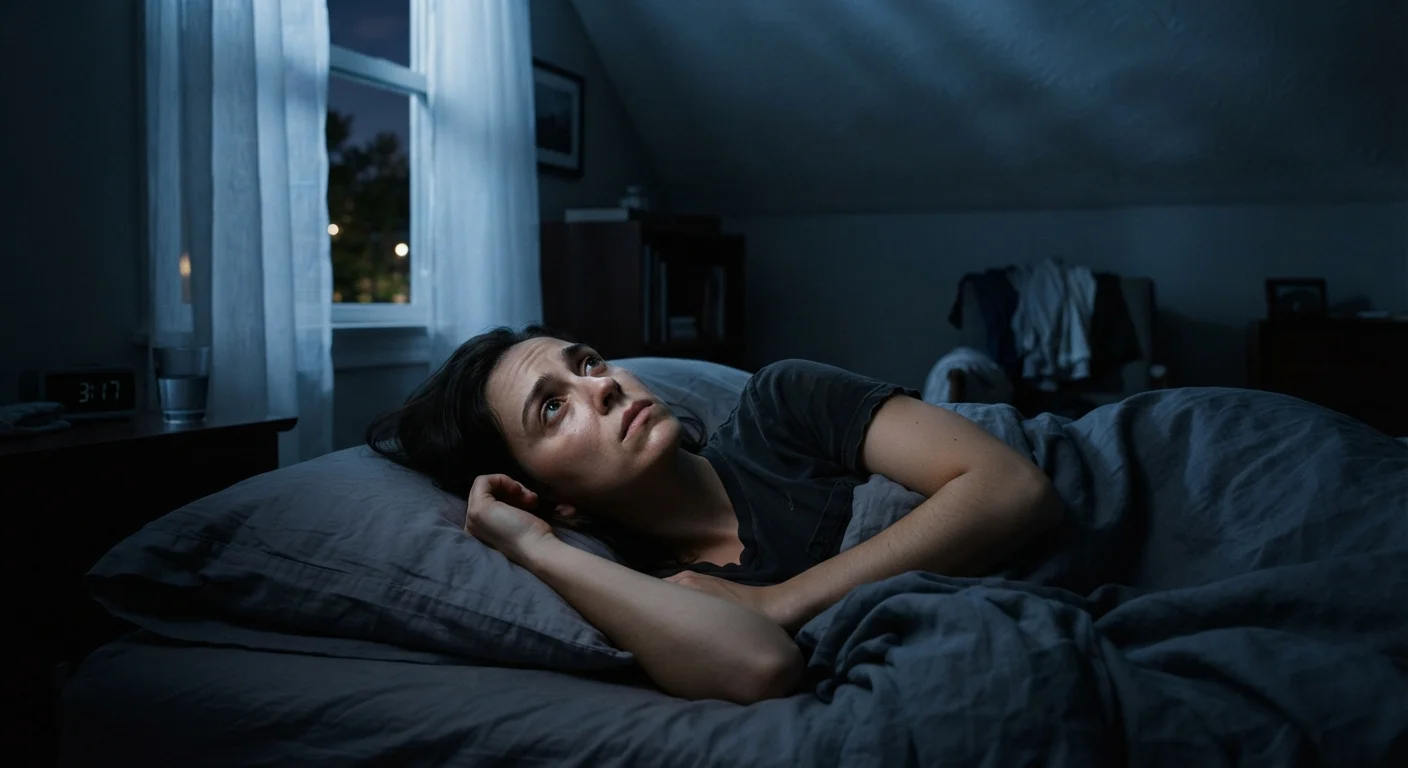
Simultaneously, the amygdala — the brain's threat-detection hub — becomes hyperactive under stress. Racing thoughts, intrusive worries, and that frustrating sense of being "tired but wired" are all downstream effects of this heightened arousal state. To understand the broader physiological picture of what stress does to the body beyond bedtime, see our detailed look at chronic stress and the body.
Cortisol Follows a Natural Daily Rhythm
Cortisol levels are naturally highest shortly after waking — a pattern called the cortisol awakening response — and should decline across the day, reaching their lowest point around midnight. Chronic stress can flatten or distort this curve, keeping evening cortisol elevated when it should be falling. Recognizing that some morning alertness from cortisol is normal may reduce anxiety about the hormone itself.
How Poor Sleep Feeds Back Into Stress
The feedback mechanism runs in both directions. Sleep — particularly slow-wave (deep) sleep and REM sleep — is the brain's primary opportunity to process emotional memories, clear metabolic byproducts, and restore hormonal balance. When sleep is cut short or fragmented, the prefrontal cortex, which governs rational thought and emotional regulation, becomes less effective.
Studies using neuroimaging have shown that sleep-deprived subjects show significantly greater amygdala reactivity to negative stimuli compared with well-rested counterparts. In practical terms: the same stressful situation genuinely feels more threatening after a poor night's sleep, not because the situation has changed, but because the brain's capacity to put it in perspective has been temporarily impaired. This is why the loop can intensify over consecutive nights — each night of poor sleep lowers the threshold for perceived stress the following day.
~60%
Adults reporting stress-related sleep disruption
The American Psychological Association's Stress in America surveys have consistently found that a majority of U.S. adults cite stress as a factor in their sleep difficulties.
60%
Greater amygdala reactivity after sleep deprivation
A landmark neuroimaging study published in Current Biology found that sleep-deprived participants showed significantly amplified amygdala responses to negative emotional stimuli compared to rested controls.
70–80%
Insomnia improvement rate with CBT-I
Research cited by the American Academy of Sleep Medicine indicates that cognitive behavioral therapy for insomnia produces meaningful improvements in the majority of patients who complete a full course.
Evidence-Informed Ways to Interrupt the Cycle
Breaking the loop typically means addressing both sides simultaneously — reducing physiological arousal at night and building stress-regulation habits during the day.
Structured Wind-Down Routines
Consistency in pre-sleep behavior signals the nervous system that alertness is no longer required. A reliable transition period — typically 30 to 60 minutes before bed — that avoids stimulating inputs (bright screens, work emails, news) helps facilitate the cortisol decline needed for sleep onset. For a step-by-step framework, our guide on building a wind-down routine that actually sticks covers the evidence-informed steps in detail.
Breath-Based Nervous System Regulation
Slow, diaphragmatic breathing — particularly exhales longer than inhales — activates the parasympathetic nervous system, which directly counteracts the HPA-axis arousal driving the loop. Techniques such as 4-7-8 breathing or box breathing have documented support in reducing pre-sleep anxiety. Our article comparing mindfulness meditation vs. deep breathing explores which approach may suit different situations.
Cognitive Behavioral Therapy for Insomnia (CBT-I)
CBT-I is considered a first-line treatment for chronic insomnia by several major medical bodies. It addresses the thought patterns and behaviors — like spending excessive time in bed or clock-watching — that perpetuate the loop, without the side effects associated with sleep medications. A qualified therapist or structured digital program can guide this process.
Try 'Worry Time' to Contain Rumination
If racing thoughts at bedtime are a persistent problem, consider scheduling a dedicated 15-minute 'worry period' earlier in the evening — write down concerns and any actionable next steps, then consciously set them aside. Research on stimulus control techniques suggests this boundary-setting can reduce the intrusive thinking that delays sleep onset. It works best when practiced consistently rather than used only on particularly stressful nights.
When the Loop Becomes Something More
For many people, the stress-sleep loop is situational and resolves as stressors ease. But when disrupted sleep persists for more than a few weeks — especially when accompanied by low mood, difficulty concentrating, or physical symptoms — it may indicate an underlying condition such as chronic insomnia or an anxiety disorder that warrants professional evaluation.
Sleep disorders like insomnia and sleep apnea have documented associations with stress-related health outcomes. Our article on sleep disorders and their connection to physical health provides a broader look at how disrupted sleep intersects with cardiovascular and metabolic conditions. Likewise, a foundational review of sleep hygiene and why it matters can clarify which behavioral habits hold up best under scientific scrutiny.
This article is for general informational and educational purposes only and is not a substitute for professional medical advice, diagnosis, or treatment. If you are experiencing persistent sleep problems or significant stress, please consult a qualified healthcare provider.