

Key Takeaways
Option A
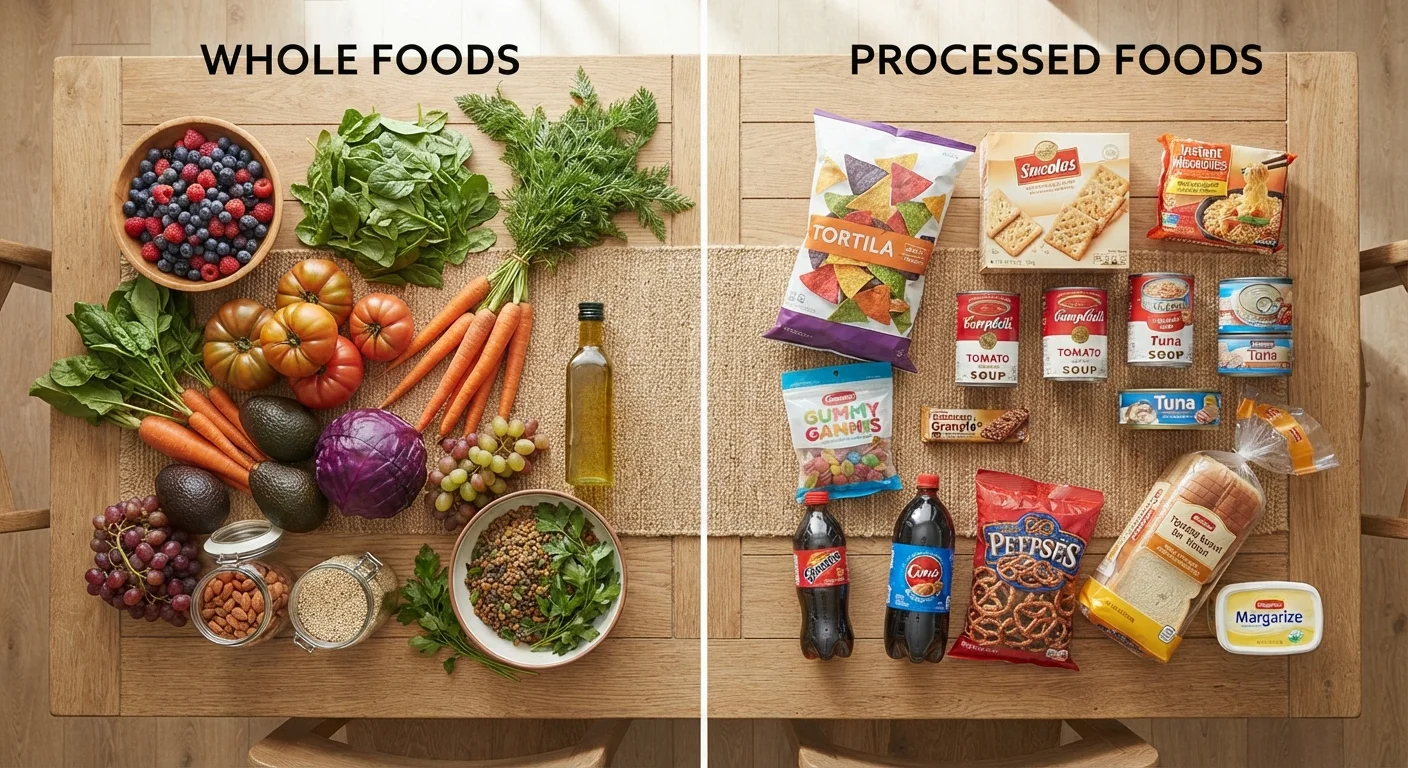
Whole Foods
Minimally altered, nutrient-dense foods as nature produced them.
Best for: People seeking maximum micronutrient density, fiber, and minimal additives in their diet.
Option B
Processed Foods
Convenient, shelf-stable foods shaped by industrial or kitchen preparation.
Best for: People prioritizing convenience, affordability, and longer shelf life, especially in busy households.
If you want to maximize fiber, vitamins, and phytonutrients
Whole Foods
Whole foods preserve the full nutritional matrix of plants and animals, including fiber and micronutrients that are often stripped or degraded during heavy processing.
If convenience and shelf life are your primary constraints
Processed Foods
Minimally to moderately processed foods like canned beans, frozen vegetables, or plain yogurt offer workable nutrition with far greater convenience for busy schedules.
If you are managing sodium or added sugar intake
Whole Foods
Whole foods contain negligible added sodium or sugar; heavily processed options frequently contribute significant amounts of both, making label-reading essential.
If you want a practical everyday diet without strict rules
Whole Foods
Centering meals on whole foods while allowing occasional processed items reflects most mainstream dietary guidance and is sustainable for most adults.
What Do 'Whole' and 'Processed' Actually Mean?
The term whole foods refers to foods that are consumed in or very close to their natural state — think fresh vegetables, fruits, legumes, whole grains, eggs, and unprocessed meat or fish. They haven't been substantially altered by industrial manufacturing. Processing, by contrast, describes any deliberate change to a food before it reaches your plate — from washing and cutting to canning, fermenting, or adding preservatives.
Nutritional researchers often use the NOVA classification system, which organizes foods into four groups based on the degree and purpose of processing: unprocessed or minimally processed foods; processed culinary ingredients (like oils and flours); processed foods (canned goods, cheese, cured meats); and ultra-processed foods (soft drinks, packaged snacks, reconstituted meat products). This framework is useful because lumping all processed foods together obscures meaningful nutritional differences. A can of plain chickpeas and a bag of cheese-flavored corn puffs are both technically processed — yet they are nutritionally worlds apart.
For a foundational look at how macronutrients and micronutrients function in your body, see our guide to nutrition fundamentals.
What Happens to Nutrients During Processing?
The nutritional impact of processing depends heavily on the method and degree involved. Some changes are minimal or even beneficial; others strip foods of key compounds.
Losses to Watch For
- Water-soluble vitamins — Vitamin C and B vitamins are heat-sensitive and can be significantly reduced by cooking, canning, or pasteurization.
- Dietary fiber — Refining whole grains into white flour removes the bran and germ, substantially reducing fiber content.
- Phytonutrients — Beneficial plant compounds such as polyphenols can degrade with prolonged heat or chemical treatment.
Additions That Raise Concern
- Added sugars — Ultra-processed foods are a primary source of added sugars in the US diet, which most dietary guidelines recommend limiting.
- Sodium — Preservation and flavoring in packaged foods frequently involves high sodium levels.
- Refined fats and oils — Industrial processing may introduce partially hydrogenated oils or high ratios of omega-6 fatty acids.
Not every form of processing is harmful, though. Fermentation, for example, can enhance nutrient bioavailability and introduce beneficial microorganisms. Freezing vegetables shortly after harvest can preserve vitamins at levels comparable to — or even surpassing — those in "fresh" produce that has spent days in transit. For a detailed comparison, see our analysis of fresh, frozen, and canned vegetables.
| Criterion | Whole Foods | Processed Foods |
|---|---|---|
| Fiber content | Generally high (retained) | Often reduced or absent |
| Vitamin & mineral density | High; naturally occurring | Variable; may be fortified |
| Added sugars | None | Frequently present in ultra-processed |
| Sodium | Naturally low | Often elevated for preservation |
| Shelf life | Short; requires refrigeration | Extended; stable at room temperature |
| Cost & accessibility | Can be higher cost; seasonal | Often lower cost; widely available |
| Preparation time | Typically requires cooking | Often ready to eat or quick to prepare |
| Phytonutrient content | Rich and diverse | Reduced by heat and processing |
Reading Labels and Making Practical Choices
Few people eat exclusively whole foods or entirely processed diets — real eating patterns exist on a continuum. Understanding how to navigate labels makes a meaningful difference in where your diet lands on that spectrum.
When evaluating a processed food, a few practical signals are worth examining:
- Ingredient list length — A shorter list with recognizable ingredients generally indicates less processing.
- Added sugars — The Nutrition Facts panel now distinguishes added sugars from total sugars, making it easier to spot significant additions.
- Sodium per serving — Foods with more than 20% of the Daily Value for sodium per serving are considered high-sodium by FDA standards.
- Whole grain claims — Labels can be misleading; our breakdown of whole grain labeling explains what these claims actually require.
~58%
US calories from ultra-processed foods
Research published in BMJ Open estimated that ultra-processed foods account for roughly 58% of daily caloric intake in the average US diet.
2–3×
Higher added sugar in ultra-processed foods
Studies have consistently found that ultra-processed foods deliver disproportionately more added sugars compared to minimally processed dietary patterns.
25–30%
Fiber reduction in refined grains vs. whole grains
Milling whole wheat into refined white flour removes the bran and germ, eliminating most of the grain's dietary fiber and many B vitamins.
Building meals around whole-food anchors — a grain, a vegetable, a protein source — and then filling in with minimally processed items when needed is a practical strategy that aligns with mainstream dietary guidance. For a structured but flexible approach, see our guide to building a balanced meal.
Processing Is Not Always the Enemy
Plain frozen vegetables, canned legumes with no added salt, and fermented dairy products like plain yogurt are all technically processed — yet they contribute meaningfully to a healthy diet. The NOVA classification and nutrition labels together offer more nuanced guidance than simply avoiding anything in a package. Focus on the degree of processing and the ingredient profile rather than applying a blanket rule.
This article is for general informational and educational purposes only and does not constitute medical or dietary advice. Consult a qualified healthcare professional or registered dietitian for guidance tailored to your individual health needs.