

Key Takeaways
Our Verdict
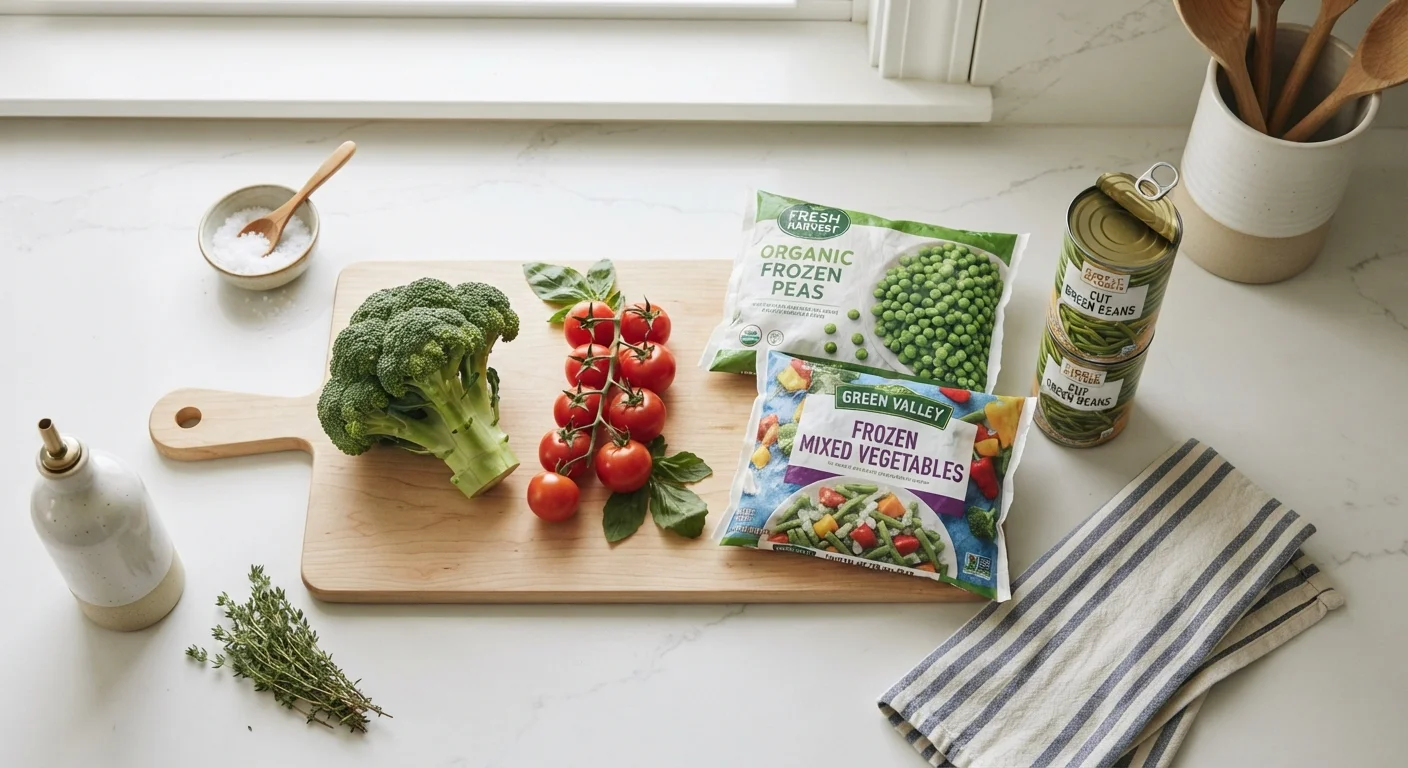
No single form of vegetable is nutritionally superior in every circumstance. Frozen tends to retain vitamins well, fresh excels when truly local and just-harvested, and canned provides reliable, affordable accessibility year-round. The practical winner is whichever option fits your schedule, budget, and cooking habits.
| Best for | Recommended |
|---|---|
| Maximum vitamin retention with minimal planning | Frozen vegetables |
| Peak flavor and texture in season | Fresh vegetables |
| Long shelf life and cost-conscious cooking | Canned vegetables |
| Everyday balanced meals without overthinking form | A mix of all three |
What Happens to Nutrients During Processing
Understanding how each form of vegetable is produced helps explain the nutritional differences. Fresh vegetables are harvested and sold without further processing, but "fresh" at a supermarket can mean days or weeks of cold storage and cross-country transport. During that time, water-soluble vitamins - particularly vitamin C and folate - degrade steadily through exposure to light, heat, and air.
Frozen vegetables are typically blanched (briefly heat-treated) and flash-frozen within hours of harvest, which halts enzyme activity and locks in most nutrients. Research published in peer-reviewed journals has shown that frozen vegetables often match or exceed fresh supermarket produce in vitamin C content, precisely because of this rapid processing. Some water-soluble vitamins are partially lost during blanching, but the overall nutritional profile remains strong.
Canned vegetables undergo heat processing at higher temperatures to ensure shelf stability. Heat-sensitive vitamins like vitamin C and thiamine see the largest reductions. However, fat-soluble nutrients such as vitamins A and K, along with some antioxidants like lycopene in tomatoes, can become more bioavailable after heat processing. For a deeper look at how processing broadly affects food nutrition, see Whole Foods vs. Processed Foods: Understanding the Nutritional Trade-Offs.
| Fresh | Frozen | Canned | |
|---|---|---|---|
| Vitamin C retention | High if very fresh; declines with storage | High - preserved by flash-freezing | Moderate to low after heat processing |
| Fat-soluble vitamins (A, K) | Good | Good | Good; some bioavailability may increase |
| Fiber content | Intact | Intact | Largely intact |
| Mineral content | Good | Good | Good |
| Sodium | None added | Typically none added | Often added; low-sodium options exist |
| Shelf life | Days to 1-2 weeks | Months to over a year | 1-5 years |
| Cost and accessibility | Variable; seasonal pricing | Consistent year-round pricing | Generally lowest cost |
Fiber and Minerals: The Stable Nutrients
Not every nutrient is equally vulnerable to processing. Dietary fiber, which comes from the plant cell walls themselves, remains largely intact whether a vegetable is fresh, frozen, or canned. The same holds for most minerals - calcium, iron, potassium, and magnesium are retained well across all three forms because they are not degraded by heat or oxidation the way vitamins are.
This is meaningful context for everyday nutrition decisions. If your primary concern is fiber intake or mineral content, choosing between forms matters far less than simply eating more vegetables in whichever form you prefer. For foundational guidance on how fiber, vitamins, and minerals function in the diet, Understanding Nutrition From the Ground Up covers these basics clearly.
~40%
Sodium reduction from rinsing canned vegetables
Food science studies estimate that draining and rinsing canned vegetables removes roughly 30-40% of added sodium.
Up to 77%
Vitamin C lost in fresh spinach after storage
Research has found that spinach stored at refrigerator temperature can lose a substantial proportion of its vitamin C within seven days.
Sodium in Canned Vegetables: What to Know
The most practical nutritional concern with canned vegetables is added sodium, which is used as a preservative and flavor enhancer. A standard serving of canned green beans, for instance, can contain 300-400 mg of sodium - a meaningful amount relative to general dietary guidance. Low-sodium and no-salt-added canned options are widely available and address this concern without sacrificing convenience.
For those using standard canned varieties, draining and rinsing the vegetables under water before cooking can reduce sodium content by roughly 30-40%, according to food science research. Understanding how to read sodium figures on labels - including what "low sodium" legally means - is covered in detail in our guide to sodium on nutrition labels.
Watch for Hidden Sodium in Canned Products
Standard canned vegetables can be a significant source of added sodium that's easy to overlook, particularly when multiple canned ingredients appear in a single dish. Always check the Nutrition Facts panel and compare servings across brands. Choosing no-salt-added varieties is the simplest way to control sodium without sacrificing convenience.
Making Smart Choices Across All Three Forms
The most evidence-aligned takeaway is that consistent vegetable consumption matters more than the form it takes. A household that keeps frozen peas and canned tomatoes on hand will almost certainly eat more vegetables than one waiting only for peak-season farmers market finds.
Practical strategies that align with nutrition research include: choosing frozen for out-of-season produce, selecting no-salt-added canned options when possible, and using fresh vegetables quickly after purchase rather than storing them for extended periods. Mixing forms throughout the week is a reasonable, low-stress approach.
For help building meals that incorporate vegetables across forms, Building a Nutritionally Balanced Meal Without Overcomplicating It offers a practical framework without rigid rules. The broader principles of smart cooking at home are also explored through our Cooking Basics hub.
This article is for general informational purposes only and does not constitute medical or dietary advice. Consult a registered dietitian or qualified healthcare professional for guidance tailored to your individual health needs.