

Key Takeaways
Standard Lease Agreement
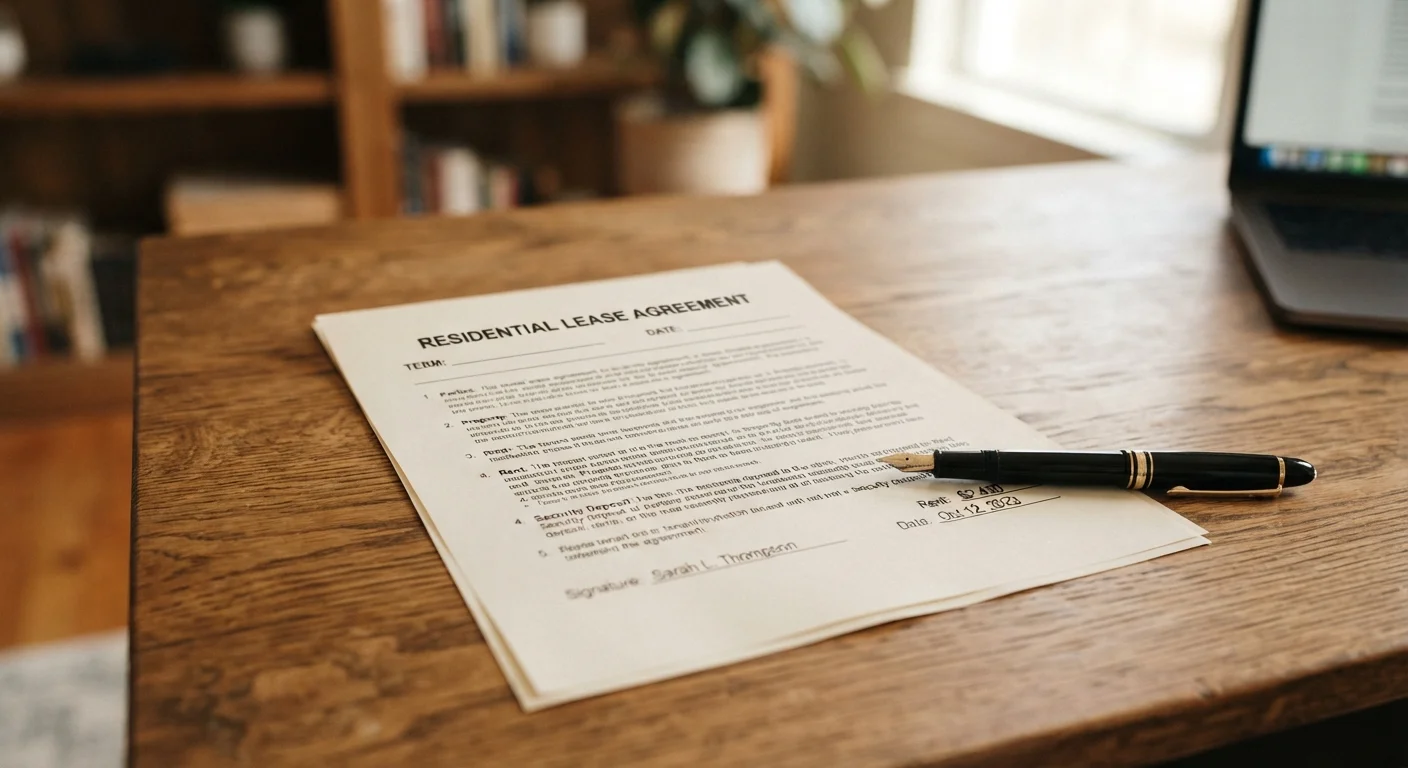
A standard lease agreement is a legally binding contract between a landlord and tenant that sets out the terms of renting a residential property. It specifies rent amount, payment due dates, the length of the tenancy, rules for the property, and the rights and responsibilities of both parties. Signing it creates enforceable obligations—so understanding every clause before you sign is essential.
Lease agreements are governed by state and local landlord-tenant law, which can override or supplement individual lease provisions. A clause that violates applicable law is generally unenforceable, even if both parties signed it.
The Parties, the Property, and the Term
Every lease opens with foundational information: the full legal names of all tenants and the landlord (or property management company), the exact address of the rental unit, and the lease term. The lease term defines the tenancy type—most commonly a fixed-term (typically 12 months) or month-to-month arrangement. For a comparison of how these differ in cost and flexibility, see month-to-month vs. annual lease trade-offs.
Pay attention to the exact start and end dates. The lease is enforceable from the start date even if you haven't moved in yet. Listing all adult occupants matters too—anyone not named may not have the legal right to live there.
Rent, Late Fees, and Payment Terms
This section specifies the monthly rent amount, the due date (typically the 1st of the month), acceptable payment methods, and the grace period—if any—before a late fee applies. Late fees must be reasonable and, in many states, are capped by law. Common caps range from $25 to 10% of monthly rent, depending on jurisdiction.
Look for clauses about returned-check fees and rent increases. A fixed-term lease usually locks in rent for the full term; a month-to-month arrangement may allow increases with proper notice. Understanding these mechanics now helps when the time comes for renewal—see our article on lease renewal and rent increases for what to expect.
30–60 days
Typical notice period required to vacate
Most standard residential leases in the US require written notice of 30 to 60 days before move-out, regardless of whether the lease term has ended.
14–30 days
Common security deposit return window
State laws across the US most commonly require landlords to return security deposits within 14 to 30 days of a tenant vacating the property.
1–2 months
Typical maximum security deposit allowed
Many states cap security deposits at one to two months' rent, though the specific limit varies by jurisdiction and sometimes by unit type.
Security Deposit: What It Covers and How You Get It Back
The security deposit clause outlines the deposit amount, what it may be used for (unpaid rent, damages beyond normal wear and tear), and the timeline for its return after move-out. Normal wear and tear—minor scuffs, small nail holes, carpet wear from regular use—cannot legally be deducted in most states. Damage like broken fixtures, large stains, or unauthorized alterations can be.
State law governs the maximum deposit amount (often one to two months' rent) and the deadline for return—typically 14 to 30 days after you surrender the keys. Landlords who miss this deadline may forfeit the right to make deductions or face penalties. Document the unit's condition at move-in with dated photos.
Document Everything at Move-In
Conduct a written walk-through inspection with your landlord before or on move-in day. Note any existing damage on a move-in checklist, take dated photos, and keep a copy. This documentation is your primary defense if the landlord later attempts to deduct pre-existing damage from your deposit.
Maintenance, Repairs, and Landlord Entry
Leases divide maintenance responsibilities between landlord and tenant. Landlords are generally required to maintain the property in a habitable condition—functioning heat, plumbing, and structural safety. Tenants are typically responsible for keeping the unit clean, disposing of trash properly, and reporting damage promptly.
The entry clause specifies how much notice a landlord must give before entering the unit. Most states require at least 24 hours' written notice except in emergencies. A lease that gives the landlord unrestricted access rights may conflict with state law. For a full overview of your legal protections, tenant rights every renter should know covers the core protections that apply in most states.
“A lease is not just a formality—it is the governing document of the entire landlord-tenant relationship. Tenants who read and understand it are far better positioned to protect themselves when disputes arise.”
— National Housing Law Project, Nonprofit legal organization focused on housing rights for low-income Americans
Subletting, Guests, and Occupancy Rules
Most leases restrict or prohibit subletting—renting your unit to another person—without written landlord approval. Violating a no-subletting clause can be grounds for eviction. If subletting may be relevant (e.g., for extended travel), negotiate this before signing.
Guest policies define how long a visitor may stay before being considered an unauthorized occupant, commonly 7 to 14 consecutive days or a set number of days per month. Occupancy limits may also appear, often tied to local housing codes. These clauses exist to manage liability and property use, but should not be used to discriminate against families with children, which is prohibited under the Fair Housing Act.
Termination, Notice Periods, and Early Exit
The termination clause explains how either party can end the tenancy. For fixed-term leases, it specifies what happens at expiration—whether the lease auto-renews, converts to month-to-month, or simply ends. Notice requirements are usually 30 to 60 days and apply to both landlords and tenants.
Early termination clauses outline the financial consequences of breaking the lease before the end date—often two months' rent or forfeiture of the security deposit. Some leases include a legitimate early termination fee option; others hold tenants liable for rent through the end of the term. If you face this situation, breaking a lease early explains your options and how to limit financial exposure. For a broader guide to lease language and its implications, see what a lease agreement actually says.
This article provides general educational information about residential lease agreements and is not legal advice. Lease terms, tenant rights, and landlord obligations vary by state and locality. Consult a licensed attorney or local tenant rights organization for guidance specific to your situation.