

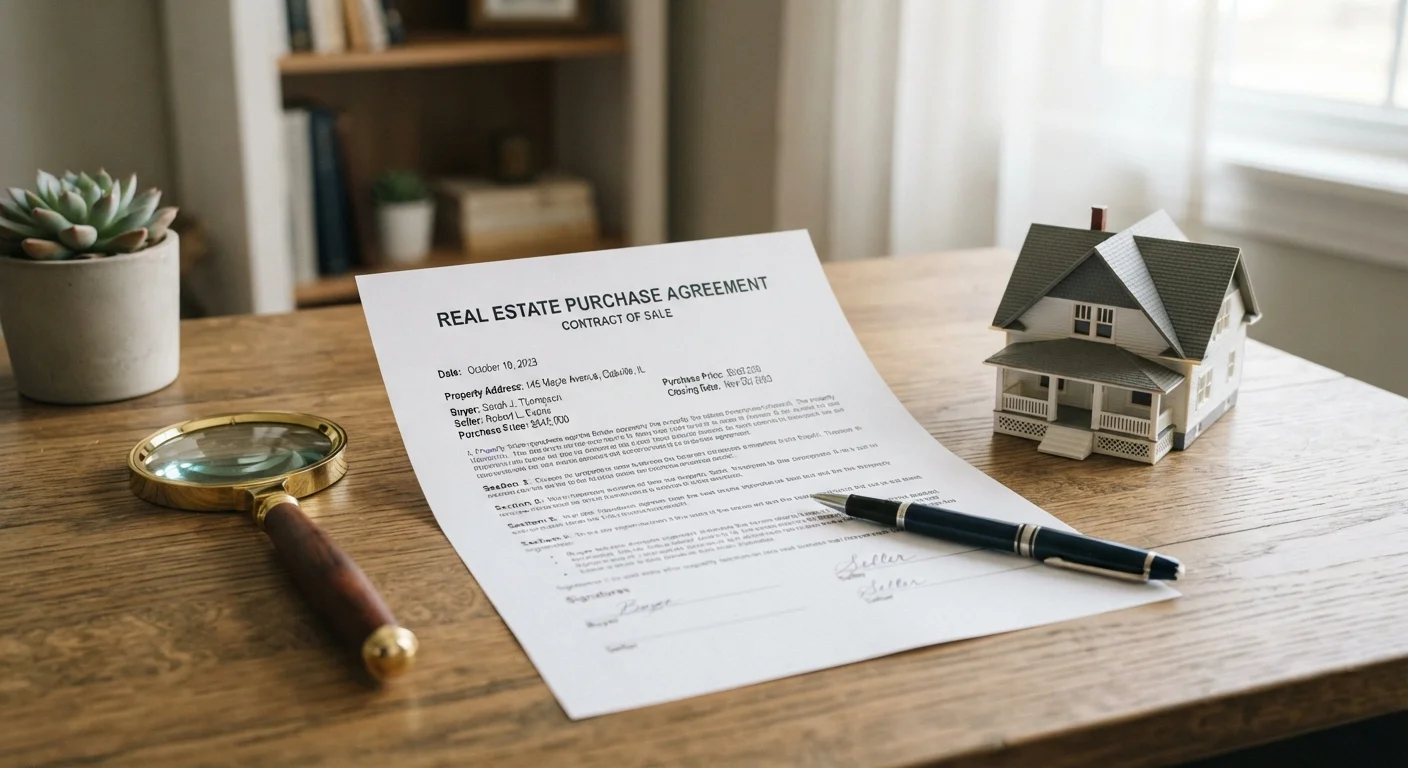
| Most common contingencies | Inspection, financing, and appraisal |
| Typical inspection contingency window | 7–14 days after accepted offer (Varies by state and contract) |
| Earnest money at risk if waived contingency fails | Potentially the full deposit (Depends on contract terms and state law) |
| Financing contingency deadline | Usually 21–30 days from offer acceptance (Varies by lender and contract) |
| Sale contingency usage | Common for buyers who own a current home |
| Title contingency purpose | Ensures property transfers free of liens or claims |
What Contingencies Actually Do
A contingency is a condition that must be met for a home sale to move forward. If the condition fails — the loan falls through, the inspection reveals serious problems, or the appraisal comes in low — the buyer can typically exit the contract and recover their earnest money.
Contingencies are negotiated upfront, written into the purchase agreement, and governed by deadlines. Each one creates a defined off-ramp. Understanding what each protects — and what you surrender when you waive it — is fundamental to navigating any home purchase.
Contingency
A condition written into a purchase agreement that must be satisfied before the sale can close. If the condition is not met, the buyer may typically withdraw from the contract without losing their earnest money.
Earnest Money
A deposit made by the buyer when submitting an offer, held in escrow and applied toward the purchase price at closing. If a buyer backs out without a valid contingency, they may forfeit this deposit.
Appraisal Gap
The difference between a property's appraised value and the agreed purchase price when the appraisal comes in lower. Buyers may need to cover this gap out of pocket or renegotiate.
Clear to Close
A lender's confirmation that all conditions of the loan have been satisfied and the mortgage is approved for funding at closing.
Waiver
A buyer's voluntary decision to remove a contingency from a purchase offer, accepting the associated financial or physical risk in exchange for a more competitive offer.
Due Diligence Period
A contractually defined window of time during which the buyer investigates the property — through inspections, title review, and other means — before committing unconditionally.
For a broader look at what to verify before committing, see the due diligence checklist for home buyers.
The Three Standard Contingencies
| Most common contingencies | Inspection, financing, and appraisal |
| Typical inspection contingency window | 7–14 days after accepted offer (Varies by state and contract) |
| Earnest money at risk if waived contingency fails | Potentially the full deposit (Depends on contract terms and state law) |
| Financing contingency deadline | Usually 21–30 days from offer acceptance (Varies by lender and contract) |
| Sale contingency usage | Common for buyers who own a current home |
| Title contingency purpose | Ensures property transfers free of liens or claims |
Inspection Contingency
This gives the buyer the right to have the property professionally inspected within a set timeframe — typically 7 to 14 days. If the inspection reveals material defects, the buyer can request repairs, renegotiate the price, or walk away. Without this contingency, the buyer accepts the property's physical condition as-is, whatever the inspector might later find. The limits of a standard home inspection matter here — not everything is examined.
Financing Contingency
Also called a mortgage contingency, this protects buyers whose loan approval is not yet final. If the lender declines the loan before the deadline — due to income changes, credit issues, or property problems — the buyer can exit without penalty. Waiving this contingency means if financing falls apart after contract execution, the earnest money is generally forfeited.
Appraisal Contingency
Lenders require an independent appraisal to confirm the property's market value supports the loan amount. If the appraisal comes in below the purchase price, this contingency lets buyers renegotiate or cancel. Without it, buyers must either cover the appraisal gap out of pocket, persuade the seller to reduce the price, or risk losing their deposit.
Less Common but Equally Protective Contingencies
Sale Contingency
Buyers who need to sell their current home to fund the new purchase often include a sale contingency. It ties the new purchase to closing on the existing property. Sellers generally view this as a risk — if the buyer's home lingers on the market, the sale stalls — so buyers using this contingency often face more resistance or competition disadvantage.
Title Contingency
A title search verifies that the seller legally owns the property free of liens, disputes, or encumbrances. The title contingency allows the buyer to exit if unresolved title issues emerge. Title insurance is typically purchased at closing, but the contingency provides protection during the review period.
HOA Review Contingency
For properties in homeowner associations, this contingency gives buyers time to review HOA documents — bylaws, financial statements, meeting minutes, and fee schedules — before committing. Undisclosed special assessments or poorly funded reserves can significantly affect ownership costs.
This Is General Information, Not Legal Advice
Contingency language, deadlines, and enforcement vary significantly by state, contract form, and individual negotiation. The information here is educational. Consult a licensed real estate attorney or agent for guidance specific to your transaction.
When and Why Buyers Waive Contingencies
In competitive markets, sellers often prefer offers with fewer contingencies because they reduce the chance of a deal falling apart. Buyers sometimes waive contingencies strategically to make their offer stand out.
~3 core
Contingencies in most standard purchase agreements
Inspection, financing, and appraisal contingencies appear in the majority of residential purchase contracts across the US.
1–5%
Typical earnest money deposit as percentage of purchase price
Industry practice generally places earnest money deposits in this range, though competitive markets can push amounts higher.
Waiving the inspection contingency is the riskiest move for most buyers. It removes the formal mechanism for discovering structural issues, outdated systems, or safety hazards before purchase. Buyers who waive it may choose to conduct a pre-offer walkthrough with a contractor, though this is not a substitute for a full inspection.
Waiving the appraisal contingency is more common among cash buyers or those with significant reserves who can cover a potential appraisal gap. It signals financial strength to sellers but requires real liquidity to back it up.
Waiving the financing contingency is typically only advisable for buyers who are fully pre-underwritten — meaning the lender has reviewed income, assets, and credit in depth — or who are purchasing with cash.
The decision to waive any contingency involves genuine financial risk. The tactics for making a competitive offer can help buyers think through how to strengthen an offer without unnecessarily exposing themselves. Working with a knowledgeable buyer's agent is also valuable when navigating these trade-offs.
This article provides general educational information about real estate purchase contracts. It is not legal or financial advice. Consult a licensed real estate professional or attorney for guidance specific to your situation and jurisdiction.