

Key Takeaways
Why Spotting Red Flags Before Signing Matters
Signing a lease is a legally binding financial commitment — often for 12 months or more. A problem landlord can mean ignored maintenance requests, unlawful fees, harassment, or even unsafe living conditions. The good news: most warning signs appear before you ever hand over a security deposit, if you know where to look.
Whether you're searching listings online or sitting across from a landlord reviewing a lease, the signals described below can help you distinguish a well-managed rental from one likely to cause serious problems. Our guide for first-time renters covers related foundational steps for those new to the process.
The listing photos are mismatched, scarce, or heavily filtered
Legitimate listings typically include multiple clear, well-lit photos of every main room. A listing with only one or two photos, exterior-only images, or heavily edited shots obscuring the unit's actual condition is a common tactic used to hide problems — water damage, outdated fixtures, or deteriorating interiors. If a landlord won't provide additional photos or refuses a video walkthrough for remote applicants, treat it as a signal that the unit may not match its description.
Scarce or filtered listing photos often conceal conditions a landlord would rather you not see until after you've committed.
Pressure to decide immediately or sign on the spot
"I have three other applicants viewing it today" is a phrase designed to create urgency. While rental markets can be competitive, a landlord who insists you sign a lease before you've had time to read it, verify ownership, or review terms is likely hoping you won't notice problematic clauses. Any reputable landlord will give you at least 24–48 hours to review a lease before signing. If that's not on offer, reconsider your interest entirely.
Pressure to sign before reading is one of the clearest signs a landlord doesn't want you to scrutinize the agreement.
Vague or one-sided lease language
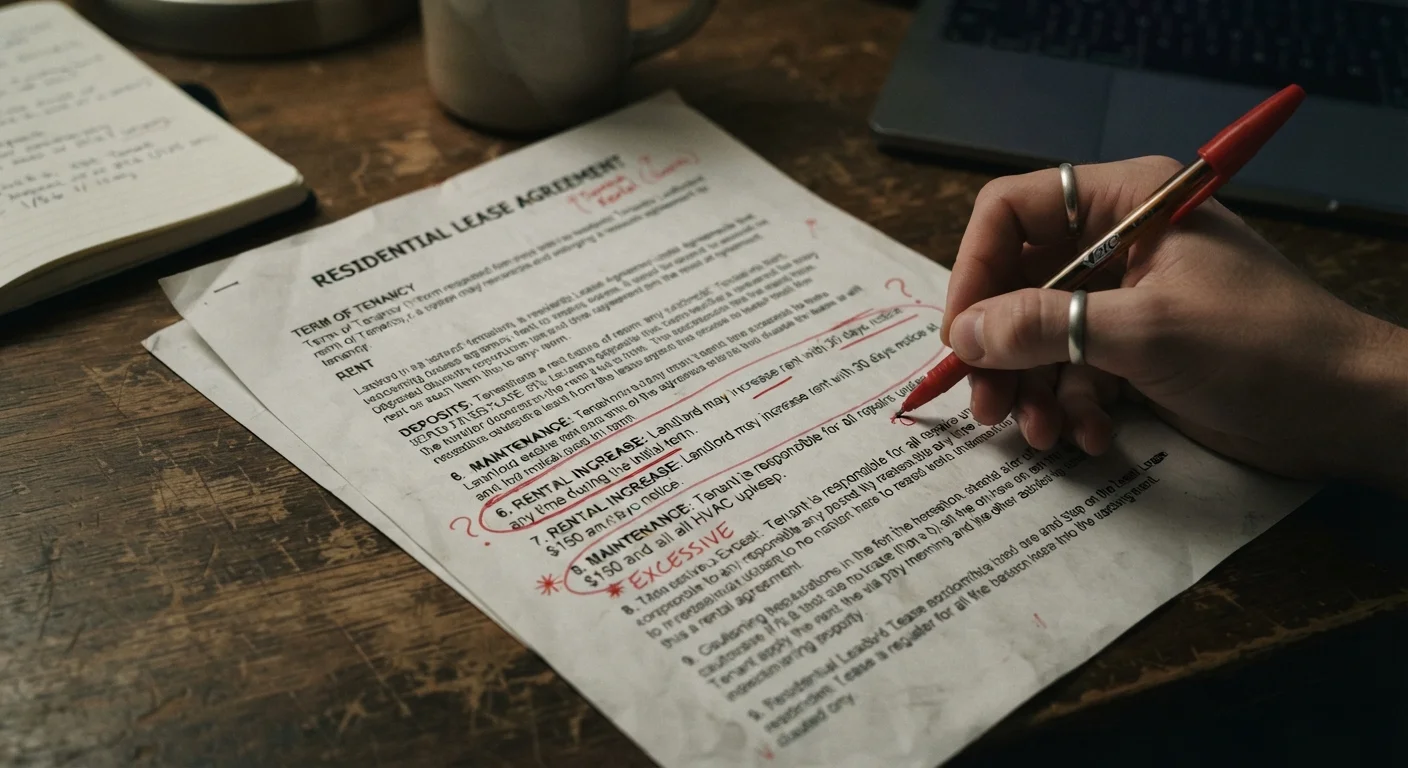
A lease that defines the landlord's rights in detail but leaves tenant protections ambiguous is structurally lopsided. Watch for clauses that allow the landlord to enter without reasonable notice, charge undefined "administrative fees," modify rent mid-lease, or terminate tenancy at will. Legitimate leases specify notice periods (commonly 24 hours for non-emergency entry), define all fees precisely, and follow the requirements of your state's landlord-tenant statute. If a clause seems designed to give the landlord maximum discretion with no checks, question it directly. Reviewing a lease at renewal requires the same scrutiny.
Vague lease language almost always benefits the landlord — clarity in contract terms protects both parties equally.
Missing legally required disclosures
Federal law requires landlords of pre-1978 housing to disclose known lead-based paint hazards and provide the EPA's lead hazard pamphlet. Many states additionally require disclosure of mold, pest infestations, flood zone status, or prior methamphetamine use. A landlord who omits required disclosures — whether through ignorance or deliberate avoidance — is a compliance risk. Ask directly which disclosures apply in your state and confirm they're included in or attached to your lease before signing.
[note_callout]Omitting required federal or state disclosures isn't a technicality — it can expose tenants to undisclosed health and safety risks.
Upfront fees or deposit amounts that exceed legal limits
Most states cap the security deposit a landlord can collect — commonly between one and two months' rent — and some also regulate application fees. Requests for large non-refundable "holding deposits," cash-only payments, or total upfront amounts that exceed your state's legal limit are serious red flags. They can indicate either that the landlord is unaware of (or indifferent to) local law, or that they're deliberately collecting money they have no intention of returning. Look up your state's security deposit rules through your state attorney general's office or a tenant rights organization before handing over any funds.
Deposits or fees that exceed your state's legal cap are not just unusual — they may be unlawful.
Reluctance to discuss maintenance or put repair commitments in writing
If a landlord verbally promises to fix something before you move in but resists putting it in writing, that promise is essentially unenforceable. A lease addendum or written email exchange documenting agreed repairs — with a completion timeline — is a reasonable request. A landlord who becomes defensive or dismissive when asked to formalize verbal commitments is likely to follow the same pattern once you're a tenant. The apartment guides hub covers what tenants can realistically expect from landlords over the course of a tenancy.
Verbal promises about repairs have little legal weight — get every maintenance commitment documented before signing.
The landlord cannot verify ownership of the property
Rental scams — where a fraudulent "landlord" collects deposits on a property they don't own — are an ongoing problem, particularly on peer-to-peer listing platforms. Before paying anything, verify that the person you're dealing with actually owns or is legally authorized to rent the unit. You can check property ownership through your county assessor's or recorder's office, which is generally public record. If a landlord is unwilling to provide identification, a management agreement, or ownership documentation, do not transfer any funds.
Verifying property ownership through public records is a simple step that can prevent devastating financial fraud.
Before You Commit: What to Do With Your Findings
Identifying a red flag doesn't necessarily mean walking away — but it does mean asking direct questions, getting answers in writing, and understanding your rights under your state's landlord-tenant law. If a landlord is evasive or dismissive in response to reasonable questions, that behavior is itself a red flag worth weighing heavily.
Request Everything in Writing
Before signing or paying any deposit, ask for a complete copy of the lease to review at home — not at the showing. If a landlord made verbal promises during the walkthrough, follow up by email to create a written record. Courts and mediation bodies give significantly more weight to documented communications than to "he said, she said" accounts.
Keep copies of all communications, the listing as you found it, and every version of the lease you're given. If a dispute arises later — over a deposit, a repair, or an early exit — documentation is your strongest tool. For context on what landlords are legally obligated to address, see our article on landlord repair obligations. And if you eventually need to leave before your lease ends, understanding your options early makes that process far less damaging — see breaking a lease early.
This article is for general informational purposes only and does not constitute legal advice. Landlord-tenant laws vary significantly by state and locality. Consult a licensed attorney or local tenant rights organization for guidance specific to your situation.