

| Most common document required | Valid U.S. passport book (U.S. Department of State) |
| Passport card use case | Closed-loop cruises to select destinations only; not valid for air travel (U.S. Department of State) |
| Typical passport validity required | 6 months beyond travel dates (varies by country) (U.S. Department of State travel advisories) |
| Visa requirements | Vary by destination country and traveler nationality; must be verified per port |
| Official verification source | U.S. Department of State + destination country embassy or consulate |
| Minors on closed-loop cruises | Certified birth certificate may be accepted for children under 16 in some cases (Cruise line and government requirements vary) |
Why Cruise Documentation Is More Complex Than It Looks
Many first-time cruisers assume that boarding a ship is a self-contained event — show your booking confirmation, get on board, and enjoy the ride. In reality, cruise travel involves multiple entry points, each governed by different rules depending on the country, the port, and your nationality.
A Caribbean itinerary stopping in four countries means four sets of potential entry requirements. A transatlantic crossing may route through ports with strict documentation rules. And unlike flying, where you clear customs once at your destination, a cruise ship may require you to show different credentials at every stop.
Understanding what documentation you may need — and knowing where to verify official requirements — is one of the most important steps in cruise trip planning. See our pre-trip research checklist for a structured approach to this process before you confirm any booking.
| Most common document required | Valid U.S. passport book (U.S. Department of State) |
| Passport card use case | Closed-loop cruises to select destinations only; not valid for air travel (U.S. Department of State) |
| Typical passport validity required | 6 months beyond travel dates (varies by country) (U.S. Department of State travel advisories) |
| Visa requirements | Vary by destination country and traveler nationality; must be verified per port |
| Official verification source | U.S. Department of State + destination country embassy or consulate |
| Minors on closed-loop cruises | Certified birth certificate may be accepted for children under 16 in some cases (Cruise line and government requirements vary) |
Core Documents Most Cruise Travelers Need
For U.S. citizens, the following documents form the foundation of any cruise travel file:
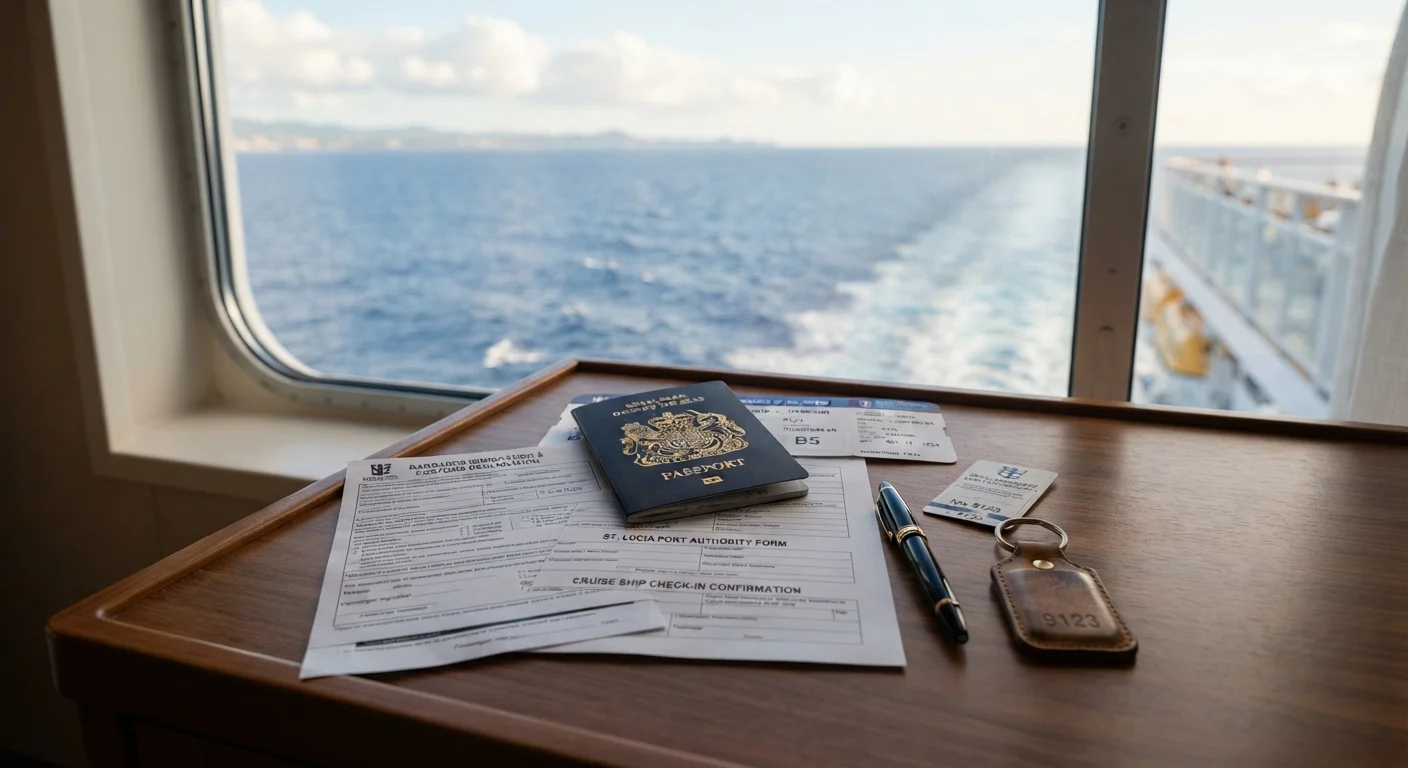
- A valid U.S. passport book: Required for most international cruises, including those that begin and end in a foreign port. A passport book is also the safest option if there is any chance you will need to fly home unexpectedly from an international port.
- Passport card (limited use): U.S. passport cards are accepted for closed-loop cruises — those that depart and return to the same U.S. port — to certain destinations including Mexico, Canada, and the Caribbean. However, they cannot be used for air travel, so they offer much less flexibility. Review how passport books and passport cards differ before deciding which to carry.
- Cruise line boarding documents: These typically include your booking confirmation, a health declaration, and a cruise card issued at embarkation. These are separate from government-issued travel documents.
- Visas: Depending on your nationality and the countries your ship visits, visas may be required for individual ports. Some ports allow cruise passengers to enter visa-free for short stays; others do not. Requirements change and must be verified for each itinerary.
- Birth certificate (minors): For closed-loop domestic cruises, a certified copy of a birth certificate may be accepted for children under 16 in lieu of a passport, though requirements vary by cruise line and destination.
Closed-loop cruise
A cruise that departs from and returns to the same U.S. port. U.S. citizens on closed-loop cruises may qualify for relaxed passport requirements to some destinations, but individual port rules still apply.
Port of entry
An officially designated location — such as a seaport — where travelers may legally enter a country and clear immigration and customs. Each port operates under the rules of its host country.
Arrival/departure card
A short paper or digital form that some countries require travelers to complete upon entry. It typically records personal details, travel purpose, and accommodation. Not all countries require this for cruise day visits.
Passport validity rule
Many countries require a passport to remain valid for a set period — commonly six months — beyond the traveler's planned departure date. A passport close to expiration may be refused even if technically still valid.
Visa on arrival
An entry authorization issued at the port of arrival rather than in advance. Not all nationalities qualify for visa-on-arrival access at every destination; eligibility must be verified per country.
Immigration clearance
The process by which a traveler's identity and documentation are reviewed by a country's border authority before entry is granted. On cruise ships, this may occur onboard or after disembarking at the port.
Port Entry Rules: What to Expect When the Ship Docks
When a cruise ship arrives at a foreign port, passengers who wish to go ashore typically must clear immigration — either onboard (where port agents come aboard) or after disembarking. This process can vary significantly by country and port.
Some ports require a completed arrival/departure card (a short paper form recording your personal and travel details). Some countries charge a port or tourism fee upon entry. Others conduct biometric checks. A few require proof of onward travel, sufficient funds, or travel health insurance — though these requirements are more common for extended stays than for cruise day visits.
It is also worth knowing that cruise passengers who choose to stay aboard during a port call are generally not subject to that country's entry requirements. However, if you step off the ship, you are entering that country and must comply with its rules.
Entry Rules Apply Even on Day Visits
Stepping off a cruise ship at a foreign port — even for just a few hours — means you are entering that country and must comply with its immigration requirements. Passengers who remain aboard are generally not subject to those rules. If you are unsure whether you meet entry requirements for a specific port, consult the relevant country's official embassy or consulate well before your sailing date.
For accurate, current requirements for each port on your itinerary, consult the U.S. Department of State's travel information pages and each country's official embassy or consulate website. Cruise lines often provide documentation guidance as well, but official government sources are the authoritative reference. As noted in our article on verifying entry requirements reliably, checking twice — and close to your departure date — is a sound habit.
Passport Validity, Copies, and Practical Safeguards
Many countries require that your passport remain valid for at least six months beyond your travel dates, even if your actual trip is shorter. A passport that expires one month after your cruise ends may be refused at a port that enforces this rule.
Practical safeguards recommended by experienced travelers include:
- Making photocopies or digital scans of your passport, visa pages, and cruise documents and storing them separately from the originals.
- Leaving a copy with a trusted contact at home.
- Noting the contact information for the nearest U.S. embassy or consulate in each country on your itinerary.
If your passport is lost or stolen at a foreign port, your ship may leave without you if you cannot clear outbound customs in time. Travel insurance policies that include trip interruption coverage may help cover costs in this scenario — but review any policy carefully before purchasing, as coverage terms vary. For a complete pre-departure review, see the international travel checklist every departing passenger should run through.
Avoid the common assumption that a valid passport guarantees entry anywhere. Entry decisions rest with each country's border authorities. Read more about widely held travel misconceptions that cause real problems before your next trip.
This article provides general informational guidance only. Entry requirements, visa rules, and documentation standards are subject to change. Always verify current requirements with official government sources — including the U.S. Department of State and the relevant country's embassy or consulate — before traveling.