

Key Takeaways
Why Skipping the Obvious Can Pay Off
The gravitational pull of famous American destinations is real — and understandable. But the US is large enough that genuinely spectacular places fly under the radar for years, sometimes decades. Travelers who venture beyond the marquee names often find shorter lines, lower costs, warmer interactions with locals, and landscapes that feel like personal discoveries rather than managed attractions.
This isn't about avoiding popular destinations entirely. It's about widening your frame. While the Southwest's iconic parks are worth knowing, so is the fact that equally striking geology exists in places most visitors never consider. The destinations below reward travelers who bring curiosity and a willingness to plan slightly off-script. For help avoiding common planning pitfalls, the trip planning myths guide is a useful companion before you book.
Alvord Desert, Oregon
Tucked into the far southeastern corner of Oregon, the Alvord Desert is a vast alkali playa — a flat, cracked lakebed — backdropped by the dramatic Steens Mountain escarpment. The contrast between the blinding white playa and the dark volcanic ridgeline is genuinely arresting.
Access requires driving through remote high-desert terrain, so a capable vehicle and a full tank of gas are practical necessities. Hot springs nearby add an unexpected reward. Summer brings the driest and most navigable conditions, though temperatures can be extreme.
The Alvord Desert's cracked white playa against volcanic peaks offers scenery that rivals anything on the tourist circuit.
Atchafalaya Basin, Louisiana
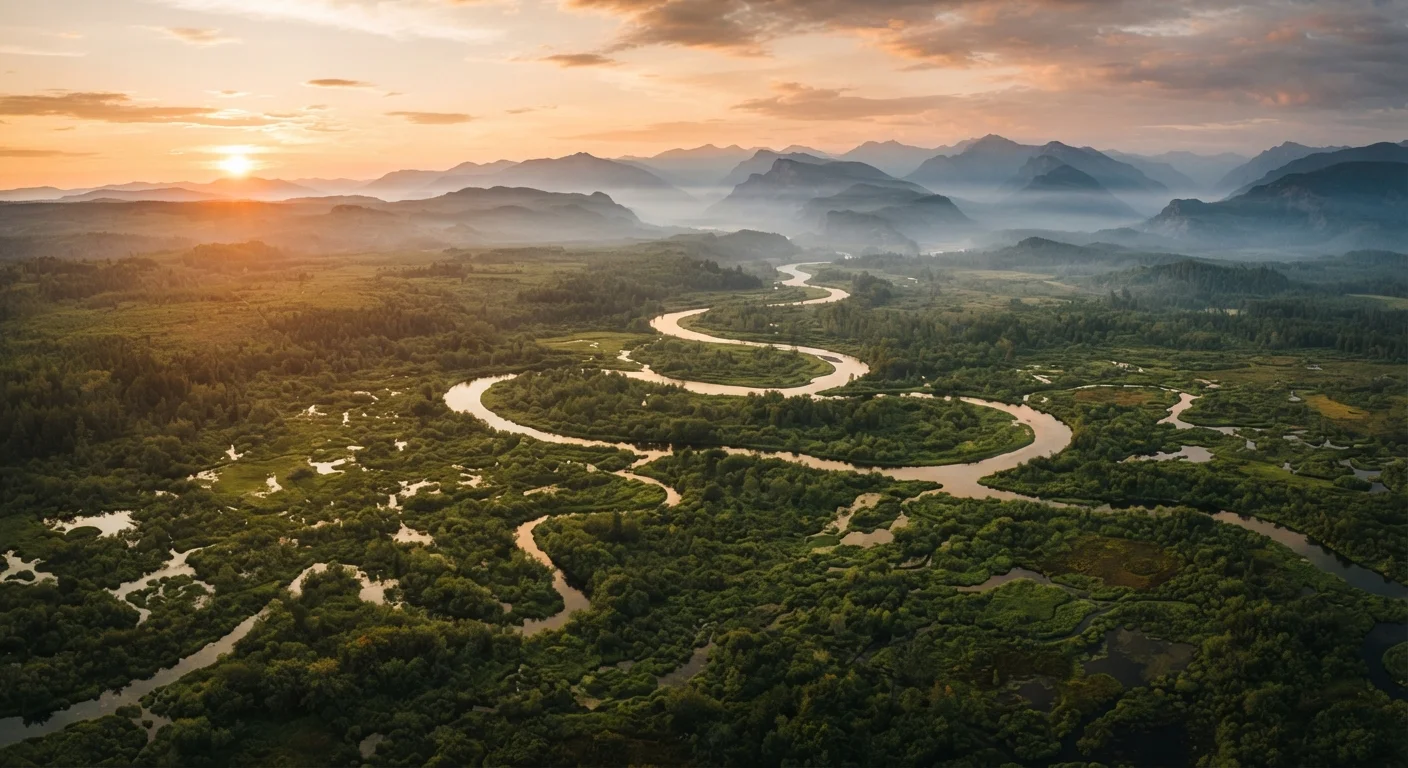
The Atchafalaya Basin is the largest river swamp in the United States, stretching across south-central Louisiana. It's a working landscape — home to crawfish fishers, cypress trees draped in Spanish moss, and an extraordinary density of birdlife including herons, egrets, and roseate spoonbills.
Guided boat tours from small towns like Henderson or Breaux Bridge are the most practical way to explore the interior. Spring and fall offer the most comfortable conditions and active wildlife. This is a place where cultural depth — Cajun foodways, fishing traditions, French-inflected dialects — layers on top of remarkable natural scenery.
The Atchafalaya layers Cajun cultural richness over one of America's most biologically dense wetland systems.
Apostle Islands, Wisconsin
Twenty-one islands scattered across the southwestern tip of Lake Superior form the Apostle Islands National Lakeshore. The sea caves carved into Basswood Island and the mainland shoreline are among the most visually striking geological features in the Midwest — best explored by kayak in summer or on foot across frozen lake ice in winter, when conditions allow.
The islands see a fraction of the visitors that comparable coastal parks attract. Bayfield, Wisconsin serves as the main gateway and offers a genuine small-town infrastructure of marinas, outfitters, and lodging. Unlike the permit-heavy experience described in national park planning guides, access here is generally more flexible.
The Apostle Islands' sea caves reward visitors with world-class scenery and almost none of the crowd management headaches.
Marfa, Texas
Marfa is a small West Texas town that has quietly built an international reputation for minimalist art installations, a strong architectural identity, and one of the clearest night skies in the continental US. The Chinati Foundation, a large-scale permanent art installation in a converted military base, draws visitors from around the world — yet the town itself remains uncrowded and unhurried.
The surrounding high desert landscape — flat grasslands giving way to distant mountain ranges — adds visual drama that complements the cultural offering. Marfa works well as a base for exploring Big Bend National Park and the Davis Mountains, creating a trip with unusual range.
Marfa combines world-class minimalist art with some of the darkest, clearest skies in the continental United States.
Ouachita Mountains, Arkansas and Oklahoma
The Ouachitas are ancient mountains — among the oldest in North America — running east-west rather than north-south, which gives them a distinctive ridge-and-valley character unlike the Appalachians or Rockies. The Ouachita National Forest covers nearly two million acres, offering hiking, paddling, and fall foliage that rival better-known destinations in the region.
The Ouachita Trail stretches over 200 miles and is considered one of the finest long-distance hiking paths in the South. Hot Springs, Arkansas, at the eastern edge, adds thermal bathing culture and a well-preserved downtown to the itinerary. Visitation levels remain modest relative to the scale and quality of what's on offer.
The Ouachita Trail offers over 200 miles of high-quality hiking through terrain most travelers never think to visit.
Pictured Rocks National Lakeshore, Michigan
Along Michigan's Upper Peninsula, the cliffs of Pictured Rocks rise up to 200 feet above Lake Superior, streaked with mineral deposits in vivid bands of orange, brown, green, and white. The effect — particularly when viewed by kayak at water level — is genuinely dramatic and unlike anything else in the Great Lakes region.
The park sees far fewer visitors than similarly spectacular shoreline parks elsewhere in the country. Munising serves as the access town, with boat tours available for those who prefer not to paddle. Winter transforms the area: frozen waterfalls and ice-covered cliffs attract a small but devoted community of ice climbers and winter hikers.
Pictured Rocks' mineral-streaked cliffs above Lake Superior are among the most visually striking shorelines in the US.
Planning Your Off-the-Beaten-Path Trip Wisely
Lesser-known destinations often require a bit more independent research, particularly around access, seasonal closures, and local services. Some have limited lodging options that book out well in advance precisely because capacity is smaller. Others depend on weather windows that aren't obvious from a quick search.
Research Seasonal Access Before Booking
Many lesser-known destinations have narrow windows of ideal access — roads that close in winter, water levels that determine boat navigability, or extreme temperatures that make visits impractical. Check with the managing agency (often the National Forest Service, state parks, or National Park Service) for current conditions. Flexibility in your travel dates often makes a significant difference in what you're able to do on arrival.
If you're considering going solo, the realities of solo US travel are worth understanding before committing to a remote itinerary. And don't overlook logistics — the small details that derail trips apply everywhere, including places with patchy cell coverage or limited fuel stops. With sound preparation, off-the-radar destinations almost always deliver exactly what curious travelers are looking for.