

Key Takeaways
National Scenic Byway
A National Scenic Byway is a road officially recognized by the U.S. Department of Transportation for having outstanding qualities in one or more of six categories: scenic, natural, historic, cultural, archaeological, or recreational. The program was established by Congress in 1991 as part of the Intermodal Surface Transportation Efficiency Act. Roads that meet an even higher bar across multiple categories may be elevated to the title of All-American Road.
Designation is administered through the Federal Highway Administration (FHWA). As of the program's last active funding cycle, there were 150 designated byways across 46 states, the District of Columbia, and Puerto Rico.
Where the Program Comes From
The National Scenic Byways Program was created by Congress in 1991 under the Intermodal Surface Transportation Efficiency Act, commonly known as ISTEA. The intent was to formally recognize roads whose corridors offered exceptional value beyond simple transportation function — and to give communities a framework for protecting and promoting those corridors.
The Federal Highway Administration (FHWA), a division of the U.S. Department of Transportation, administers the program. Importantly, designation does not transfer ownership or control of any road to the federal government. State and local authorities retain jurisdiction; the designation is a recognition of quality, not a takeover of management.
Funding for byway improvements and promotion has been tied to successive federal transportation bills, meaning the program's resources have fluctuated over the decades. Travelers should treat byway infrastructure — signage, rest areas, interpretive stops — as variable rather than guaranteed.
Program Funding Has Varied Over Time
The National Scenic Byways Program's grant funding has been subject to congressional appropriations and has not been consistently funded in every transportation bill cycle. This means some designated byways have well-developed visitor infrastructure while others have minimal signage or amenities. Checking with local tourism offices before visiting gives you a realistic picture of what to expect on the ground.
The Two-Tier Designation System
The program recognizes two distinct levels. A National Scenic Byway must demonstrate outstanding qualities in at least one of six intrinsic categories. An All-American Road must meet a stricter test: qualifying in two or more categories and being considered a destination in its own right — a road travelers would specifically seek out, not merely pass through.
This distinction matters for planning. If you see an All-American Road designation, the route itself has been formally determined to be a primary reason to travel, not just a pleasant detour. Examples include routes through dramatic canyon country, historically significant corridors, and culturally distinctive regions — though specific roads change status over time, so always confirm current designation with the FHWA directory.
For drivers planning a longer journey, understanding this hierarchy helps calibrate expectations. A National Scenic Byway might reward a half-day detour; an All-American Road often anchors an entire trip. See our road trip route planning guide for advice on building either type into a workable itinerary.
150+
Designated byways across the U.S.
As of the program's last active designation cycle, the FHWA recognized more than 150 byways across 46 states, D.C., and Puerto Rico.
1991
Year the program was established
Congress created the National Scenic Byways Program through the Intermodal Surface Transportation Efficiency Act (ISTEA) as part of broader federal transportation legislation.
6
Intrinsic quality categories evaluated
The FHWA assesses nominations across scenic, natural, historic, cultural, archaeological, and recreational categories — a road needs to qualify in at least one.
The Six Intrinsic Qualities Explained
Designation isn't purely about dramatic vistas. The FHWA evaluates roads against six formally defined intrinsic qualities:
- Scenic: The visual appeal of the natural and built environment — landforms, vegetation, water, and how human-made elements harmonize with the landscape.
- Natural: The presence of notable ecosystems, geological features, or landforms that have scientific or ecological significance.
- Historic: Legible connections to significant past events, people, or periods — through structures, landscapes, or documented associations.
- Cultural: Evidence of living traditions, arts, crafts, or customs that reflect the heritage of a community or region.
- Archaeological: The presence of physical remains — ruins, sites, artifacts — that illustrate past human activity.
- Recreational: Opportunities for outdoor activity that depend on, or are enhanced by, the corridor's natural or cultural setting.
A road does not need to score on all six categories. A single compelling quality, sufficiently documented, can support a National Scenic Byway nomination. This breadth means designated byways can look very different from one another — a byway recognized for archaeology may feel nothing like one recognized primarily for scenic value.
How Designation Actually Happens
The process begins at the state or tribal level. A state department of transportation, in coordination with local communities and stakeholders, assembles a nomination package. That package must document the road's intrinsic qualities with supporting evidence and — critically — include a Corridor Management Plan (CMP).
The CMP is the heart of the application. It outlines how the corridor's qualities will be preserved and enhanced over time, who is responsible for stewardship, and how conflicts between development and conservation will be managed. Without a credible CMP, a nomination is unlikely to advance.
Once submitted, the FHWA reviews the application against program criteria. Designation is not guaranteed, and the agency may return applications for revision. Communities that successfully achieve designation often credit years of coalition-building among local governments, conservation groups, and business interests.
Use the Official FHWA Byway Directory
Before planning a route around a designated byway, consult the Federal Highway Administration's official byway directory at fhwa.dot.gov to confirm current designation status. State tourism offices often publish complementary driving guides with curated stops, seasonal notes, and road-surface details that general mapping apps don't capture.
What Designation Means for Travelers
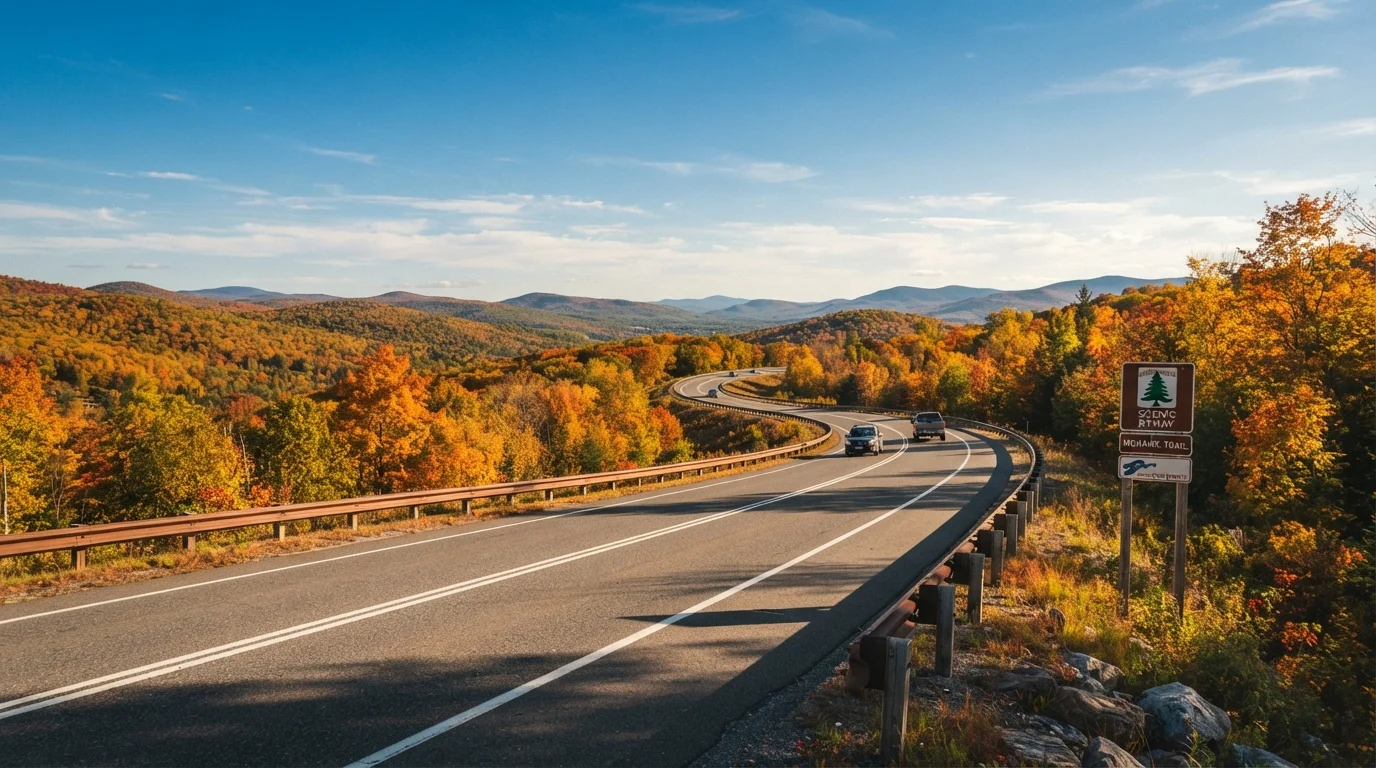
From a driver's seat, the most visible sign of byway status is signage — a standardized brown-and-white marker identifying the route. Beyond that, designation can influence the traveler experience in several practical ways:
- Interpretive infrastructure: Some byways have developed pull-offs, wayside exhibits, and visitor guides funded partly through byway-related grants.
- Local planning pressure: Designation creates a framework that can discourage incompatible commercial development along the corridor, though it does not legally prevent it.
- Curated information: Designated byways often have state-produced maps and guides that aggregate points of interest more thoroughly than generic mapping apps.
Driving a byway does not require any pass or special permit — these are public roads. Specific parks, monuments, or recreation areas accessed along a byway may charge their own fees. If you're visiting multiple federal sites during a road trip, what the America the Beautiful Pass covers is worth understanding before you go.
For travelers drawn to the natural and cultural depth that scenic byways often parallel, our guide to America's National Parks for first-time visitors offers complementary context on what to expect at federally managed sites along the way.
Road conditions, seasonal closures, and byway program details can change. Verify current information with the Federal Highway Administration and relevant state transportation or tourism agencies before traveling.