

Key Takeaways
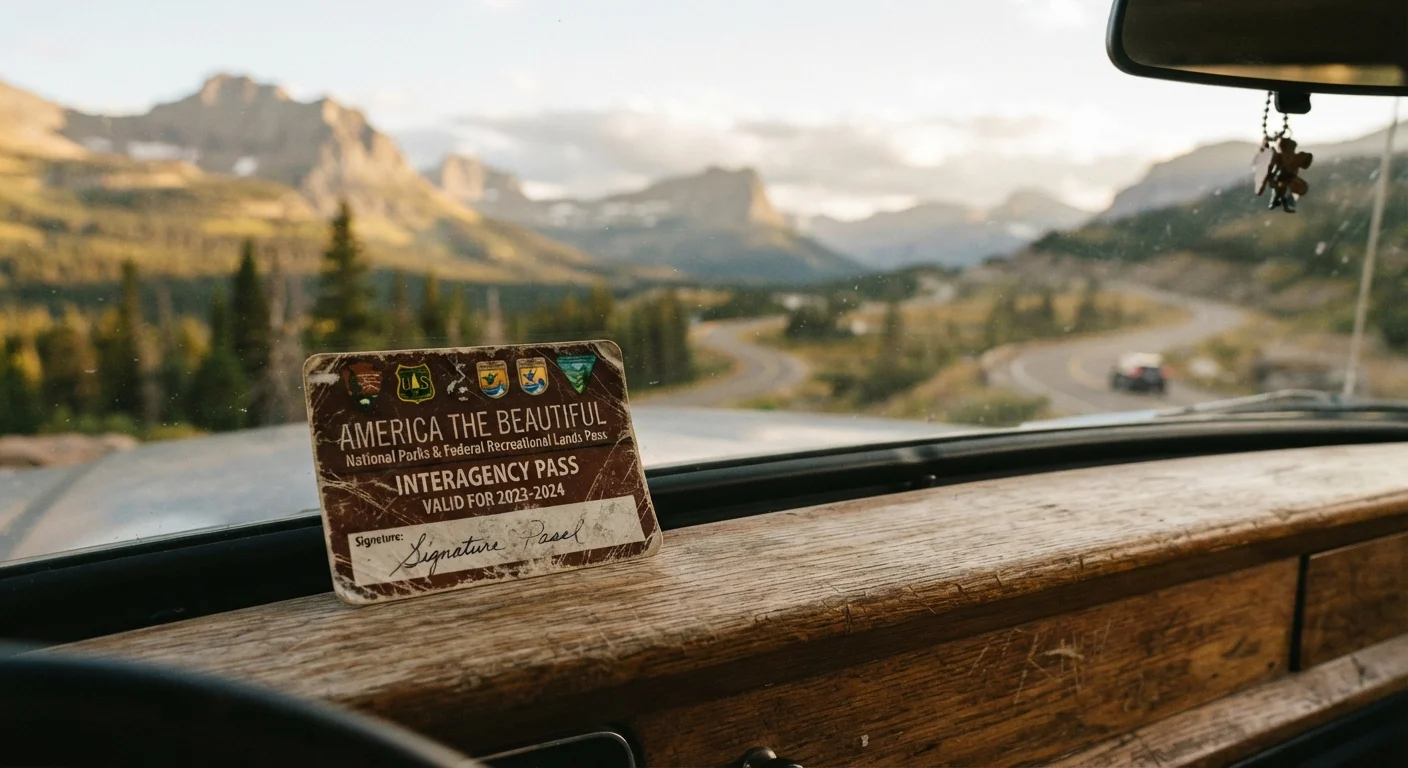
America the Beautiful Pass
The America the Beautiful Pass — formally called the America the Beautiful National Parks and Federal Recreational Lands Pass — is an annual interagency pass issued by the US federal government. For a set annual fee, it covers the entry cost for the pass holder and accompanying passengers at participating federal recreation sites. It is sold through the National Park Service, US Forest Service, Bureau of Land Management, and other partner agencies.
The pass covers entrance fees and standard amenity fees at federal sites but does not waive reservation fees, concession charges, or fees imposed by state or private operators on federal land.
What the Pass Actually Covers
The America the Beautiful Pass is honored at sites managed by six federal agencies: the National Park Service (NPS), US Forest Service (USFS), Bureau of Land Management (BLM), Bureau of Reclamation, US Fish and Wildlife Service, and US Army Corps of Engineers. Collectively, those agencies oversee more than 2,000 recreation areas where the pass is valid.
At the most practical level, the pass waives two categories of fees:
- Entrance fees — the per-vehicle or per-person fee charged at the gate of many national parks, monuments, and recreation areas.
- Standard amenity fees — day-use fees at certain forest recreation areas, boat launches, visitor centers, and similar facilities managed by participating agencies.
Understanding which federal lands the pass covers gets easier when you're already clear on how those designations differ. The differences between national parks, national monuments, and national forests matter here because each land type has its own fee structure and agency oversight.
2,000+
Federal recreation sites that accept the pass
According to the US Geological Survey's interagency pass program documentation, more than 2,000 sites across six federal agencies honor the pass.
$35
Typical per-vehicle entrance fee at major national parks
Many of the most-visited national parks — including Grand Canyon, Yellowstone, and Yosemite — charge a per-vehicle entrance fee in this range, which the pass waives entirely.
6
Federal agencies participating in the pass program
The National Park Service, US Forest Service, Bureau of Land Management, Bureau of Reclamation, US Fish and Wildlife Service, and US Army Corps of Engineers all participate.
Where the Pass Falls Short
Knowing what the pass does not cover is just as important as knowing what it does — and the list is longer than many travelers expect.
- Campsite reservation fees: Nightly camping fees are charged separately. The pass does not reduce or eliminate them.
- Timed-entry and permit reservation fees: As demand for popular parks has grown, many sites now require advance reservations with a booking or ticketing fee. The pass does not cover these. For context on just how crowded parks have become and why permits have multiplied, summer timing and permit planning deserve close attention before any trip.
- Concession-operated services: Guided tours, equipment rentals, lodges, and restaurants inside parks are typically operated by private concessionaires — they set their own prices, and the pass has no effect on them.
- State parks: State-managed parks operate independently and charge their own fees. The interagency pass is not valid there.
- Tribal lands: Lands managed by tribal governments are sovereign and have separate fee systems.
- Private operations on federal land: Ski areas, marinas, and similar private businesses that lease federal land charge independently.
Check Fee Types Before You Go
Before assuming the pass covers a specific fee, look up the site on Recreation.gov or the managing agency's official website. Fee descriptions are categorized there as 'entrance,' 'amenity,' 'reservation,' or 'concession' — only the first two are generally waived by the pass. This quick check prevents surprises at the gate or trailhead.
Sites That Charge No Fee at All
An often-overlooked fact: a significant portion of federal land — including many national park units — charges no entrance fee whatsoever. Remote parks, many BLM tracts, and large stretches of national forest simply don't have fee stations. Visiting these areas costs nothing regardless of whether you hold a pass.
This matters for trip planning. If the majority of your itinerary runs through fee-free areas, the pass may not return its cost in a single trip. Conversely, if your route includes several high-traffic parks — places like Grand Canyon, Yosemite, or Zion — each with per-vehicle entrance fees of $35 or more, a single family road trip can recover the pass cost at the first or second stop.
For a fuller picture of what to expect when visiting high-demand parks for the first time, see our guide on what first-time national park visitors actually need to know.
Specialized Pass Versions Worth Knowing
The standard annual pass is not the only option. Several versions are available based on eligibility:
- Senior Pass (Age 62+)
- US residents aged 62 and older can purchase a lifetime Senior Pass at a discounted one-time fee, or an annual version at a lower annual cost than the standard pass. Both provide the same access benefits.
- Access Pass
- Available free of charge to US residents with permanent disabilities. It provides the same entrance and amenity fee waivers as the standard pass.
- Military Pass
- Active-duty military members and their dependents can obtain the pass free of charge. Gold Star families are also eligible at no cost.
- Every Kid Outdoors (4th Grade)
- US fourth-graders receive a free annual pass, and the program typically extends to accompanying family members at participating sites.
- Volunteer Pass
- Individuals who complete 250 or more hours of service with a federal agency may qualify for a free pass.
Verifying current eligibility requirements directly with the issuing agencies before applying is always advisable, as program details can change.
Pass Details Can Change
Fee structures, participating sites, eligibility rules, and pass prices are subject to revision by the federal agencies that administer them. Always confirm current terms directly through Recreation.gov or the relevant agency's official website before purchasing or relying on the pass for a specific trip.