

Key Takeaways
Why Summer Feels So Chaotic — and Why Visitors Are Often Surprised
Every July, millions of Americans load up their vehicles and head for iconic landscapes — Yosemite Valley, Zion Canyon, the rim of the Grand Canyon — and a significant number arrive frustrated, tired, and wondering why nobody warned them. The short answer: the parks haven't grown, but visitation has surged dramatically over the past decade. Many marquee parks now receive more than four million visitors annually, and a disproportionate share crowd into June, July, and August.
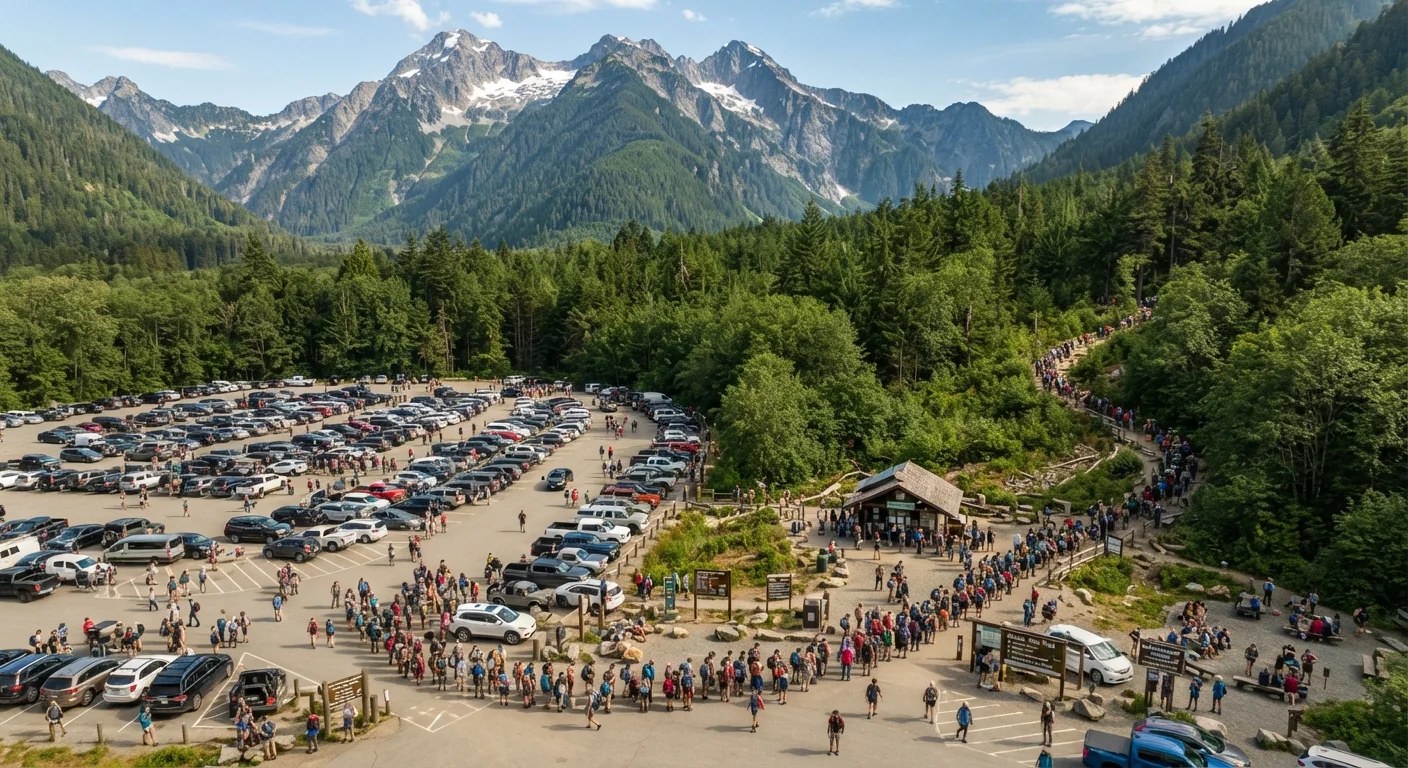
What makes the experience feel chaotic isn't just the volume of people — it's the mismatch between expectation and reality. Many visitors picture the serene, wide-open landscapes from promotional photography and plan accordingly. They bring a vague itinerary, assume parking will work itself out, and expect to feel connected to nature. What they often find instead is a gridlocked access road, a shuttle line stretching around a building, and a trailhead that looks more like a theme park queue than a wilderness entry point.
This gap between expectation and experience is almost entirely preventable. Understanding what specifically goes wrong — and why — is the first step toward planning a trip that actually delivers.
4.5M+
Peak annual visits at top-tier parks
Several marquee parks — including Zion and Grand Canyon — regularly record more than four million visits per year, with summer months accounting for a disproportionate share.
~30–50%
Weekend vs. weekday crowd gap
National Park Service visitation patterns consistently show weekend attendance significantly exceeding weekday counts at gateway parks during peak season.
The Most Common Mistakes — and How to Avoid Them
The errors travelers make at busy parks tend to cluster around a few predictable blind spots: permit systems, timing, logistics, and assumptions about what "planning" actually means. For a broader look at how these patterns connect to general trip planning, see common trip planning myths that affect travelers across many destinations.
Arriving without a timed-entry permit at parks that require one.
Why it happens: Timed-entry systems are relatively new at many parks, and travelers assume a park entrance fee is sufficient. The permit requirement often isn't visible until you're already deep into trip planning — or parked at the gate.
Arriving at trailheads mid-morning during summer peak weeks.
Why it happens: Most people plan to "get an early start" but interpret that as 9 or 10 a.m. At popular parks, trailhead lots fill entirely by 8 a.m. on summer weekends — sometimes earlier.
Treating the park's official website as a formality rather than a planning resource.
Why it happens: Third-party travel content is often more accessible and visually engaging than government sites, so travelers get their logistics from blogs or social media and miss critical operational details like reservation windows, road closures, and fee changes.
Ignoring lesser-known entry points and adjacent public lands.
Why it happens: Visitors naturally gravitate toward the most photographed viewpoints and the main visitor center, concentrating crowds at a fraction of a park's total area. The assumption that the iconic spot equals the best experience drives this pattern.
Underestimating how far in advance campsite reservations sell out.
Why it happens: Travelers assume campsite availability works like hotel booking — available until close to the date. In reality, sites at popular in-park campgrounds open on Recreation.gov up to six months in advance and disappear within minutes.
Conflating peak season crowds with peak season scenery.
Why it happens: Summer is marketed heavily as prime park season, and many travelers assume July offers the best experience. For a significant number of parks, this isn't accurate — wildflower season, fall color, and wildlife migration patterns often peak outside summer.
For travelers who are newer to US parks altogether, what first-time park visitors actually need to know covers the foundational systems — permits, fees, and seasonal expectations — in greater depth.
When to Go Instead — and What Shoulder Season Really Means
Shoulder season — broadly, May and late September through October — is the single most underutilized tool available to park visitors. Temperatures at most parks remain comfortable, most trails are fully accessible, and visitor numbers drop sharply. At Zion National Park, for instance, the park service's own visitation data consistently shows October crowds running well below July peaks, while fall foliage adds scenic value that summer can't match.
Spring shoulder season carries more variability: snowpack, trail closures, and unpredictable weather can complicate plans, particularly at higher-elevation parks. Research specific conditions for your target park rather than treating all shoulder seasons as identical. The National Park Service website publishes current conditions and closure information — checking it within two weeks of your trip is a practical habit.
Weekdays also make a measurable difference. Saturday and Sunday visitation at gateway parks routinely exceeds weekday counts by 30–50%, according to park service data patterns. If your schedule has any flexibility, a Tuesday-through-Thursday visit will feel like a different park than a Saturday arrival during peak weeks.
Shoulder Season Doesn't Mean No Preparation
Visiting in May or October reduces crowds significantly, but it doesn't eliminate the need to check conditions in advance. Trail closures due to snow, washed-out roads, and limited shuttle service are all realistic possibilities in shoulder months at higher-elevation parks. Always verify current conditions through the official park website or by calling the visitor center directly before your trip.
If camping is part of your plan, understanding how reservation windows and walk-in availability shift across seasons is essential. Our guide to camping inside national parks explains how demand and availability change throughout the year. And for a clearer picture of what's myth versus reality about park visits generally, common myths about visiting US national parks is worth reading before you finalize any itinerary.