

| Number of key fluids in most vehicles | 5-7 (engine oil, coolant, brake fluid, transmission fluid, power steering fluid, washer fluid, and sometimes differential or transfer case fluid) |
| Coolant flush interval (general guideline) | Every 30,000-50,000 miles, or per manufacturer schedule (Varies significantly by vehicle make and coolant type) |
| Brake fluid change interval (general guideline) | Every 2 years or ~25,000 miles (Many manufacturers recommend moisture-content testing instead of fixed intervals) |
| Transmission fluid life (automatic) | 30,000-100,000 miles depending on type and driving conditions (Severe-duty driving (towing, stop-and-go) shortens service intervals) |
| Power steering fluid check frequency | Inspect at every oil change |
| Washer fluid refill | As needed; no fixed service interval |
Why Fluids Matter More Than Most Drivers Realize
Your car is essentially a network of interconnected systems-and nearly every one of them depends on a dedicated fluid to function safely. Neglecting fluid levels or ignoring degraded fluid is one of the most common causes of preventable mechanical failure. This glossary gives you a plain-language reference for the five fluids you'll encounter most often, what each one does, and the warning signs that something is wrong.
For a broader look at engine oil specifically-including viscosity grades and when to change it-see our guide to engine oil grades and intervals.
| Number of key fluids in most vehicles | 5-7 (engine oil, coolant, brake fluid, transmission fluid, power steering fluid, washer fluid, and sometimes differential or transfer case fluid) |
| Coolant flush interval (general guideline) | Every 30,000-50,000 miles, or per manufacturer schedule (Varies significantly by vehicle make and coolant type) |
| Brake fluid change interval (general guideline) | Every 2 years or ~25,000 miles (Many manufacturers recommend moisture-content testing instead of fixed intervals) |
| Transmission fluid life (automatic) | 30,000-100,000 miles depending on type and driving conditions (Severe-duty driving (towing, stop-and-go) shortens service intervals) |
| Power steering fluid check frequency | Inspect at every oil change |
| Washer fluid refill | As needed; no fixed service interval |
The Five Fluids Every Driver Should Know
Coolant (Antifreeze)
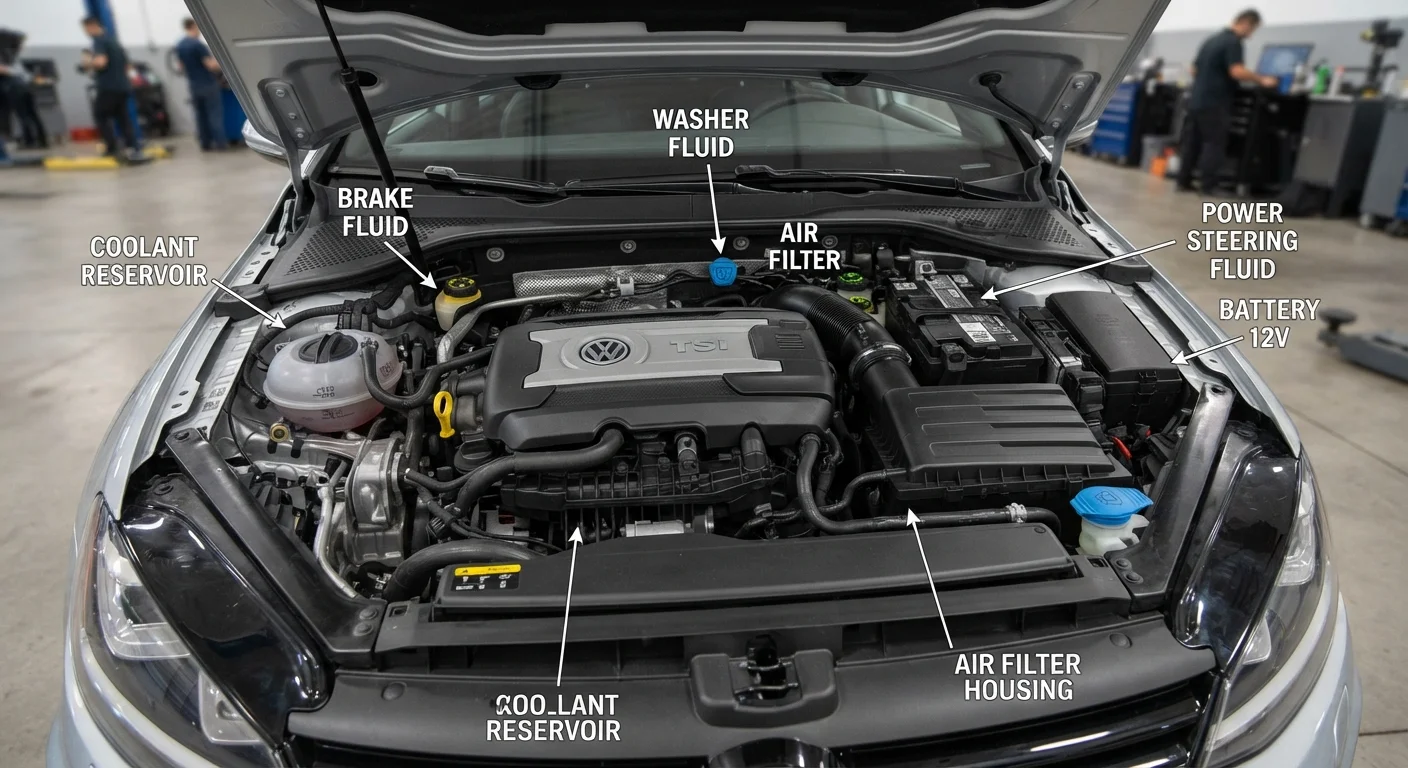
Coolant circulates between the engine and the radiator, absorbing heat and preventing both overheating and freeze-up. A low coolant level can cause the engine temperature to spike rapidly. Warning signs include a rising temperature gauge, sweet-smelling steam from under the hood, or the low-coolant indicator light. Never open the radiator cap on a hot engine-serious burns can result. Check the coolant level in the translucent overflow reservoir when the engine is cold.
Brake Fluid
Hydraulic brake systems rely on fluid to transmit pedal force to the wheel calipers. Because brake fluid is hygroscopic, it absorbs moisture over time, which lowers its boiling point and can lead to brake fade under hard use. A spongy pedal, longer stopping distances, or a dashboard warning light are signals to have the system inspected promptly. For more on how the broader braking system works, see our overview of brake pads, rotors, and calipers.
Transmission Fluid
Transmission fluid lubricates gears, cools internal components, and-in automatics-also acts as a hydraulic medium. Degraded fluid turns dark and smells burnt. Slipping gears, hesitation during shifts, or unusual grinding noises are all reasons to have transmission fluid inspected by a mechanic. Checking the level requires either a dipstick (older vehicles) or a sealed-system inspection at a shop (many modern vehicles).
Power Steering Fluid
Traditional hydraulic power steering systems use a pump and fluid to reduce the effort needed to turn the wheel. A whining noise when turning or heavy, stiff steering can indicate low fluid or a failing pump. Note that many vehicles built in the last decade use electric power steering and have no fluid reservoir-check your owner's manual to confirm which type your vehicle uses.
Windshield Washer Fluid
While not a mechanical necessity, washer fluid directly affects visibility and safety. Low washer fluid is the only reservoir issue you can temporarily address with plain water; however, dedicated washer fluid contains detergents and, in cold-weather formulas, antifreeze agents that plain water lacks. Check levels before long trips and before winter weather arrives. Our seasonal car care checklist covers washer fluid alongside other weather-related maintenance items.
Coolant (Antifreeze)
A liquid mixture-usually ethylene glycol and water-that circulates through the engine to regulate operating temperature. It prevents both overheating in summer and freezing in winter.
Brake Fluid
A hydraulic fluid that transfers the force from your brake pedal through the brake lines to the calipers at each wheel. It is hygroscopic, meaning it absorbs moisture over time, which lowers its boiling point.
Transmission Fluid
A lubricating and cooling fluid for the transmission's gears, clutch packs, and internal components. Automatic and manual transmissions typically require different fluid specifications.
Power Steering Fluid
A hydraulic fluid that enables the power steering pump to reduce steering effort. Many newer vehicles use electric power steering and have no fluid reservoir at all.
Windshield Washer Fluid
A water-based solution containing detergent and, in many formulas, an antifreeze agent. It is the only vehicle fluid safe to top off with a non-automotive substitute (plain water) in a pinch, though dedicated fluid is preferred.
Hydraulic System
Any system that uses pressurized fluid to transmit mechanical force. In cars, brakes and traditional power steering both rely on hydraulic principles.
Reservoir
A small tank under the hood that holds a supply of fluid for a specific system. Checking reservoir levels is one of the simplest routine maintenance tasks a driver can perform.
Hygroscopic
Describes a substance that readily absorbs moisture from the surrounding air. Brake fluid's hygroscopic nature is why it requires periodic flushing even if the level appears normal.
Reading the Warning Signs and Knowing When to Act
Most fluid problems announce themselves before they become serious-if you know what to look for. Puddles under a parked car, unusual odors, abnormal sounds, or dashboard warning lights are all early signals.
Always Consult Your Owner's Manual
Fluid specifications-type, capacity, and service interval-vary by vehicle make, model, and year. The intervals cited in this article are general industry guidelines only. Your owner's manual is the authoritative source for your specific vehicle. When in doubt, a qualified mechanic can check fluid condition and recommend appropriate service.
Dashboard warning lights often correspond directly to fluid systems. A brake warning light may indicate low brake fluid. A temperature warning means coolant is failing to do its job. To understand the full range of dashboard indicators, see our guide to what your car's warning lights are actually telling you.
When you notice any of the warning signs described above, prioritize a professional inspection rather than simply topping off the reservoir. Fluid loss usually signals a leak or a component issue that adding more fluid will not fix. Acting early is nearly always less expensive than waiting.
~80%
Of roadside breakdowns linked to fluid or maintenance neglect
Industry estimates from AAA suggest the majority of non-accident breakdowns involve preventable maintenance issues, including fluid failures.
3°F rise
In brake fluid boiling point lost per 1% moisture absorption
Automotive engineering references note that moisture contamination significantly reduces brake fluid's thermal performance, raising fade risk.