

Key Takeaways
Saves money on labor for simple tasks
Routine jobs like filter swaps and wiper replacement can cost $50-$100 at a shop when the parts themselves cost under $20. Doing these yourself recaptures that labor margin.
Builds familiarity with your vehicle
Regular hands-on inspection helps you notice changes in fluid levels, belt condition, or unusual buildup before they develop into mechanical problems.
Flexible scheduling on your timeline
You can address minor items the moment you notice them rather than waiting for a shop appointment, which matters for time-sensitive checks like low washer fluid before a winter trip.
Reinforces maintenance discipline
Drivers who handle their own routine upkeep tend to stay more aware of service intervals and are less likely to let minor tasks slide into neglect.
Risk of injury on unsafe or complex jobs
Working under an improperly supported vehicle or on brake hydraulics without the right tools can cause serious injury. Safety-critical systems demand professional training and equipment.
Mistakes can cause expensive secondary damage
Over-tightening a drain plug, using the wrong oil grade, or misrouting a belt can trigger failures that cost significantly more to repair than the original service.
Upfront tool investment for some tasks
A torque wrench, hydraulic jack, and jack stands are essential minimums for several common jobs. These have upfront costs that may outweigh savings for infrequent DIYers.
May affect warranty or insurance coverage
Improper DIY repairs documented in service records can complicate warranty claims. Always verify what your vehicle warranty and any extended service contract allows.
Brake, suspension, and airbag work is high-stakes
Errors in brake or suspension repairs directly affect vehicle control. Airbag systems can deploy unexpectedly during service if not properly disabled-these jobs require professional handling.
Our Verdict
DIY car maintenance is a practical, cost-effective approach for straightforward tasks like replacing filters, topping fluids, and swapping wiper blades. However, the potential savings disappear quickly if an improperly completed job causes damage or creates a safety risk. Knowing your limits-and recognizing when to call a professional-is itself a form of smart vehicle ownership.
Best for drivers who are comfortable with basic tools, willing to consult their owner's manual, and want to take an active role in routine upkeep without tackling complex or safety-critical repairs.
The Case for Handling Some Maintenance Yourself
Professional labor rates at auto shops can range from $75 to well over $150 per hour depending on location and specialty. For straightforward jobs that take 15-30 minutes and require only basic tools, paying that rate is often unnecessary. More importantly, staying engaged with your vehicle's condition helps you notice changes early-before a small issue becomes a costly one.
That said, DIY maintenance only makes sense when you have the right information, the correct tools, and a realistic picture of your own skill level. Attempting a job you're not equipped to complete correctly can cause damage that costs far more to fix than the original service would have. As a starting point, always cross-reference any task against your owner's manual. Our guide on reading your owner's manual maintenance schedule explains exactly how to find and use that information.
Saves money on labor for simple tasks
Routine jobs like filter swaps and wiper replacement can cost $50-$100 at a shop when the parts themselves cost under $20. Doing these yourself recaptures that labor margin.
Builds familiarity with your vehicle
Regular hands-on inspection helps you notice changes in fluid levels, belt condition, or unusual buildup before they develop into mechanical problems.
Flexible scheduling on your timeline
You can address minor items the moment you notice them rather than waiting for a shop appointment, which matters for time-sensitive checks like low washer fluid before a winter trip.
Reinforces maintenance discipline
Drivers who handle their own routine upkeep tend to stay more aware of service intervals and are less likely to let minor tasks slide into neglect.
Tasks Most Drivers Can Safely Do at Home
The following jobs are generally low-risk when performed carefully and with the manufacturer's specifications in hand:
- Engine air filter replacement: Typically a tool-free job on most vehicles. The filter housing is usually accessible in seconds, and the correct filter part number is listed in your owner's manual.
- Windshield wiper blades: Straightforward clip-in replacement. Measure blade length or check your manual before purchasing.
- Cabin air filter: Usually located behind the glove box or under the dashboard. Consult a vehicle-specific guide if needed.
- Topping off fluids: Windshield washer fluid, coolant (reservoir only, and only when the engine is cold), and power steering fluid are safe to top off. Never open a pressurized coolant cap on a warm engine.
- Battery terminal cleaning: Disconnecting and cleaning corroded terminals with a wire brush is manageable, but follow safety precautions-disconnect the negative terminal first.
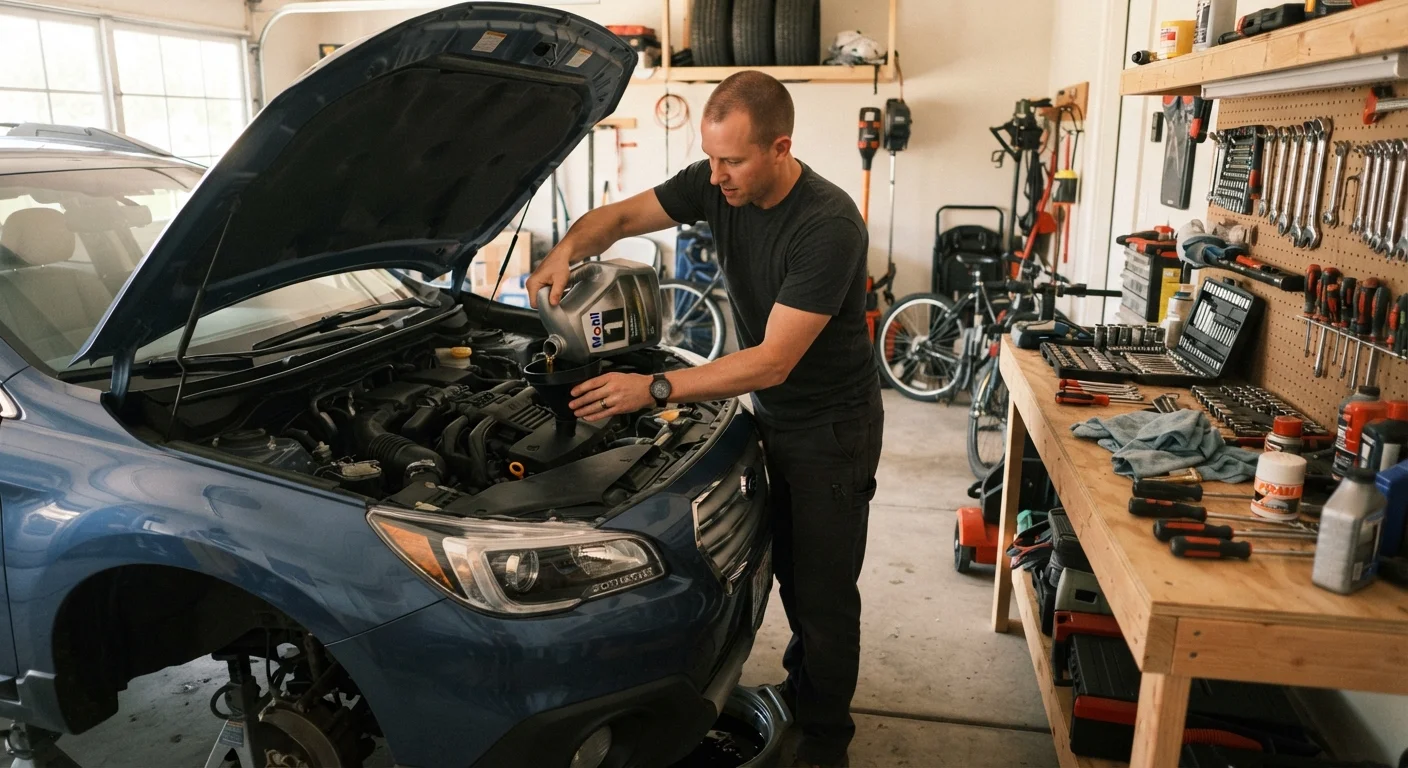
- Oil changes: Possible at home with the right equipment, but requires a drain pan, proper jack stands, and knowledge of the correct oil grade and filter. See our piece on common oil change myths to avoid missteps.
Jobs That Belong in a Professional Shop
Some repairs carry real safety consequences if done incorrectly. These are not tasks to experiment with:
Risk of injury on unsafe or complex jobs
Working under an improperly supported vehicle or on brake hydraulics without the right tools can cause serious injury. Safety-critical systems demand professional training and equipment.
Mistakes can cause expensive secondary damage
Over-tightening a drain plug, using the wrong oil grade, or misrouting a belt can trigger failures that cost significantly more to repair than the original service.
Upfront tool investment for some tasks
A torque wrench, hydraulic jack, and jack stands are essential minimums for several common jobs. These have upfront costs that may outweigh savings for infrequent DIYers.
May affect warranty or insurance coverage
Improper DIY repairs documented in service records can complicate warranty claims. Always verify what your vehicle warranty and any extended service contract allows.
Brake, suspension, and airbag work is high-stakes
Errors in brake or suspension repairs directly affect vehicle control. Airbag systems can deploy unexpectedly during service if not properly disabled-these jobs require professional handling.
When in Doubt, Get a Professional Opinion
If you are unsure whether a noise, leak, or warning light is something you can address yourself, a brief diagnostic inspection at a reputable shop is money well spent. Many shops charge little or nothing for a visual check, and the information you get helps you make an informed decision about next steps. Never ignore a brake warning light, steering pull, or fluid leak in the hope it resolves on its own.
Keeping up with even the simpler items on this list goes a long way. Neglecting routine upkeep-even the tasks you could do yourself-tends to compound into larger repair bills. Our article on why deferred maintenance costs more breaks down how that cycle works.
Building a Practical DIY Maintenance Routine
The most sustainable approach is a tiered one: handle the simple, low-risk items yourself, and budget appropriately for professional service on anything beyond that. A seasonal checklist is a useful framework-our seasonal car care checklist covers what to verify each time the weather shifts.
$1,200+
Average annual vehicle maintenance cost per driver
According to AAA research, US drivers spend an average of over $1,200 per year on vehicle maintenance and repairs, underscoring the value of reducing labor costs where safely possible.
~30%
Maintenance cost reduction potential with DIY basics
Industry estimates suggest that handling simple tasks-filters, wipers, fluid checks-at home can offset a meaningful portion of annual maintenance spending by eliminating routine labor charges.
Keep a small logbook or digital note of every service you perform, including the date, mileage, and product used. This record helps you stay on schedule, supports resale value documentation, and gives a mechanic useful context if a problem arises later.
This article provides general educational information about vehicle maintenance. It is not a substitute for manufacturer guidelines or advice from a qualified mechanic. Always follow your vehicle's owner's manual and consult a licensed automotive professional for repairs involving safety systems or work beyond your experience level.