

Key Takeaways
Why the Owner's Manual Beats Generic Advice
Most drivers pick up maintenance intervals from word of mouth, stickers left by oil-change shops, or general automotive sites - and while this information isn't always wrong, it's rarely optimized for a specific vehicle. Your owner's manual was written by the engineers who designed your car. It accounts for your engine's tolerances, the drivetrain's expected wear patterns, the climate assumptions built into the design, and the fluids your components require.
Generic schedules - like "change your oil every 3,000 miles" - have roots in older engine technology and are outdated for most modern vehicles, which commonly specify intervals of 5,000 to 10,000 miles or more depending on oil type. Following an unnecessarily short interval costs money; following one that's too long for your driving conditions causes wear. The manual gives you the right answer for your car. If you're new to managing your own upkeep, our introduction to car maintenance for new drivers is a useful starting point before diving into the schedule.
Generic Advice Isn't Built for Your Car
Interval recommendations you find online or at a quick-lube shop are often generic and may not match your vehicle's engineering. Turbocharged engines, for instance, frequently require shorter oil-change intervals than naturally aspirated ones. Your owner's manual is calibrated to your specific engine, drivetrain, and intended use - always treat it as the primary authority over third-party recommendations.
How to Find and Use the Maintenance Schedule
The steps below walk you through locating your maintenance schedule, interpreting it correctly, and translating it into an actionable service plan. You'll need your manual, your current mileage, and something to write with.
What you will need
Owner's Manual
The primary source of all manufacturer-specified maintenance intervals and fluid specifications for your vehicle.
Notepad or Maintenance Log App
Used to record upcoming service milestones so you don't lose track between visits.
Odometer Reading
Your current mileage tells you where you stand relative to the manual's interval milestones.
Digital Manual (Manufacturer Website)
A free PDF backup if the physical booklet is missing from your glove box.
Locate the maintenance schedule in your manual
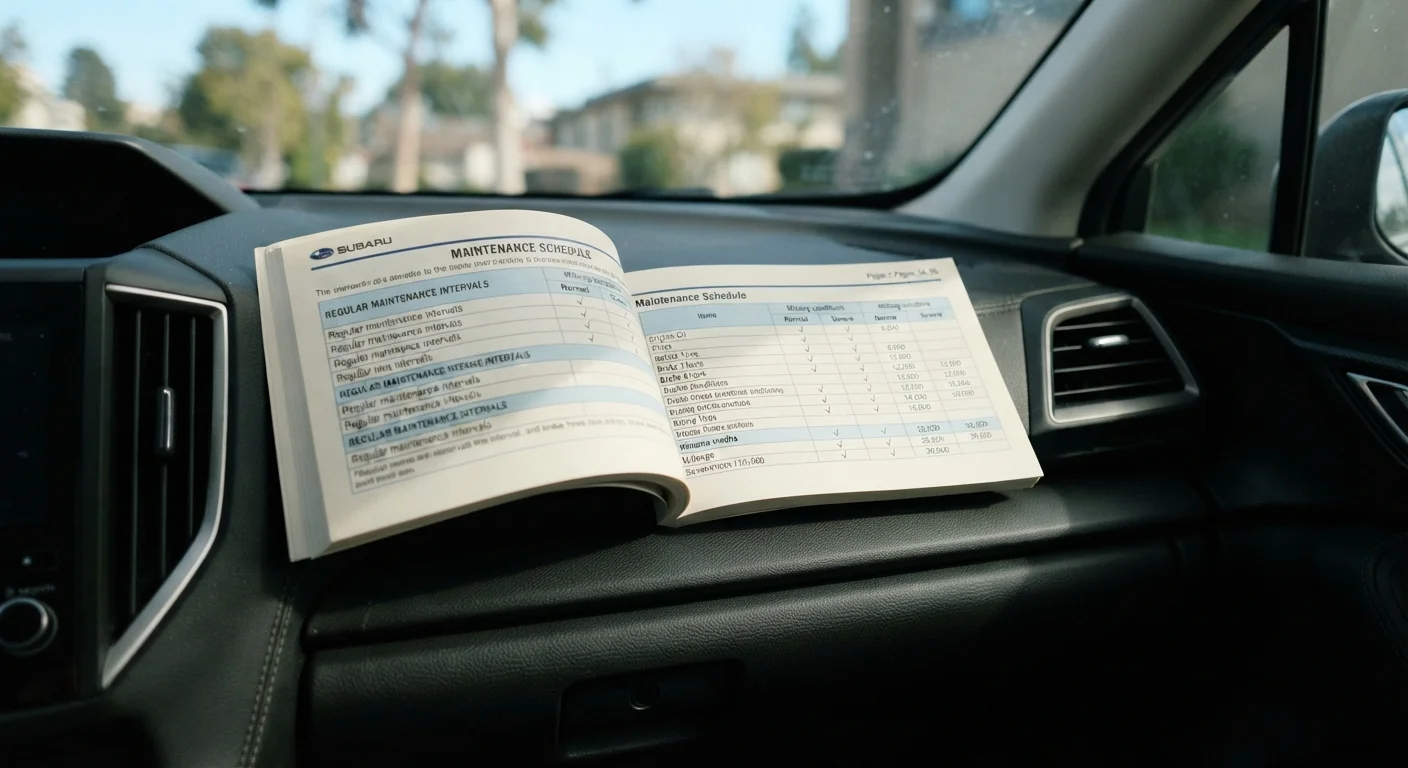
Open your owner's manual and look for a section titled "Scheduled Maintenance," "Maintenance Schedule," or "Service Intervals." It is usually found in the final third of the manual. If you can't find it by browsing, check the table of contents - the section is almost always indexed by name. On most manuals, it spans several pages organized as a table or checklist.
Identify whether your driving qualifies as 'severe'
Nearly every maintenance schedule in an owner's manual is divided into two tracks: Normal and Severe (sometimes called "Special Operating Conditions"). Severe driving typically includes frequent short trips under five miles, stop-and-go city traffic, towing or hauling heavy loads, driving in extreme temperatures, or operating on dusty or unpaved roads. If your commute or lifestyle matches any of these, use the severe schedule - it calls for more frequent service. Using the normal schedule when your driving is actually severe can accelerate wear on key components.
Read across the mileage and time columns
Maintenance schedules are typically organized in columns by mileage intervals (e.g., 5,000 / 10,000 / 15,000 miles) and, in many cases, by time elapsed (e.g., every 6 months or 12 months). Service is due at whichever threshold arrives first - mileage or time. A vehicle driven fewer than 7,500 miles per year, for example, may still need an oil change based on time rather than mileage. Read both columns carefully rather than focusing only on the mileage figures.
Cross-reference fluid and filter specifications
The maintenance schedule often references specific fluid types and grades (such as engine oil viscosity or transmission fluid specification). These are listed in a companion section of the manual - frequently labeled "Fluids and Lubricants" or "Specifications." Using the wrong fluid type can void coverage under a powertrain warranty and, in some cases, damage components. Before any fluid service, verify both the interval from the schedule and the specification from this section. For a deeper look at engine oil grades and what those numbers mean, see our guide to engine oil grades and intervals.
Note upcoming service milestones and record completed work
Once you know where you stand in the schedule, write down your next two or three upcoming service milestones - both by mileage and by date. Keep this note in the glove box or in a maintenance app. Each time a service is completed, log the date, mileage, and what was done. This record becomes your vehicle's maintenance history, which matters considerably if you ever need to make a warranty claim or sell the car. For more on why documentation counts, see why keeping maintenance records matters more than most owners realize.
Dealer 'Recommended Services' May Differ From the Manual
Service advisors sometimes recommend maintenance items - such as fuel-system flushes or transmission services - at intervals shorter than what the manufacturer specifies. These upsells are not necessarily harmful, but they are not always required. Before agreeing to any unscheduled service, check whether it appears in your owner's manual's schedule and at what interval. Informed decisions start with knowing what your manufacturer actually calls for.
Missing Your Intervals Can Void Warranty Coverage
Some powertrain and emissions warranty provisions require documented adherence to the manufacturer's maintenance schedule. Skipping or significantly delaying a scheduled service - and being unable to prove otherwise - can give a manufacturer grounds to deny a warranty claim related to that system. Keep receipts and service records for every visit, whether you go to a dealership, an independent shop, or do the work yourself.
Once you've established your schedule and started logging services, you'll have the foundation of a proper ownership record. If you're curious about how that history affects things beyond just upkeep - including resale value and high-mileage considerations - see what the odometer doesn't tell you about road safety on high-mileage vehicles. For guidance on which scheduled tasks are reasonable to handle yourself versus handing off to a professional, our DIY car maintenance guide covers that distinction clearly.