

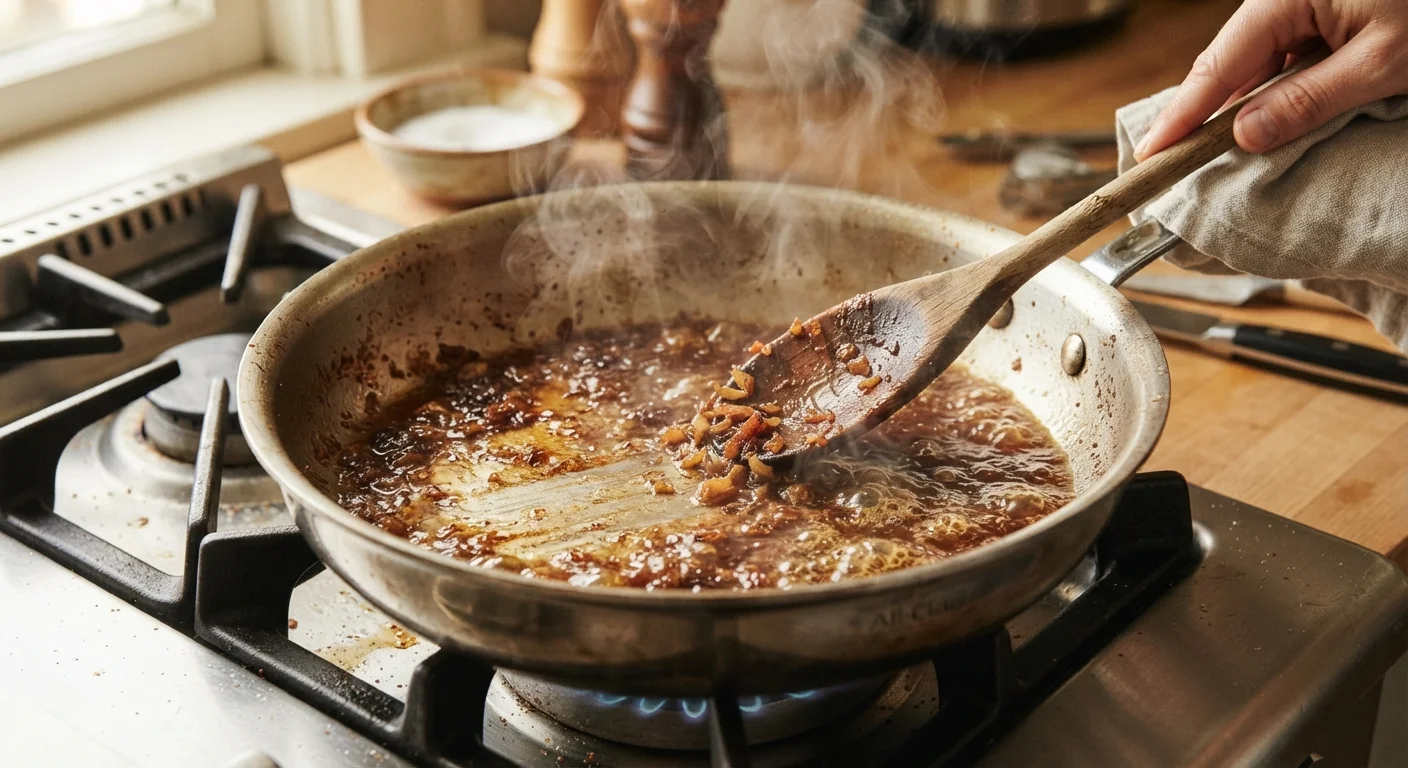
| What fond is | Caramelized residue from searing; a flavor source, not burnt food |
| Classic emulsifiers | Egg yolk, Dijon mustard, lecithin |
| Blooming works because | Many spice compounds are fat-soluble, not water-soluble |
| Resting time (general guide) | 5-10 min for steaks; 20-30 min for larger roasts |
| Reduction rule of thumb | Simmer uncovered; stir occasionally; watch volume, not just time |
Why Culinary Vocabulary Actually Matters
Recipes assume a shared language. When an instruction says "deglaze the pan" or "bloom the spices," it expects you to already know what that means - and skipping over those terms is one of the most common reasons a dish turns out differently than expected. This isn't about mastering chef-school jargon. It's about understanding what a recipe is actually asking you to do, so the technique lands correctly. If you want to go deeper on reading recipes with intention, reading a recipe before you start is a natural companion to this guide.
The terms below are among the most frequently used - and least explained - in everyday home cooking. Each one describes a specific action or result that changes the food in a meaningful, reproducible way.
Fond
The browned, caramelized residue left on the bottom of a pan after searing or sautéing. It is packed with concentrated flavor and forms the foundation of pan sauces when deglazed.
Deglazing
Adding liquid to a hot pan to dissolve the fond from the surface. The liquid absorbs the flavor compounds and becomes the base for a sauce.
Emulsification
The process of combining oil and water into a stable, uniform mixture using an emulsifier such as egg yolk or mustard. The result is a smooth, cohesive sauce or dressing.
Blooming
Briefly heating dried spices in fat or a dry pan to activate and release their aromatic, fat-soluble compounds before the main cooking begins.
Reduction
The process of simmering a liquid to evaporate water, concentrating its flavor and often thickening its consistency.
Braising
A moist-heat cooking method that begins with searing and then finishes the food low and slow in a small amount of liquid, partially covered. It is used most often for tougher cuts of meat.
Resting
Allowing cooked meat to sit off heat for several minutes before cutting. This lets the muscle fibers relax and retain their juices, keeping the meat moist.
Tempering
Gradually raising the temperature of a sensitive ingredient - such as eggs or chocolate - by slowly introducing heat or a warm liquid, preventing curdling or seizing.
The Terms Explained in Plain Language
These concepts appear across cuisines and cooking methods. Understanding them gives you tools that transfer well beyond any single recipe.
| What fond is | Caramelized residue from searing; a flavor source, not burnt food |
| Classic emulsifiers | Egg yolk, Dijon mustard, lecithin |
| Blooming works because | Many spice compounds are fat-soluble, not water-soluble |
| Resting time (general guide) | 5-10 min for steaks; 20-30 min for larger roasts |
| Reduction rule of thumb | Simmer uncovered; stir occasionally; watch volume, not just time |
Fond and Deglazing
Fond refers to the browned, caramelized residue that sticks to the bottom of a pan after searing meat or sautéing vegetables. It is concentrated flavor - not burned food. Deglazing is the process of adding liquid (wine, stock, water, vinegar) to a hot pan and scraping up that fond, dissolving it into the liquid to form the base of a pan sauce. The technique is simple but requires a hot pan and immediate action. For a broader look at how flavor compounds this way, see our guide on building flavor with aromatics.
Emulsification
Emulsification is the process of combining two liquids that don't naturally mix - typically oil and water - into a stable, unified mixture. Vinaigrette, mayonnaise, and hollandaise are all emulsions. An emulsifier (such as egg yolk, mustard, or lecithin) contains molecules that bond to both oil and water, holding the mixture together. Without one, oil and water will separate quickly.
Blooming Spices
Blooming means heating dried spices - whole or ground - briefly in fat or a dry pan before adding other ingredients. Heat activates fat-soluble aromatic compounds in spices that wouldn't otherwise fully release into a dish. Ground cumin bloomed in oil smells and tastes noticeably more vivid than cumin stirred in cold or added late. This is a technique that home cooks sometimes skip without realizing what they're losing.
Reduction, Braising, and Resting
Reduction means simmering a liquid until some of its water evaporates, concentrating flavor and often thickening consistency. A sauce "reduced by half" loses roughly 50% of its original volume. Braising is a moist-heat method: protein is first seared (dry heat) then cooked low and slow in liquid, partially submerged. The difference between dry and moist heat determines which technique fits which ingredient. Resting is the practice of letting cooked meat sit off heat before cutting - it allows muscle fibers to relax and reabsorb juices that would otherwise run out when sliced.
Tempering: A Term Worth Flagging
Tempering appears in both savory and baking contexts with different meanings. In custard and egg-based sauces, it means slowly adding hot liquid to eggs to raise their temperature gradually and avoid scrambling. In chocolate work, it refers to a controlled melting and cooling process that aligns cocoa butter crystals for a glossy finish. When you see the word, check which context applies before proceeding.
When a recipe uses terms you don't recognize mid-cook, the most common cooking errors guide can help identify what likely went wrong and how to recover.