

Key Takeaways
Why Kitchen Food Safety Is a Daily Practice
Foodborne illness affects millions of Americans every year, yet most cases trace back to a handful of preventable mistakes made at home. Unlike a restaurant kitchen with posted protocols and health inspections, a home kitchen runs on habits - which means the cook sets the standard.
Good food safety isn't about memorizing a long rulebook. It's about understanding a few core principles and building them into normal cooking routines. These habits protect everyone at the table, especially children, older adults, pregnant individuals, and anyone with a compromised immune system, who face greater risks from contaminated food.
For a full foundation in confident home cooking, see the comprehensive guide to cooking from scratch, which covers technique, pantry knowledge, and safe kitchen practices together.
Temperature: The Rule Every Cook Needs to Internalize
Bacteria multiply rapidly between 40°F and 140°F - a range food safety professionals call the temperature danger zone. Food that spends more than two cumulative hours in this range should be discarded, not refrigerated and saved for later.
This rule affects three common moments: cooling leftovers, thawing frozen food, and holding cooked food before serving. Hot food should be cooled quickly - divide large portions into shallow containers so heat escapes faster before refrigerating. Never thaw meat on the counter; use the refrigerator, cold running water, or the microwave if you're cooking immediately after.
Understanding why specific temperatures matter makes it easier to apply them flexibly. The logic behind cooking times and temperatures explains the reasoning in practical terms, from safe poultry temps to why low-and-slow works for tough cuts.
Cross-Contamination: Keeping Surfaces and Tools Separate
Raw meat, poultry, and seafood carry pathogens that can transfer to ready-to-eat foods through shared surfaces, utensils, or unwashed hands. This is cross-contamination - and it's entirely avoidable with a few spatial and behavioral habits.
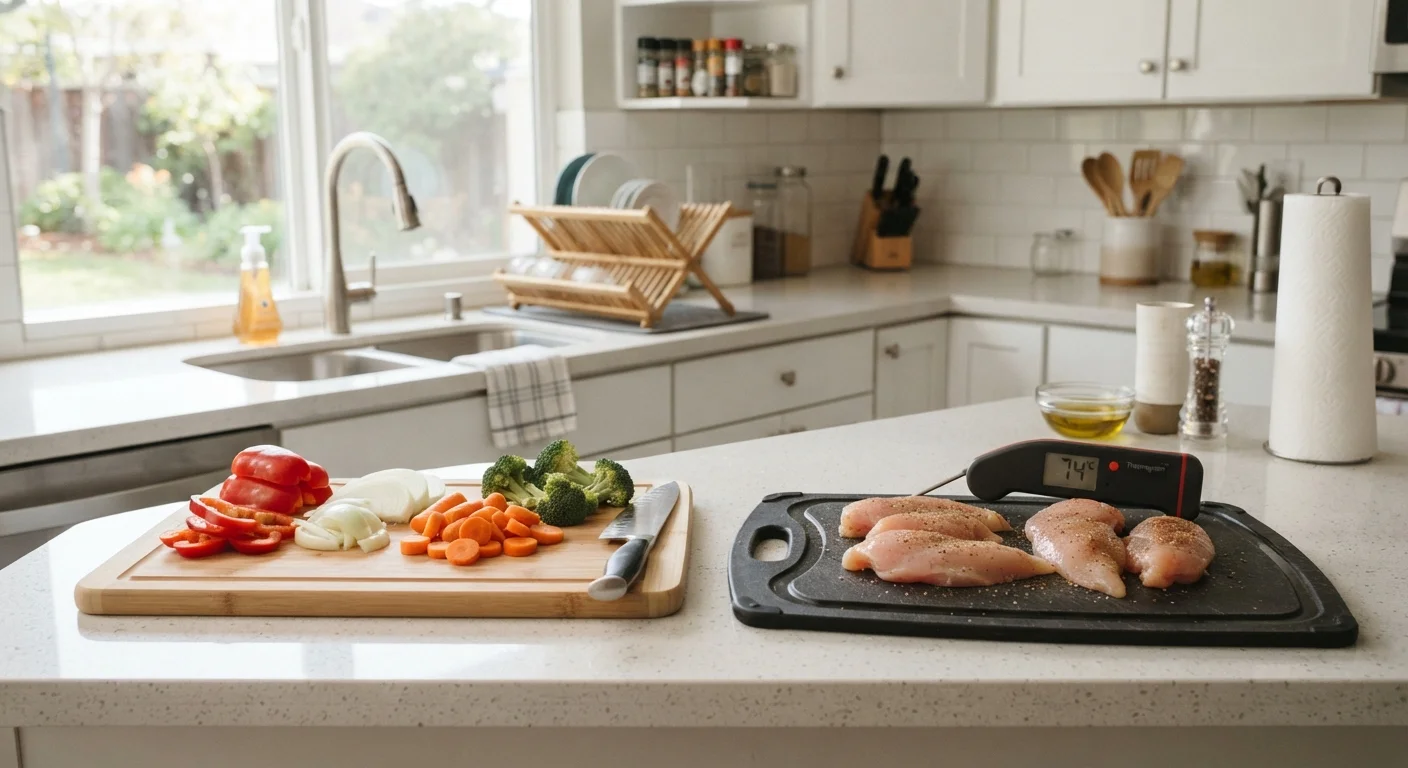
Use separate cutting boards for raw proteins and produce. Color-coded boards help remove any guesswork. Wash and sanitize surfaces, knives, and utensils that touched raw meat before using them for anything else - soap and hot water, followed by a sanitizing rinse, is sufficient for most home kitchens.
The same separation applies inside the refrigerator: raw meat belongs on the bottom shelf, below ready-to-eat foods, so drips can't fall onto produce or cooked items. Good knife handling habits also reduce cross-contamination risk by keeping prep organized and intentional.
Quick Wins You Can Apply Before Your Next Meal
Food safety improvements don't require new equipment or extra time - most are simply about sequencing and awareness. The following actions are low-effort and high-impact, and many can be implemented the very next time you cook.
Before you start any recipe, take a moment to set up your workspace with safety in mind. The kitchen readiness checklist walks through exactly that kind of pre-cook setup, helping you avoid the scrambles that lead to shortcuts.