

Key Takeaways
Cooking Time & Temperature
Cooking time and temperature determine how heat moves through food, what chemical changes occur, and whether the result is safe to eat. Together they control protein coagulation, moisture loss, collagen breakdown, and pathogen destruction. Getting either variable wrong - too hot, too cool, too long, or too short - changes the outcome in predictable, science-backed ways.
Internal temperature, not oven or pan temperature, is the definitive measure of doneness. Surface heat and core temperature can differ by 50°F or more depending on the food's thickness and density.
Why Temperature Is a Variable, Not a Setting
Most home cooks treat oven temperature as a fixed instruction to follow - set it to 375°F and proceed. But temperature is better understood as a tool you're calibrating to a specific outcome. Every food has a structure that responds to heat in a predictable way, and knowing those responses lets you make smarter decisions in real time.
Proteins in meat, eggs, and fish begin to denature - that is, to unfold and firm up - starting around 120°F and continuing through roughly 160-170°F depending on the protein. This is why a medium-rare steak at 130-135°F has a very different texture than a well-done steak at 160°F. Neither is wrong; they're just different points on the same continuum of protein transformation.
For a deeper look at how heat behaves at the cooking surface itself, see why pan temperature matters more than your recipe.
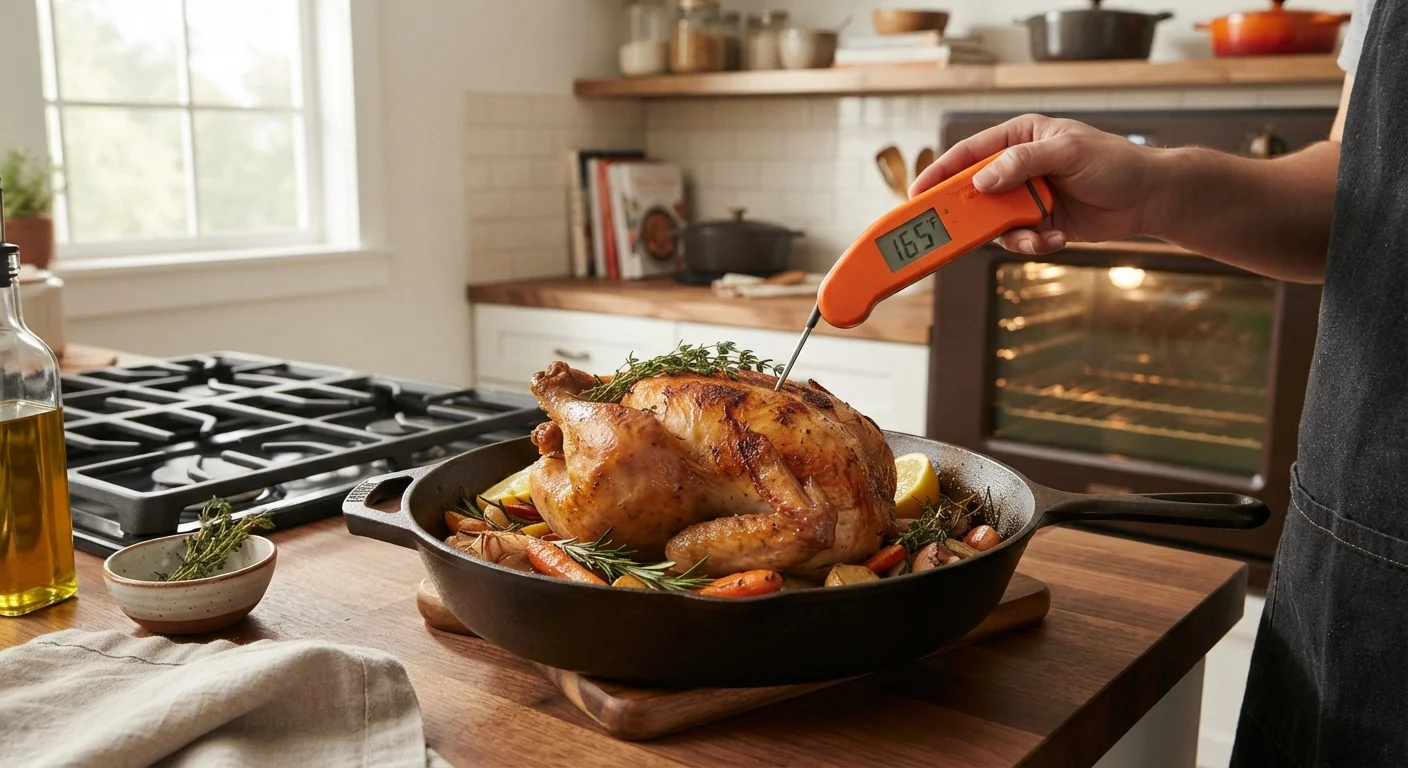
165°F
USDA safe internal temperature for poultry
According to USDA guidelines, this temperature reliably destroys Salmonella and other common poultry-associated pathogens.
280°F+
Surface temperature needed for Maillard browning
Food science research identifies this threshold as the minimum surface temperature at which meaningful Maillard reaction browning occurs.
5-10°F
Average carryover temperature rise in thick cuts
Culinary science sources note that large roasts and thick steaks commonly rise this much in internal temperature after being removed from heat.
The Case for Low-and-Slow: Collagen and Connective Tissue
Tough cuts - brisket, short ribs, pork shoulder, lamb shank - come from muscles that worked hard during an animal's life. That muscle activity builds significant collagen, the structural protein woven through connective tissue. Collagen is what makes these cuts chewy and resistant when cooked quickly at high heat.
The solution is sustained, moderate heat over time. Between roughly 160°F and 205°F, collagen gradually hydrolyzes into gelatin. Gelatin is what gives a properly braised dish its silky, rich texture and what makes the meat pull apart easily. This conversion takes hours - which is why a braise or a slow-roasted pork shoulder can't be rushed without sacrificing texture.
Conversely, applying high, fast heat to a collagen-rich cut simply contracts the muscle fibers and squeezes moisture out before the collagen has time to break down. The result is dry and tough - not because of poor quality meat, but because the wrong tool was used for the job.
Match the Method to the Muscle
Before choosing a cooking temperature, consider where the cut comes from on the animal. Muscles that worked hard - shoulders, legs, brisket - need long, moist, low heat to become tender. Muscles that rested - loins, tenderloins, ribs - respond well to quick, high heat. This single distinction resolves most decisions about time and temperature before you've even turned on the stove.
High Heat's Role: Browning, Crust, and Flavor
Not everything benefits from gentle heat. The Maillard reaction - the chemical interaction between amino acids and reducing sugars that produces browning, crust, and hundreds of complex flavor compounds - requires surface temperatures above approximately 280°F. This reaction simply cannot happen in a moist or low-heat environment.
This is why searing a steak in a hot pan before or after roasting it produces flavor that oven heat alone cannot replicate. It's also why bread develops a crust, and why roasted vegetables taste fundamentally different from steamed ones. The flavor isn't in the heat itself - it's in the chemical reaction that high surface heat enables.
Understanding dry heat vs. moist heat cooking methods clarifies when you need the Maillard reaction and when moisture is the better choice.
“Heat is the cook's most fundamental ingredient. Everything else - seasoning, technique, equipment - serves the goal of applying the right amount of heat to the right food at the right moment.”
— Harold McGee, Author of 'On Food and Cooking: The Science and Lore of the Kitchen'
Food Safety Is Physics, Not Guesswork
The USDA's recommended safe internal temperatures - 165°F for poultry, 145°F for whole cuts of beef, pork, and fish - are based on pathogen destruction curves determined through food science research. These aren't conservative suggestions; they reflect the temperatures at which bacteria such as Salmonella are reduced to negligible levels within a defined time window.
Color is not a reliable indicator of safety. Poultry can appear fully cooked while still harboring harmful bacteria if the internal temperature hasn't reached the safe threshold. Conversely, some ground beef can brown before reaching 160°F. Only a calibrated thermometer inserted into the thickest part of the food gives you an honest answer.
For a broader grounding in kitchen safety practices, food safety habits that belong in every home kitchen covers the full range of risks - from thawing to cooling - that affect food you serve to others.
Carryover Cooking and Why Timing Still Matters
Heat doesn't stop moving the moment food leaves the oven. The outer layers of a thick roast are significantly hotter than the center, and that gradient continues pushing heat inward during resting. For large cuts, this carryover effect can raise the internal temperature by 5-10°F - enough to overcook a roast if you don't account for it.
Resting also allows muscle fibers, which have contracted under heat, to relax slightly and reabsorb some of the moisture they expressed during cooking. This is why resting your meat after cooking consistently produces juicier results than slicing immediately. Time, in this phase, is just as active a cooking variable as the heat source itself.
Once you understand these principles - protein behavior, collagen conversion, Maillard browning, pathogen destruction, and carryover - recipes stop being rigid instructions and start being starting points you can read critically. That's the real payoff of foundational kitchen knowledge, and it applies whether you're keeping a dish simple or tackling something more ambitious.