

Key Takeaways
Start here
What Mise en Place Actually Means
Apply it
How to Practice It at Home
Understand the payoff
Why It Makes You a Better Cook
Avoid pitfalls
Common Beginner Mistakes to Avoid
What Mise en Place Actually Means
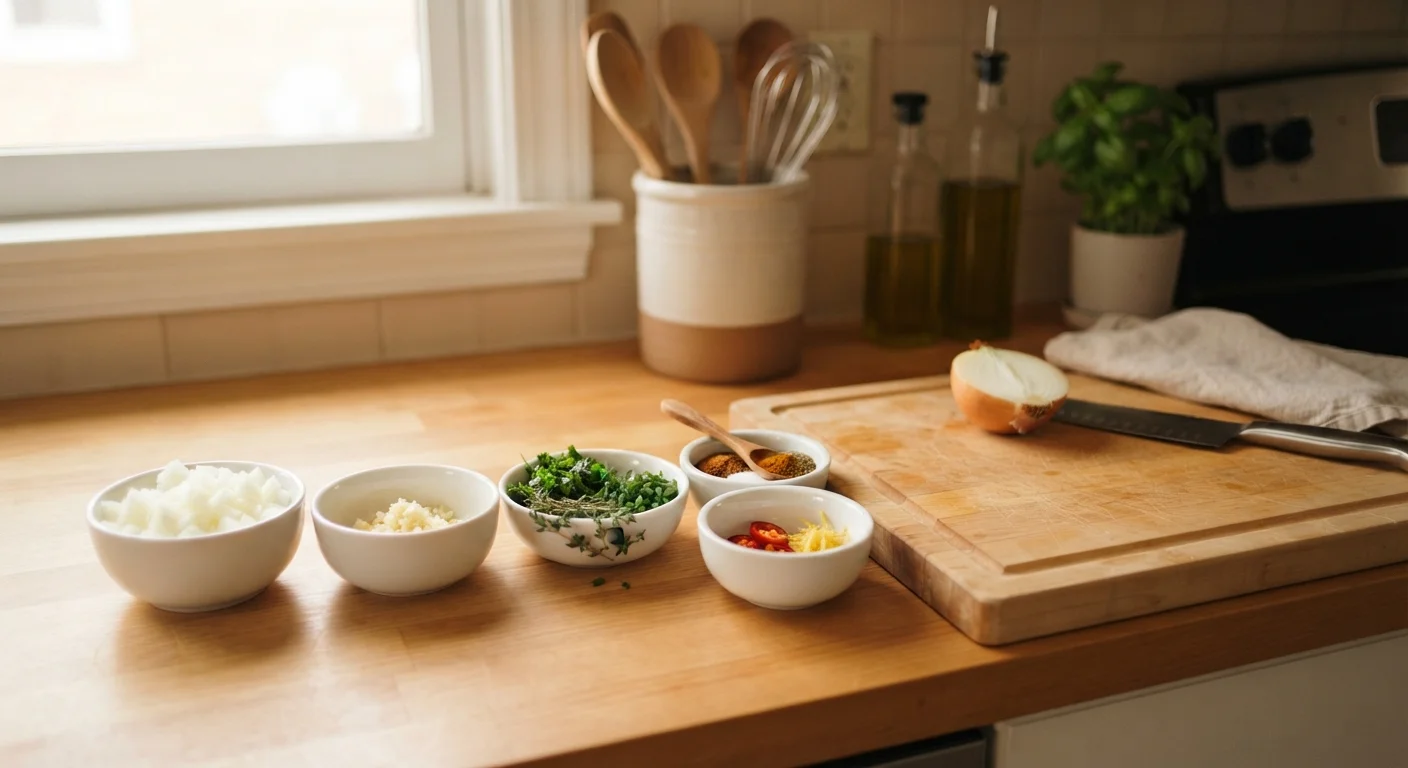
Mise en place (pronounced meez ahn plahs) is a French term used in professional kitchens to mean everything in its place. In practice, it means every ingredient is measured, cut, portioned, and organized before a single burner is turned on. Sauces are made, aromatics are chopped, spices are measured into small bowls - all within arm's reach before cooking starts.
The concept originated in classical French culinary training, where a cook's mise en place was considered a direct reflection of their discipline and competence. But the underlying logic is universal: cooking under a running clock while hunting for a spice or dicing an onion with something already burning is a recipe for frustration and inconsistency.
Mise en place
A French culinary term meaning 'everything in its place.' It refers to having all ingredients measured, prepped, and organized before cooking begins.
Aromatics
Ingredients like garlic, onion, shallots, and ginger that are cooked early in a recipe to build a flavor base for the dish.
Blooming spices
The technique of briefly heating dry spices in oil or fat to activate their flavor compounds before other ingredients are added.
Staging
Organizing prepped ingredients into groups based on when they'll be added during cooking, so each addition is ready at the right moment.
Before any prep begins, the foundational step is reading the entire recipe from start to finish. This is something reading a recipe carefully before you start covers in detail - and it's inseparable from an effective mise en place.
How to Practice It at Home
Mise en place at home doesn't require a restaurant setup. Here's a simple, repeatable process:
- Read the full recipe first. Identify every ingredient and technique step so nothing surprises you mid-cook.
- Gather all ingredients. Pull everything from the pantry and refrigerator before you touch a knife. Missing something now is far better than discovering it when your onions are already browning.
- Prep in order of time sensitivity. Ingredients that take longest to prep - root vegetables, whole spices that need toasting, proteins that need trimming - go first.
- Use small bowls or ramekins. Group ingredients that go in together at the same cooking stage. One bowl might hold your aromatics (garlic, shallot, ginger); another holds the spices for blooming.
- Clear your workspace. A clean, uncluttered counter means you can move efficiently. See our kitchen readiness checklist for a full pre-cook routine.
Label Your Bowls for Complex Recipes
For dishes with many components, use small sticky notes or write on plastic wrap to label which bowl goes in at which step. This takes under a minute and eliminates confusion when you're juggling multiple elements at once.
A well-organized pantry makes mise en place significantly faster. When core ingredients are consistently stocked and easy to find, your setup time shrinks. Stocking pantry staples strategically is a natural complement to this habit.
Why It Makes You a Better Cook
The benefits of mise en place go beyond neatness. Here's what the habit actually changes:
- Better timing. When you're not stopping to chop mid-cook, you can watch the pan, listen for the sizzle, and pull things at the right moment. Timing is one of the hardest skills in cooking - mise en place gives you room to develop it.
- Fewer errors. Pre-measuring prevents doubling a spice, forgetting an ingredient, or misreading a quantity under pressure.
- Consistent results. The same dish cooked with the same organized process tastes the same every time. Improvisation is great, but consistency requires structure.
- Reduced stress. Cooking stops feeling reactive and starts feeling deliberate. This matters especially for new cooks who are still building confidence at the stove.
This habit also scales naturally into larger cooking efforts. If you're interested in meal prepping sustainably for busy weeks, mise en place is the foundational mindset that makes batch cooking feel organized rather than chaotic.
Common Beginner Mistakes to Avoid
Even with good intentions, a few habits can undercut your mise en place routine:
Don't Let Prepped Proteins Sit Out
Raw meat, poultry, and seafood should not sit at room temperature for extended periods. Prep proteins last in your mise en place sequence and keep them refrigerated until the pan is ready and hot. This is a food safety essential, not just a style preference.
- Prepping too far in advance without considering food safety
- Cut proteins should not sit at room temperature. Prep them last, keep them refrigerated, and bring them out only when the pan is ready.
- Skipping the recipe read-through
- Jumping straight to chopping before reading the full method means you might prep ingredients in the wrong size, quantity, or order.
- Cluttering your workspace with packaging
- Remove ingredients from their packaging as you go and dispose of wrapping immediately. Clutter slows you down and leads to mistakes.
- Treating it as optional for simple dishes
- Even a two-ingredient omelet benefits from having eggs cracked and seasoning at hand before the butter hits the pan. The habit builds through consistent application.
Mise en place is one of several foundational techniques covered in our guide to cooking from scratch, which walks through knife skills, flavor building, and the core habits that make everyday home cooking more confident. For more approachable recipes that reward this organized approach, explore our easy recipes collection.