

| Highest-utility single item | Canned crushed tomatoes |
| Pantry spice shelf life | 12-18 months (ground spices) (USDA FoodKeeper guidance) |
| Core oil types to stock | Neutral, olive, high-heat (e.g., avocado) |
| Minimum grain variety recommended | One quick-cook, one longer-cook grain |
| Canned bean varieties to keep | Chickpeas, black beans, cannellini |
| Key acid staples | White wine vinegar, apple cider vinegar, soy sauce |
Why Your Pantry Determines Your Cooking Speed
Most weeknight cooking slowdowns aren't caused by complex recipes - they happen because a key ingredient is missing. When your pantry is stocked with the right foundational items, you can pull together a complete meal from almost nothing visible in the fridge. The goal isn't an exhaustive stockpile; it's a curated set of versatile ingredients that overlap across dozens of recipes.
This is a reference guide to those core staples - organized by category, with notes on why each earns its shelf space. For a broader look at kitchen readiness before you start cooking, see our kitchen readiness checklist.
| Highest-utility single item | Canned crushed tomatoes |
| Pantry spice shelf life | 12-18 months (ground spices) (USDA FoodKeeper guidance) |
| Core oil types to stock | Neutral, olive, high-heat (e.g., avocado) |
| Minimum grain variety recommended | One quick-cook, one longer-cook grain |
| Canned bean varieties to keep | Chickpeas, black beans, cannellini |
| Key acid staples | White wine vinegar, apple cider vinegar, soy sauce |
The Core Pantry Categories
A functional everyday pantry breaks into five reliable categories. Understanding what each category does - and why - makes restocking intuitive rather than guesswork.
Grains and Starches
Long-grain white rice, pasta in two shapes (a short and a long), rolled oats, and all-purpose flour cover the widest range of meals. Brown rice and whole-wheat pasta are nutritionally denser options, though they require longer cooking times. Keeping both a quick-cook and a longer-cook grain ensures flexibility on busy nights.
Canned and Jarred Goods
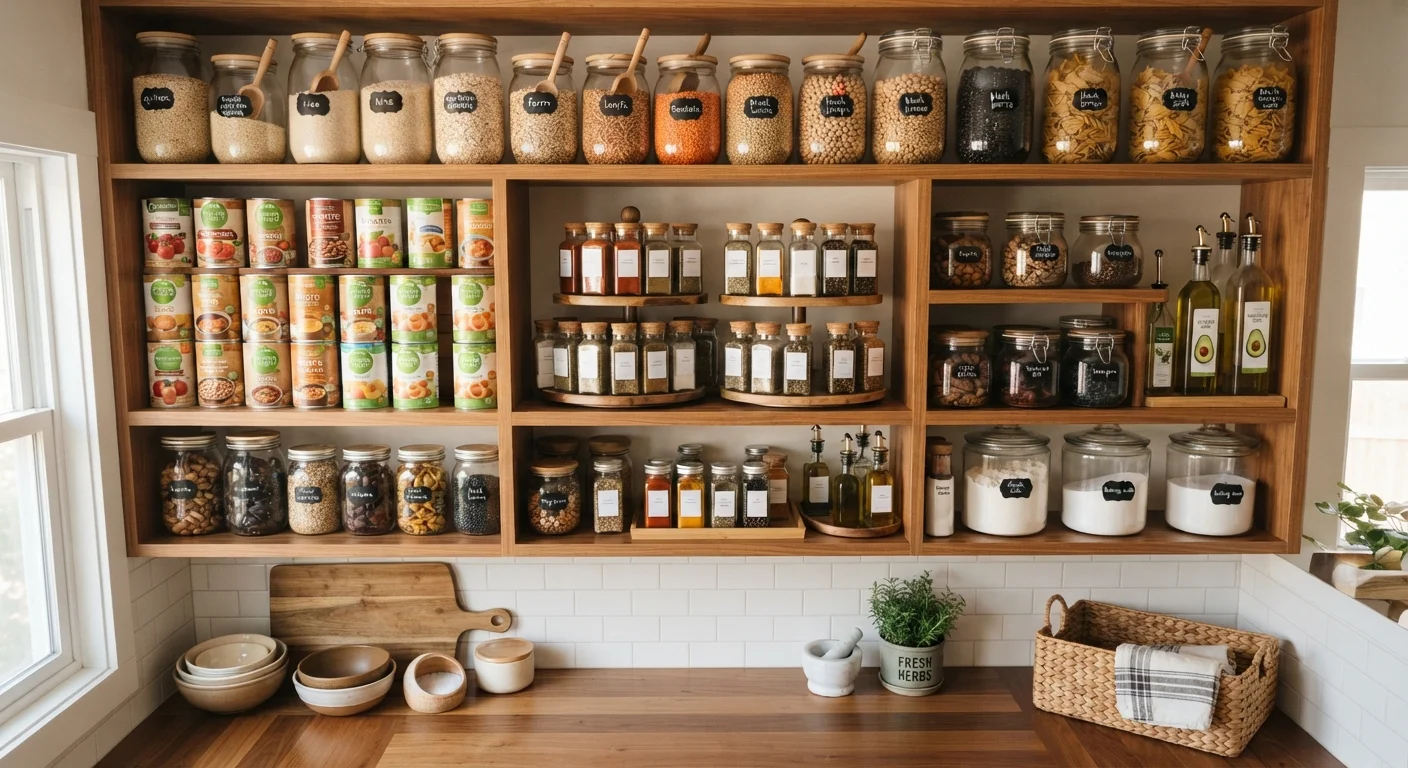
Canned tomatoes - crushed, diced, and whole - are arguably the single highest-utility pantry item. Add canned beans (chickpeas, black beans, cannellini), coconut milk, and low-sodium broth. These form the liquid and protein base of soups, stews, curries, and grain bowls with little additional prep. For a complete checklist organized by shelf category, our pantry stocking guide covers the full list.
Oils, Acids, and Condiments
A neutral oil (such as vegetable or canola), olive oil, and a high-heat option like avocado oil handle most cooking needs. Acids - white wine vinegar, apple cider vinegar, and soy sauce - brighten flavors and balance richness. Dijon mustard, hot sauce, and a good fish sauce round out the condiment shelf.
Aromatics and Dried Spices
Garlic and onions keep for weeks and form the aromatic base of more recipes than any other ingredient. On the spice rack, cumin, smoked paprika, coriander, red pepper flakes, dried oregano, and a curry powder blend handle global flavor profiles without crowding the shelf. Replace dried spices roughly every 12-18 months for best potency.
Sweeteners and Baking Basics
Granulated sugar, honey, and maple syrup serve double duty in both sweet and savory cooking. Baking powder, baking soda, and cornstarch complete the foundational baking and thickening roster.
Pantry staple
A shelf-stable ingredient kept on hand consistently because it contributes to a wide range of recipes. Staples reduce the need for frequent grocery trips and shorten meal prep time.
Neutral oil
A cooking oil with a mild flavor and relatively high smoke point, such as canola or vegetable oil. It's used when you don't want the fat to influence the flavor of the dish.
Smoke point
The temperature at which a cooking fat begins to break down and produce smoke. Exceeding an oil's smoke point can affect flavor and produce harmful compounds.
Aromatic base
The foundational flavor layer of a dish, typically built from ingredients like onion, garlic, celery, or carrots cooked in fat at the start of cooking. Most global cuisines have their own version of this technique.
Umami
One of the five basic tastes, often described as savory or meaty. Ingredients like soy sauce, fish sauce, tomato paste, and aged cheeses are rich in umami compounds and deepen overall flavor.
Applying Pantry Staples to Weeknight Meals
A pantry is only as useful as the cooking habits built around it. The mise en place habit - gathering and measuring ingredients before you start cooking - works hand-in-hand with a reliable pantry. When you already know your staples are stocked, pre-cooking prep takes seconds, not minutes of hunting.
5 categories
Core pantry groups to maintain
Grains, canned goods, oils and acids, aromatics and spices, and baking basics cover the majority of everyday recipe needs.
12-18 months
Typical shelf life of ground spices
According to USDA FoodKeeper guidance, ground spices retain best potency for 12-18 months when stored in a cool, dry location.
~30 min
Average weeknight meal time with stocked pantry
Home cooks who maintain a well-stocked pantry consistently report shorter active cooking times by reducing mid-recipe trips and substitutions.
For dishes like sheet pan dinners, pantry staples do the heavy lifting: olive oil, smoked paprika, garlic powder, and dried herbs transform any protein and vegetable combination into a complete meal. Similarly, batch-cooking strategies - covered in our meal prep guide - rely on a stable pantry foundation to stay efficient week over week.
Think of your pantry not as a static collection but as a rotating inventory. As you cook through a staple, note it for your next grocery list. Keeping a running list - even a simple note on your phone - prevents the gaps that force last-minute store runs. That small habit, sustained consistently, is what makes home cooking genuinely faster over time.
Pantry Organization Affects How You Cook
Keeping frequently used staples at eye level and in clear containers reduces the time spent searching and helps you accurately track what needs restocking. Opaque or unlabeled containers are a common reason ingredients get overlooked until they expire. A simple first-in, first-out rotation - placing newer purchases behind older ones - also reduces waste.