

Key Takeaways
Our Verdict
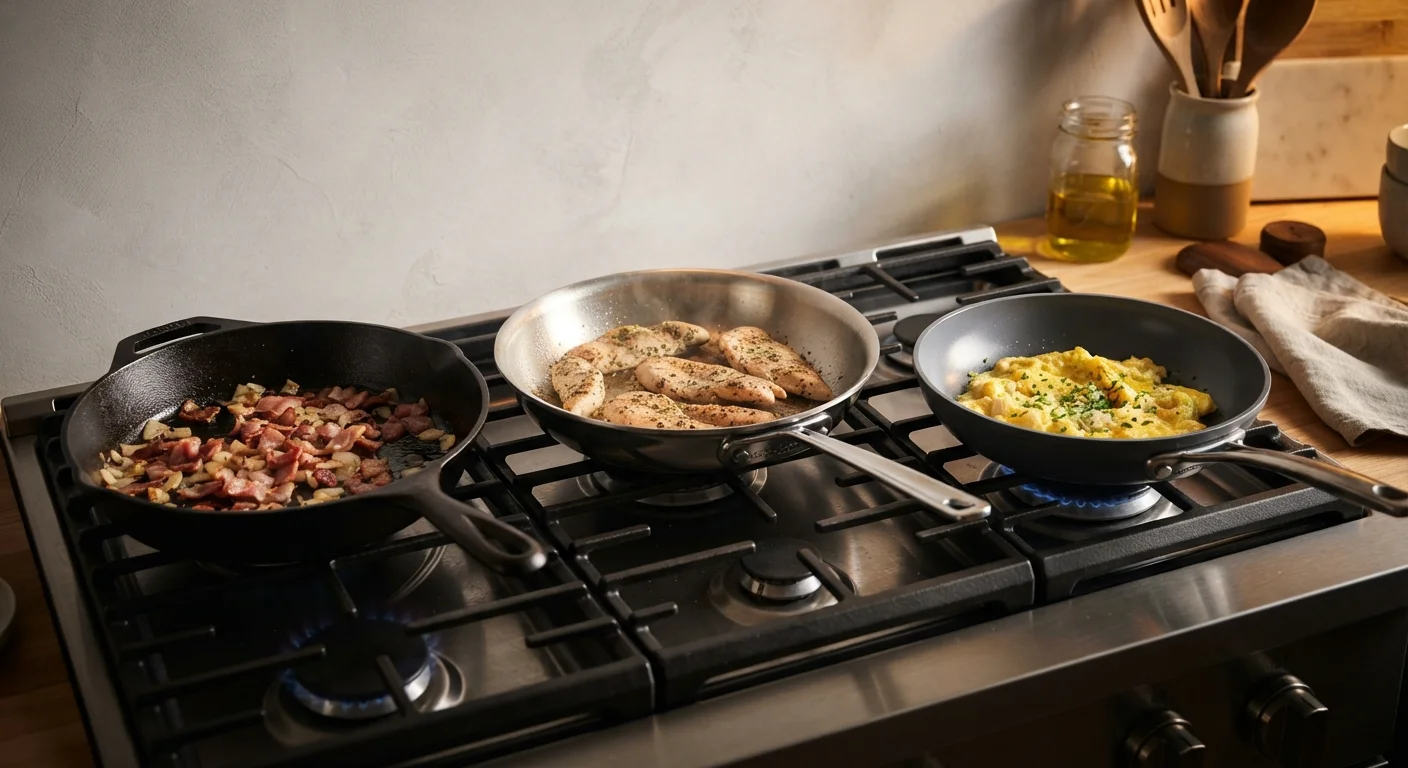
No single cooking surface wins outright - each excels in specific situations. Cast iron handles high heat and retention beautifully; stainless rewards technique with superior browning; nonstick earns its place for delicate foods and easy cleanup. Understanding the strengths of each lets you get more out of every pan you already own.
| Best for | Recommended |
|---|---|
| Searing meats and high-heat cooking | Cast Iron |
| Building pan sauces and browning proteins | Stainless Steel |
| Eggs, fish fillets, and delicate foods | Nonstick |
| Versatile all-around everyday cooking | Stainless Steel |
How Each Surface Handles Heat
The most important difference between cast iron, stainless steel, and nonstick isn't how they look - it's how they behave with heat. As covered in our guide to pan temperature, what happens in those first minutes over the burner shapes everything that follows.
Cast iron heats slowly and unevenly at first, but once up to temperature it holds heat with exceptional stability. That thermal mass means dropping a cold steak into the pan doesn't dramatically lower the surface temperature - a key reason cast iron produces such consistent sears.
Stainless steel heats faster than cast iron but responds more quickly to burner adjustments, giving you greater moment-to-moment control. It also tolerates very high heat without damage, making it suitable for tasks that range from sautéing vegetables to finishing a pan sauce.
Nonstick heats quickly and evenly, but most coatings - particularly PTFE-based surfaces - begin to degrade at sustained high temperatures. This limits nonstick to low-to-medium heat applications and disqualifies it from true searing tasks.
| Cast Iron | Stainless Steel | Nonstick | |
|---|---|---|---|
| Heat retention | Excellent - very high thermal mass | Moderate - loses heat faster | Low - thin, quick to cool |
| Searing ability | Excellent | Excellent | Poor - not suitable for high heat |
| Browning / fond | Good | Excellent - ideal for pan sauces | Minimal - coating prevents sticking |
| Nonstick behavior | Good when seasoned | Requires oil and technique | Excellent out of the box |
| Oven-safe temperature | Very high (500°F+) | Very high (500°F+) | Limited (typically under 400°F) |
| Durability | Decades with proper care | Decades | Degrades in 2-5 years |
| Ease of cleaning | Moderate - no soap, dry promptly | Easy - dishwasher-safe | Easy - hand wash only |
| Best use cases | Searing, baking, braising | Sautéing, pan sauces, all-purpose | Eggs, fish, delicate foods |
Browning, Sticking, and the Science Behind Each
The Maillard reaction - the chemical process that creates the brown crust on a seared steak or sautéed onion - requires direct, dry surface contact and sufficient heat. Cast iron and stainless steel both support this reaction well. Stainless is particularly valued for the fond it produces: the browned bits left in the pan that dissolve into pan sauces and add deep savory flavor.
Nonstick surfaces, by contrast, are specifically engineered to prevent food from bonding to the pan. That property is genuinely useful for eggs, crepes, and delicate fish, but it also prevents the sticking that drives browning. For foods where a crust or caramelization matters, nonstick works against you.
Seasoning Cast Iron: Keep It Simple
To maintain or restore cast iron seasoning, rub a very thin layer of a high-smoke-point oil (such as flaxseed or vegetable shortening) over the entire surface and bake it upside down in a 450-500°F oven for an hour. Repeat this process two or three times to build a durable base. Consistent use with moderate oil is often enough to maintain a good surface from there.
Cast iron's naturally porous surface, when properly seasoned with layers of polymerized oil, also becomes moderately nonstick over time - without sacrificing its searing ability. This makes a well-seasoned cast iron pan one of the most versatile tools in the kitchen, as explored in our comprehensive cooking fundamentals guide.
Care, Maintenance, and Longevity
Each surface demands a different approach to cleaning and upkeep.
- Cast iron should be dried immediately after washing to prevent rust, then lightly oiled before storage. Avoid prolonged soaking and highly acidic foods (such as tomato-based sauces cooked for long periods), which can strip seasoning and leach iron into food.
- Stainless steel is the most forgiving. It's dishwasher-safe, tolerates acidic ingredients, and can be scrubbed without damage. Discoloration from high heat is cosmetic and doesn't affect performance.
- Nonstick requires the most careful handling. Metal utensils scratch the coating, and high heat degrades it over time. Hand-washing and silicone or wooden tools extend its useful life, but nonstick pans typically need replacing every few years.
Overheating Nonstick Is a Real Risk
Heating a nonstick pan to very high temperatures - particularly preheating an empty pan on high - can cause PTFE-based coatings to break down and release fumes that are harmful in an enclosed space. Always use nonstick pans over low to medium heat, never preheat them empty, and ensure your kitchen is adequately ventilated.
Matching your care routine to the surface isn't just about longevity - it directly affects cooking performance. A cast iron pan that hasn't been re-seasoned after stripping, for example, will stick far more than expected.
Matching Surface to Task
The most practical takeaway from understanding these differences is simple: use the right surface for the job, rather than defaulting to a single pan for everything.
For high-heat tasks - searing a steak, browning chicken thighs, cooking a smash burger - cast iron or stainless are both sound choices. For dishes that involve building a pan sauce, stainless is the natural fit. For eggs scrambled or fried at moderate heat, nonstick reduces frustration significantly. For braising or oven-finishing a dish, cast iron's heat retention is a genuine advantage, and it transitions seamlessly from stovetop to oven.
Understanding the logic behind cooking times and temperatures deepens this further: the surface you choose interacts directly with how quickly food reaches safe internal temperatures and how efficiently it browns.
A kitchen equipped with all three surface types gives you the flexibility to approach virtually any stovetop recipe with the right tool. If you're working with just one or two pans, knowing their strengths and limits lets you adapt recipes - and get better results - without buying anything new. See our kitchen readiness checklist for more on setting yourself up before a cook session begins.