

| FDA Daily Value for Sodium | 2,300 mg per day (U.S. FDA Nutrition Labeling Reference) |
| Low Sodium Threshold | 140 mg or less per serving (FDA Nutrient Content Claims Regulations) |
| Very Low Sodium Threshold | 35 mg or less per serving (FDA Nutrient Content Claims Regulations) |
| High %DV Benchmark | 20% DV or more (FDA general %DV guidance) |
| Low %DV Benchmark | 5% DV or less (FDA general %DV guidance) |
How Sodium Appears on the Nutrition Facts Panel
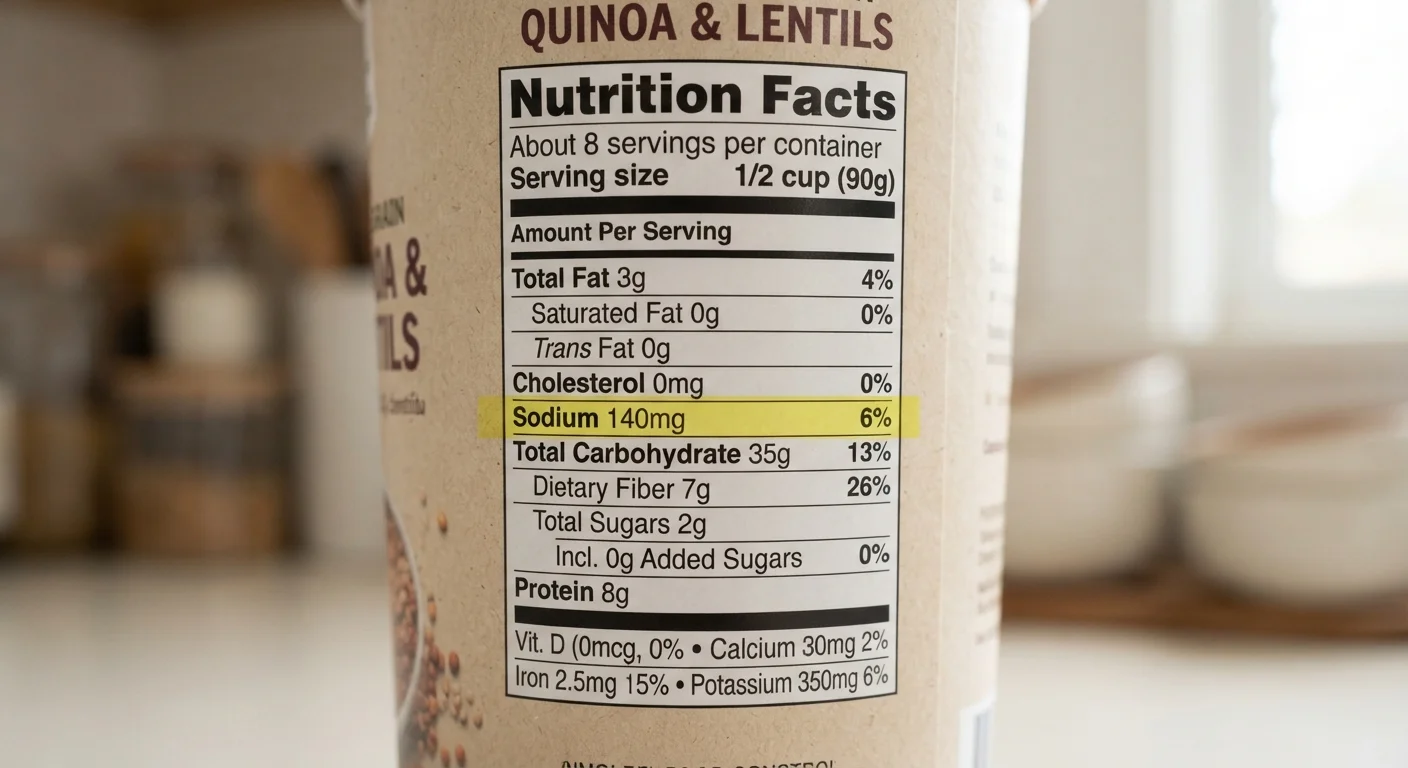
The sodium line on a US Nutrition Facts panel shows two values: milligrams (mg) of sodium per serving, and a % Daily Value (%DV). Both numbers matter, and neither tells the full story alone.
| FDA Daily Value for Sodium | 2,300 mg per day (U.S. FDA Nutrition Labeling Reference) |
| Low Sodium Threshold | 140 mg or less per serving (FDA Nutrient Content Claims Regulations) |
| Very Low Sodium Threshold | 35 mg or less per serving (FDA Nutrient Content Claims Regulations) |
| High %DV Benchmark | 20% DV or more (FDA general %DV guidance) |
| Low %DV Benchmark | 5% DV or less (FDA general %DV guidance) |
The %DV is calculated against a reference intake of 2,300 mg of sodium per day - the figure established by the FDA as the Daily Value for adults. That means a food with 460 mg of sodium per serving carries a 20% DV for sodium. A general guideline: 5% DV or less is considered low for a nutrient, while 20% DV or more is considered high. Applied to sodium, those thresholds are a practical shortcut when scanning labels quickly.
The serving size printed above the sodium line is critical. If a can of soup lists 890 mg of sodium but the serving size is half a can, the full container delivers 1,780 mg - 77% of the Daily Value. For a complete walkthrough of how serving sizes interact with every nutrient listed, see this introduction to reading Nutrition Facts panels.
What FDA-Regulated Sodium Claims Actually Mean
Front-of-package sodium claims are regulated by the FDA, which sets specific thresholds each term must meet. These definitions are not marketing language - they carry legal meaning.
% Daily Value (%DV)
A percentage showing how much of a nutrient one serving contributes toward the FDA's established daily reference amount. For sodium, the reference is 2,300 mg per day for adults.
Low Sodium
An FDA-regulated claim meaning the food contains 140 mg or less of sodium per serving. This is one of the most meaningful sodium claims on packaging.
Reduced Sodium
An FDA-regulated claim meaning the food contains at least 25% less sodium than the standard version of that same product. The absolute amount can still be substantial.
Very Low Sodium
An FDA-regulated claim meaning the food contains 35 mg or less of sodium per serving - significantly stricter than the 'low sodium' threshold.
Sodium Free
An FDA-regulated claim meaning the food contains less than 5 mg of sodium per serving. It does not mean zero sodium is present.
Light in Sodium
An FDA-regulated claim meaning the food contains at least 50% less sodium than the reference food. Like 'reduced sodium,' it is a relative comparison, not an absolute limit.
Understanding these definitions matters because marketing terms like "light in sodium" or "reduced sodium" describe amounts relative to a reference food, not relative to an absolute health standard. A "reduced sodium" soup could still deliver 600 mg per serving if the original version contained 900 mg. That is still 26% of the Daily Value in a single bowl.
"No added salt" and "unsalted" are also regulated terms - they mean no salt was added during processing, but they do not mean the food is sodium-free. Naturally occurring sodium in ingredients such as milk, celery, and beets still contributes to the total. For a broader look at how label claims can mislead, this checklist of nutrition label red flags is a useful companion read.
Comparing Products Without Being Misled
When comparing two packaged foods for sodium content, align your comparison on a consistent basis. Check that serving sizes match before comparing milligrams side by side - a 28 g serving of one cracker versus a 16 g serving of another makes raw mg figures incompatible at a glance.
70%+
Share of US sodium intake from packaged and restaurant foods
According to the CDC, the majority of sodium Americans consume comes from processed and commercially prepared foods, not the salt shaker.
~40%
Sodium reduction from rinsing canned beans
Published food science research has documented roughly a 40% reduction in sodium content after thorough rinsing of canned legumes.
A practical method: divide the milligrams of sodium by the serving size in grams to get a sodium density figure (mg per gram). A food with 200 mg sodium in a 40 g serving has a density of 5 mg/g, while one with 200 mg in a 20 g serving has a density of 10 mg/g - meaningfully different despite identical label numbers.
Canned vegetables are a category where sodium varies dramatically by processing style. Rinsing canned beans under water for 30 seconds has been shown in published research to reduce sodium content by roughly 40%. For a deeper look at how processing affects vegetable nutrition broadly, see how fresh, frozen, and canned vegetables compare nutritionally.
Sodium does not appear only where you expect it. Sweet foods - bread, breakfast cereals, some flavored yogurts - can carry significant sodium loads without tasting salty. The ingredient list can surface hidden sodium sources such as baking soda (sodium bicarbonate), disodium phosphate, and monosodium glutamate. Understanding ingredient list ordering helps identify how prominently these compounds feature in a product's formulation.
Sodium content is only one dimension of a label worth scrutinizing. The same label-reading habits apply to fat and sugar claims - a pattern explored in why low-fat foods can still be high in sugar.
This article provides general nutrition education and is not medical or dietary advice. Individuals managing health conditions such as hypertension or kidney disease should consult a qualified healthcare provider or registered dietitian for guidance tailored to their specific needs.