

Key Takeaways
Summary
22 items · 30-60 minutes to audit and restock
Why Most Pantries Fail (and How to Fix Yours)
The problem with most home pantries isn't a shortage of food - it's a shortage of the right food. Shelves fill up with impulse buys, duplicates, and specialty ingredients purchased for a single recipe and never touched again. The result is a pantry that feels full but delivers nothing useful at 6 p.m. on a Tuesday.
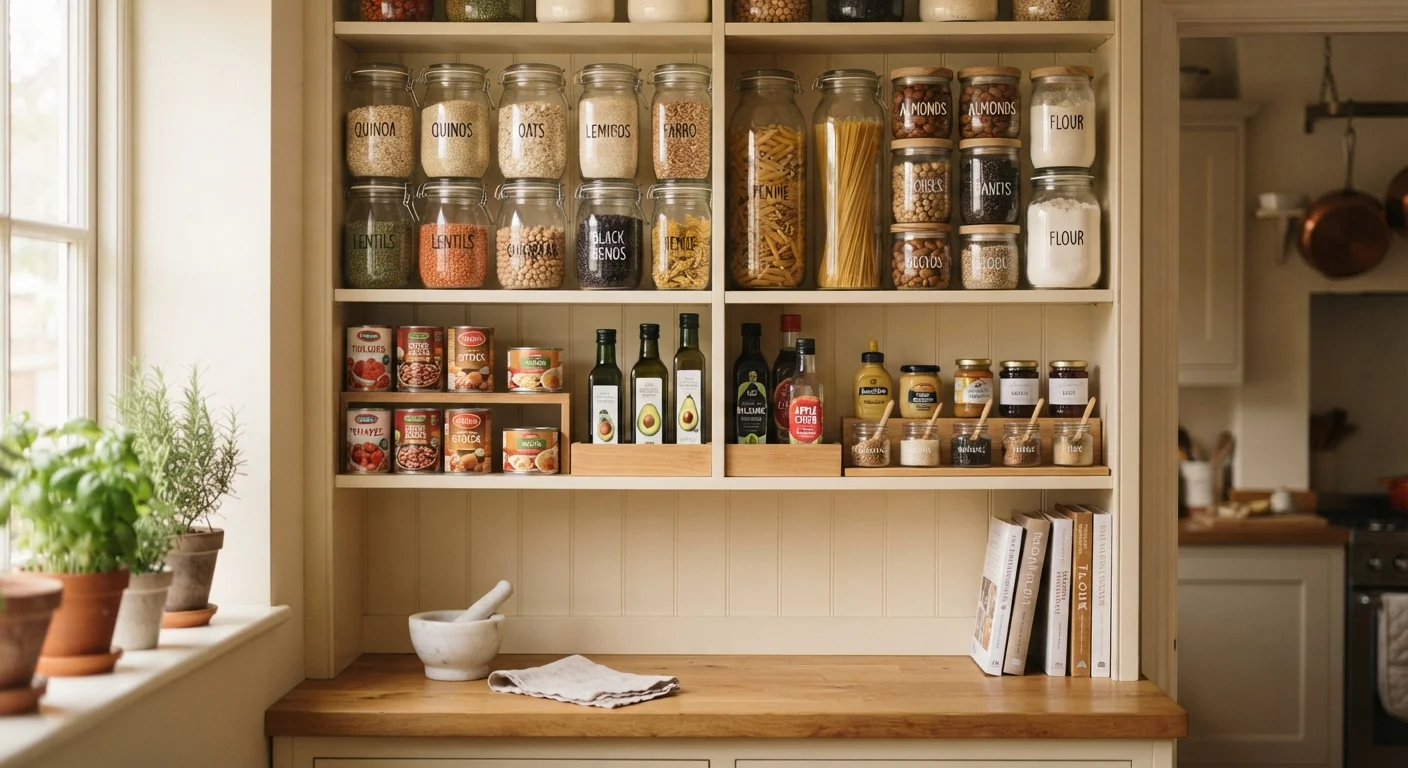
A genuinely useful pantry is built around a tight core of versatile, shelf-stable ingredients that combine into dozens of meals without requiring a special trip to the store. This checklist focuses on exactly those items, organized by category so you can audit what you have, identify gaps, and restock efficiently.
For a deeper look at how these ingredients function in everyday meals, see our guide to pantry staples that speed up cooking. And if you want to turn a stocked pantry into consistent weeknight meals, meal prepping strategies for busy households offers practical batch-cooking habits that work alongside what you'll stock here.
Whole Grains
Legumes
Canned and Jarred Goods
Oils, Vinegars, and Acids
Sauces and Condiments
Baking and Thickening Staples
Pantry Maintenance
Tools and Supplies That Make This Checklist Work
The pantry items themselves are only half the equation. Having the right storage and reference tools ensures your staples stay fresh, visible, and actually get used.
Airtight glass or BPA-free plastic containers
Store transferred grains, legumes, and flours to extend shelf life and deter pests.
Permanent marker and masking tape
Label containers with contents and transfer date for accurate rotation and freshness tracking.
Kitchen scale
Measure dry goods accurately, especially when following recipes that list weights rather than volume.
Pantry inventory app or notepad
Track what you have, what's running low, and what needs to be replaced before the next grocery run.
Once your pantry is stocked and organized, the next logical step is knowing how to deploy these ingredients efficiently before you start cooking. Our kitchen readiness checklist walks through what to verify before any recipe begins - workspace, equipment, and ingredient prep - so nothing derails you mid-cook. For grain-specific technique, one-pot grain cooking methods covers reliable water ratios and timing for the staples you'll stock here.
Check Sodium Levels on Canned Goods
Many canned beans, tomatoes, and broths contain significant added sodium - some cans exceed 400-500 mg per serving. Look for labels marked "no salt added" or "low sodium" if you're managing salt intake, and always rinse canned beans before use. Reading the nutrition facts panel is more reliable than front-of-package claims like "reduced sodium," which are relative to the standard product, not an absolute benchmark.