

Key Takeaways
Summary
22 items · 20–35 minutes
Why a Port Day Demands Its Own Packing Strategy
Stepping off a cruise ship into a port town is nothing like checking into a resort. You're working against a hard deadline — the ship's all-aboard time — navigating unfamiliar streets, managing your own logistics, and doing it all without the safety net of a hotel concierge or a fixed base. One forgotten item can derail the day far more than it would on a typical vacation.
Seasoned cruisers approach every port morning the same way: with a pre-packed, purpose-built day bag ready to go. The difference between a smooth, memorable shore excursion and a stressful scramble often comes down to ten minutes of preparation the night before. If you're still ironing out the bigger picture of your cruise experience, our walkthrough of the full cruise experience covers how port mornings fit into the overall rhythm of a voyage.
This checklist focuses specifically on what goes ashore — not what stays in your cabin, and not what you pack for the full trip. Use it the evening before each port stop.
Compact Day Bag (15–20L)
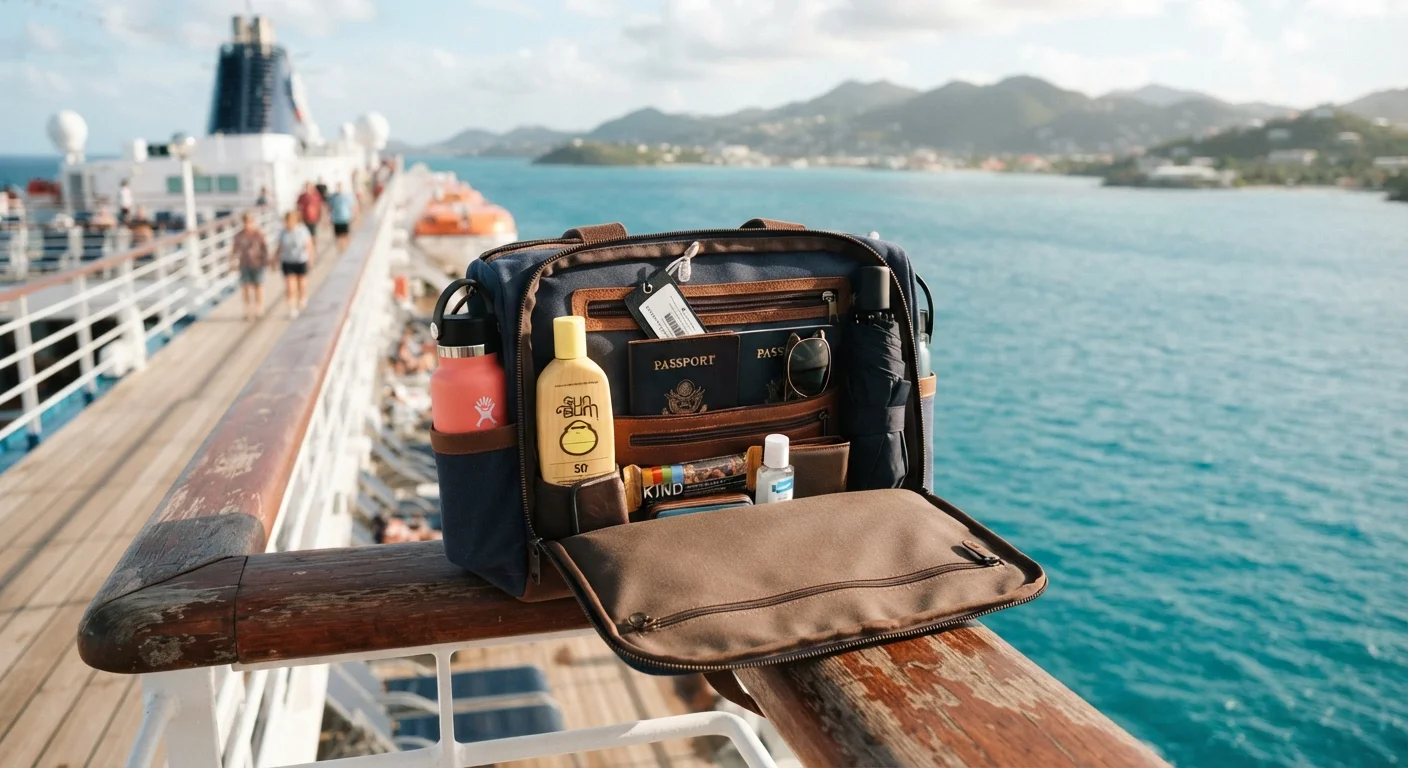
Carries all port essentials without the bulk of a full travel backpack; look for one with a zip closure and a secure inner pocket.
Portable Power Bank
Keeps your phone charged throughout a long shore day when GPS, maps, and communication are all running in the background.
Document Organizer or Travel Wallet
Keeps cruise card, ID copies, local currency, and a credit card together and easily accessible at checkpoints.
Reusable Water Bottle
Reduces cost and waste while ensuring you stay hydrated in warm or humid port climates.
Packable Rain Jacket
Folds into its own pocket and adds negligible weight while protecting against sudden tropical showers.
Small Dry Bag or Waterproof Pouch
Protects phone, documents, and currency during beach stops, boat excursions, or water taxi transfers.
The Port Day Packing Checklist
Work through each group below before you leave the ship. Items marked must are non-negotiable for a safe, functional day ashore. Items marked should are strongly recommended based on common port-day realities. Nice-to-have items are worth adding when space allows.
Documents & Identification
Money & Connectivity
Sun, Heat & Hydration
Health & Safety Basics
Comfort & Contingency
Missing the Ship Is a Real Risk
Cruise ships depart on schedule regardless of whether all passengers have returned — this is not a hypothetical. If you miss the all-aboard time, you are responsible for your own transportation and costs to reach the next port. Always build a buffer of at least 45 minutes between your planned return and the departure time, and keep a physical note of the ship's pier address in case you need to direct a taxi quickly.
For a broader look at pre-departure preparation — including passport validity checks and travel insurance reminders — the international travel checklist is a useful companion resource, particularly for ports outside the US.
How Experienced Cruisers Think About the Shore Day
Beyond the individual items, veteran port-day packers share a few consistent habits worth borrowing.
Pack once, adjust per port. Keep a dedicated port day bag stocked with the permanent essentials — documents, first aid, sunscreen — so you're only swapping out destination-specific items like local currency or a light jacket. This eliminates last-minute scrambles and the anxiety of wondering if you've forgotten something.
Go lighter than you think you need. The temptation to over-prepare is real, but a heavy bag becomes a liability fast — especially in warm climates, on cobblestone streets, or during unplanned walking detours. If you find your packing list keeps expanding beyond what's useful, our guide to why packing lists fail addresses the reasoning behind over-packing and how to break the habit.
Understand what your excursion type demands. A ship-organized bus tour has different needs than an independent walking tour of a market district. Thinking through the day's agenda shapes which items are must-haves versus unnecessary weight. The excursion planning guide can help you think through that decision port by port.
Verify Entry Requirements Before Each Port
Some ports — particularly those outside the US — may have specific requirements for what you can bring ashore, what you can purchase and re-import, or how you must present identification at the pier. Requirements can change. Always verify current rules with official government sources and your cruise line before each port of call, rather than relying on general guidance alone.
Solo travelers should take particular care with document safety and communication plans ashore. Our solo cruising overview covers practical considerations unique to sailing and exploring ports alone.