

Key Takeaways
Start here
Arriving at Port: Check-In and Embarkation
Next
Getting Settled: Your First Hours Onboard
Then
Life at Sea: Daily Rhythms and Port Days
Know before you spend
The Onboard Economy: How Spending Works
Finally
Disembarkation: How the Cruise Ends
Arriving at Port: Check-In and Embarkation
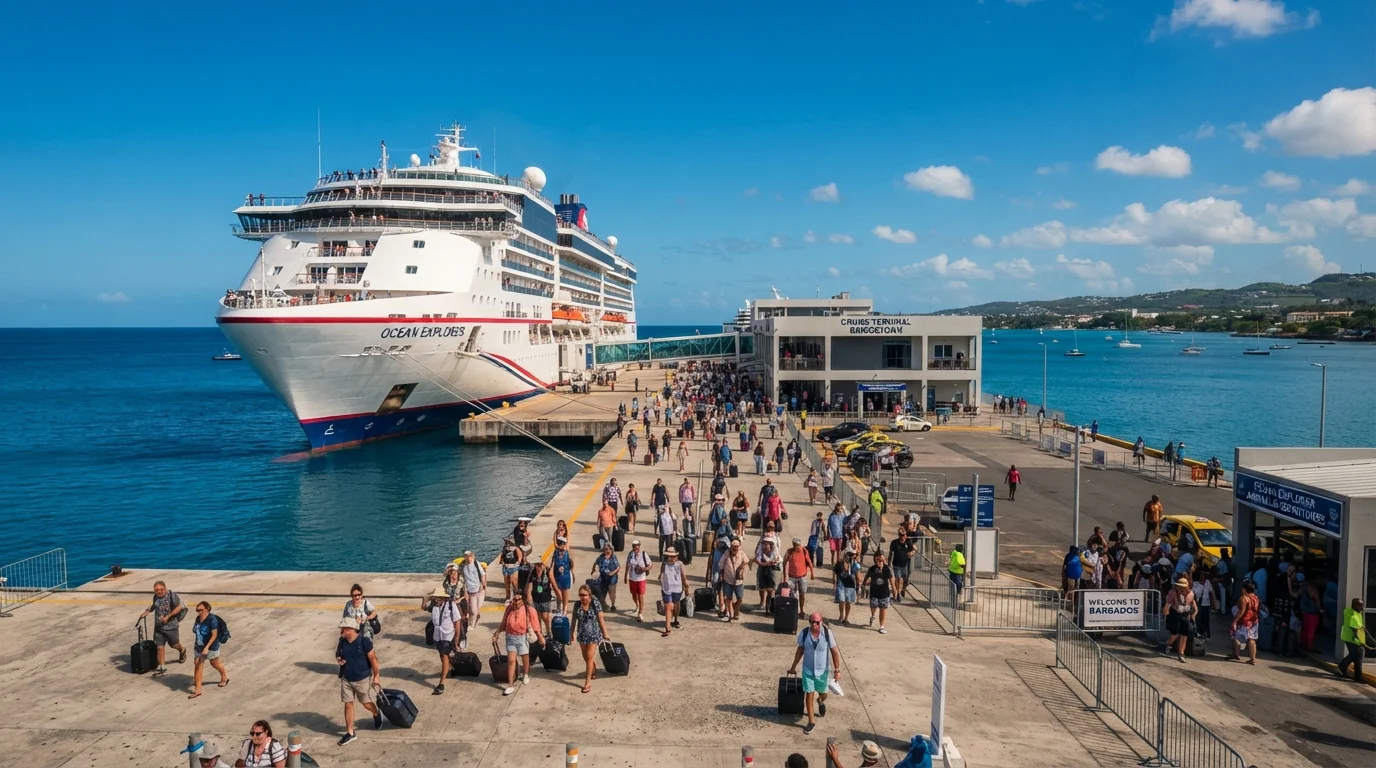
The cruise terminal experience feels more like an airport than a ferry dock. You'll arrive, drop off checked luggage with porters (who tag it with your cabin number), and then join the check-in line inside the terminal building. Have your passport, booking confirmation, and any pre-filled health or customs forms ready — lines move faster when documents are in hand.
Most lines now handle a portion of check-in digitally before you travel. You may upload a photo, register a credit card, and select an embarkation time window through the cruise line's app or website. Sticking to your assigned window is genuinely worthwhile; arriving too early often means waiting outside.
Once processed, you'll receive your keycard — the all-purpose card that opens your cabin, tracks onboard purchases, and serves as your ID when leaving and returning to the ship.
Embarkation
The process of boarding the cruise ship at the start of your sailing, including check-in, security screening, and crossing the gangway.
Muster drill
A mandatory safety briefing, required by international maritime law, where passengers learn emergency procedures and locate their assigned lifeboat station.
Sea day
A day on the itinerary when the ship remains at sea with no scheduled port stop — all activities take place onboard.
All-aboard time
The deadline by which all passengers must return to the ship on a port day. The ship departs at this time regardless of who is still ashore.
Keycard
The card issued at check-in that serves as your cabin key, onboard ID, and the payment method linked to your account for all purchases.
Disembarkation
The organized process of leaving the ship at the end of the sailing, including luggage collection and customs clearance at the home port.
Getting Settled: Your First Hours Onboard
After crossing the gangway, you're onboard — but your cabin almost certainly isn't ready yet. Cabins are typically accessible by early-to-mid afternoon, even if boarding begins late morning. This gap is intentional: the housekeeping team needs time to turn over every room from the previous sailing.
Use this window to explore. Find the buffet (usually open immediately), grab lunch, locate the pool deck, and get your bearings. Ship maps are available at guest services and usually posted near elevators. If you're curious about what your cabin category actually includes, our cruise ship cabin glossary breaks down every room type clearly.
Before or shortly after departure, you'll complete the muster drill — a mandatory safety briefing required by international maritime law. It covers your assigned lifeboat station and emergency procedures. On many ships this is now done partially via an in-app video followed by a brief physical check-in at your muster station.
Pack a Day Bag for Embarkation Day
Checked luggage often doesn't arrive at your cabin until mid-to-late afternoon. Pack a small carry-on with sunscreen, a swimsuit, any medications, and a change of clothes so you can enjoy the ship from the moment you board without waiting for your bags.
Life at Sea: Daily Rhythms and Port Days
A cruise itinerary alternates between sea days (days spent entirely at sea) and port days (when the ship docks or anchors near a destination). Each evening, a daily program is delivered to your cabin or pushed to the ship's app, listing the next day's activities, entertainment, dining hours, and — on port days — the all-aboard time.
On sea days, the ship's programming runs from morning fitness classes through evening shows. On port days, most passengers go ashore either independently or via ship-organized excursions. If you go independently, always note the published all-aboard time posted at the gangway — the ship will not wait for late returners.
Motion sensitivity affects some first-time cruisers. Our article on seasickness on a cruise ship covers why it happens and what strategies travelers commonly use. Understanding the types of cruise itineraries before you book also helps you anticipate how many sea days versus port days you'll experience.
The Onboard Economy: How Spending Works
Nothing on a cruise ship is paid for with cash at the time of purchase. Every drink, spa treatment, specialty restaurant meal, or shore excursion booked onboard is charged to the account linked to your keycard. At the end of the sailing, the total is billed to your registered credit or debit card.
Your base fare typically covers your cabin, standard dining venues, and most entertainment. It generally does not cover alcoholic beverages, specialty restaurants, gratuities, spa services, internet, or most shore excursions. These costs add up quickly for travelers who aren't tracking them. Our guide on why first-time cruisers overspend explains how the frictionless billing system works and what habits help travelers stay within their intended budget.
Watch Your Onboard Account Balance
Because purchases are linked to your keycard rather than paid immediately, it's easy to lose track of spending. Most ships let you check your running account total at a kiosk, through the ship's app, or at guest services. Reviewing it every day or two helps you avoid an unexpectedly large bill at the end of the sailing.
Disembarkation: How the Cruise Ends
Disembarkation — leaving the ship at the end of the sailing — is a logistical process spread over several hours. The night before arrival at the home port, you'll receive instructions for your departure group, usually organized by deck or a colored luggage tag system. You'll also set your checked bags outside your cabin door before a stated cut-off time (often around midnight), so they can be offloaded while you sleep.
On disembarkation morning, the ship arrives at port early — often before 7 a.m. Guests traveling with early flights or transportation are called off first. The process is staggered to avoid thousands of people flooding the terminal simultaneously. Once your group is called, you collect your bags in the terminal warehouse, clear customs, and exit.
If you've arranged your own post-cruise transportation, verify pickup logistics the day before. For solo travelers, our look at solo cruise travel covers how disembarkation and the overall experience differ when you're traveling independently.
This article provides general travel information. Entry requirements, ship policies, and safety procedures vary by cruise line and destination. Always verify current requirements with your cruise line and relevant government authorities before traveling.