

Key Takeaways
12-Volt Car Battery
A 12-volt lead-acid battery is the standard power source found in most gasoline and hybrid vehicles. It stores electrical energy and delivers a large burst of current to start the engine, then powers accessories like lights and the radio while the alternator keeps it charged during driving. Unlike the high-voltage battery packs in fully electric vehicles, this is a standalone, replaceable component typically located under the hood.
Most modern car batteries are valve-regulated lead-acid (VRLA) or absorbed glass mat (AGM) designs. AGM batteries are increasingly common in vehicles with start-stop systems because they handle more frequent charge-discharge cycles.
How a 12-Volt Battery Actually Works
Your car's 12-volt battery has two jobs: deliver a large, short burst of electricity to spin the starter motor, and serve as a buffer that smooths out voltage fluctuations for sensitive electronics. Once the engine is running, the alternator takes over and recharges the battery continuously.
Inside the battery are lead plates submerged in a sulfuric acid solution. When the battery discharges, a chemical reaction converts chemical energy into electrical current. Charging reverses that reaction. This cycle is efficient but not perfect - each charge-discharge cycle causes minor degradation, and over hundreds of cycles, capacity gradually shrinks.
It's worth noting that the 12-volt battery in a conventional car is fundamentally different from the high-voltage traction battery in a fully electric vehicle. The battery architecture in EVs involves different chemistry, voltage ranges, and management systems entirely.
3-5 years
Typical car battery lifespan
Industry guidance from battery manufacturers and automotive associations consistently cites this range under normal driving conditions.
~50%
Power loss at 0°F vs. 80°F
Lead-acid battery output drops substantially in extreme cold, with testing commonly showing roughly half the capacity available at freezing temperatures compared to warm conditions.
40%
Of roadside breakdowns involve electrical systems
Data from major roadside assistance providers indicates that battery, charging, and starting system failures are among the leading causes of service calls.
What Shortens Battery Life
Three factors accelerate battery aging more than any others:
- Heat: Sustained under-hood heat accelerates corrosion on battery plates and evaporates electrolyte fluid. Batteries in hot climates often fail earlier than the three-to-five-year average.
- Short trips: Drives under ten to fifteen minutes don't give the alternator enough time to fully replenish the energy used during starting. Repeated partial cycling promotes sulfation - a crystalline buildup on plates that permanently reduces how much charge the battery can hold.
- Parasitic drain: Accessories drawing power when the car is off - a dome light left on, an aftermarket alarm, or a malfunctioning module - slowly discharge the battery. Deep discharges are particularly damaging to lead-acid chemistry.
Driving habits and vehicle age compound one another. A high-mileage vehicle may have an older charging system that no longer brings the battery to a full charge consistently, stressing the battery even on long drives.
Extend Battery Life With One Simple Habit
If your driving consists mainly of short trips, consider taking a longer drive - 30 minutes or more - at least once a week. This gives the alternator sufficient time to bring the battery back to a full state of charge. It's one of the simplest ways to slow the sulfation process and add months to battery life.
Cold Weather and Battery Failure
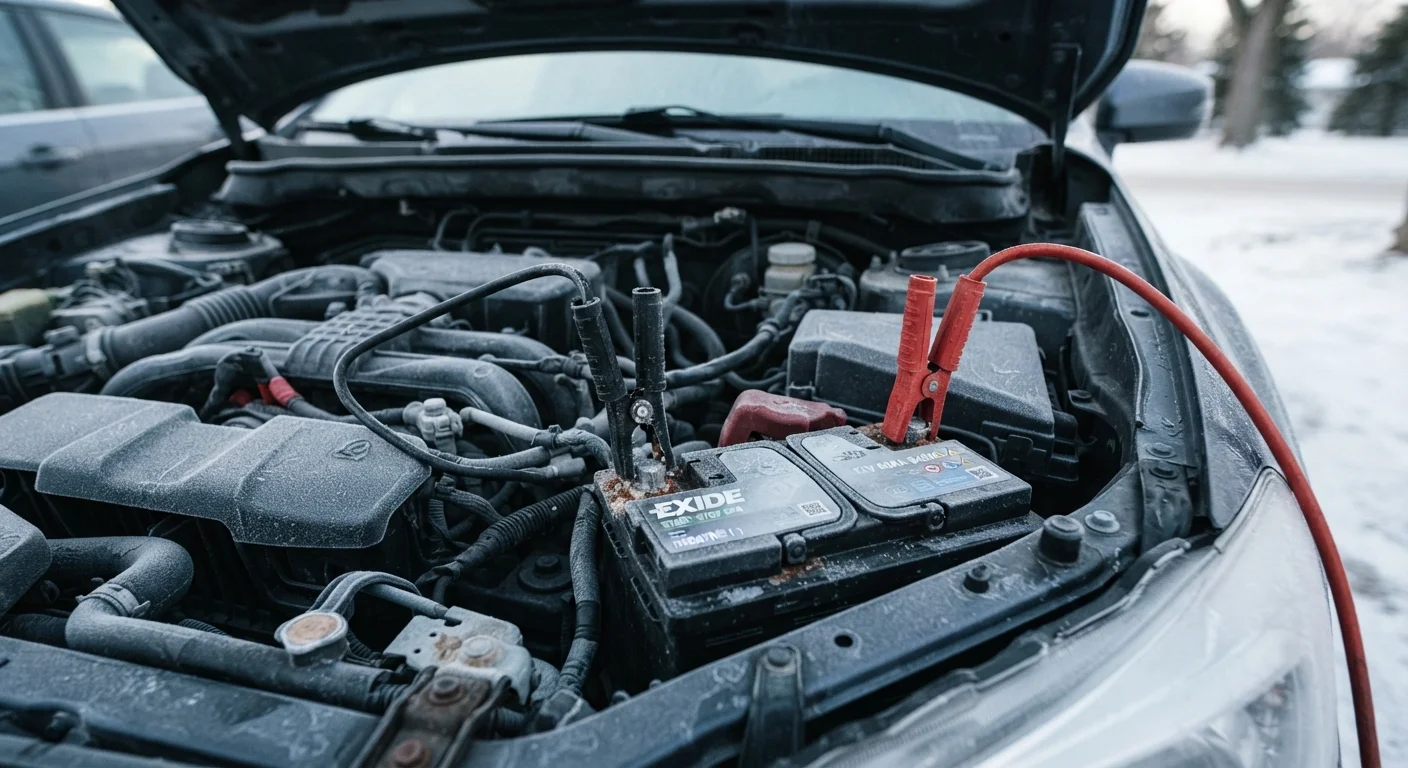
Cold temperatures hit batteries from both directions at once. The electrochemical reactions that produce current slow down significantly as temperature drops - a battery at 0°F (-18°C) may deliver only about half the power it would at 80°F (27°C). At the same time, engine oil thickens in the cold, so the starter motor must work harder and longer to turn the engine over.
This is why a battery that seemed fine through fall can leave a driver stranded on the first truly cold morning. The battery wasn't failing in a detectable way - it just no longer had the cold-cranking reserves needed for the conditions.
“The battery is the heart of the electrical system. When it weakens, every other electrical component in the vehicle is affected - and the symptoms often appear long before a complete failure.”
— AAA Automotive Research, Automotive consumer safety and research organization
Cold-cranking amps (CCA) is the rating that describes a battery's ability to start an engine at 0°F. When replacing a battery, matching or exceeding the vehicle manufacturer's CCA specification matters, especially in northern climates.
Load Testing: The Right Way to Check Battery Health
A multimeter showing 12.6 volts at rest tells you the battery isn't deeply discharged - it doesn't tell you whether the battery can handle the stress of starting. A load test does.
During a load test, a technician applies a controlled electrical load (typically half the battery's CCA rating) for several seconds and measures whether the battery maintains adequate voltage. A healthy battery holds voltage well under load; a worn one drops sharply, revealing that its internal resistance has climbed too high to deliver reliable current.
Many auto parts retailers and service shops will perform a load test without charge. It's worth requesting one proactively if your battery is three years old or older - particularly before winter. The seasonal car care checklist outlines exactly when to schedule this and other critical pre-season checks.
AGM Batteries Require Compatible Chargers
If your vehicle came equipped with an AGM battery, standard battery chargers designed for flooded lead-acid batteries may not charge it correctly and can cause damage. When charging an AGM battery at home, use a charger with an AGM-specific mode. When in doubt, have the battery serviced by a shop with the appropriate equipment.
Recognizing Early Warning Signs
Battery failure rarely happens without some advance notice. The challenge is that the signals are easy to rationalize away. Watch for:
- Slow or labored cranking: The engine turns over sluggishly before starting, especially in the morning.
- Battery or check-engine warning light: Modern vehicles monitor charging system voltage. A lit battery icon means the system has detected something outside normal range.
- Dimming headlights at idle: If lights brighten noticeably when you rev the engine, the alternator and battery aren't keeping pace with electrical demand at low RPM.
- Frequent need for a jump-start: One dead battery after leaving a light on is a mistake; needing a jump repeatedly without a clear cause points to a failing battery or charging system.
If you notice any of these, schedule a load test promptly rather than waiting for a complete failure. Being stranded is avoidable in most cases.