

Key Takeaways
Engine Oil Viscosity Grade
Engine oil viscosity grade is a standardized rating that describes how thick or thin motor oil is and how it flows at different temperatures. Grades are set by the Society of Automotive Engineers (SAE) and appear as numbers like 5W-30 or 10W-40 on the container. The first number (before the W, which stands for Winter) indicates cold-temperature flow, while the second number reflects performance at operating temperature.
Multi-viscosity oils use polymer additives that cause the oil to behave like a thinner grade when cold and a thicker grade when hot, giving engines protection across a wide temperature range.
How to Read an Oil Grade Label
Walk down any auto-parts aisle and you'll see labels like 0W-20, 5W-30, and 10W-40. These aren't arbitrary codes - they follow a precise SAE (Society of Automotive Engineers) grading system that tells you exactly how the oil behaves under different conditions.
The number before the W (Winter) rates cold-temperature flow. A lower number - like 0W or 5W - means the oil remains fluid enough to circulate quickly during a cold start, which is when most engine wear actually occurs. The number after the W rates viscosity at normal engine operating temperature, roughly 212°F (100°C). A higher number here means thicker oil at heat.
Modern engines are engineered to tight tolerances and typically require thinner grades like 5W-20 or 0W-20 for efficient flow through small passages. Older or high-mileage engines sometimes benefit from slightly heavier grades, though you should verify any change with your owner's manual or a trusted mechanic. For a deeper look at oil formulation differences, see our article on synthetic vs. conventional oil.
~40%
Engine wear occurring at cold start
Industry engineering sources broadly attribute a significant share of engine wear to the moments before oil fully circulates after a cold start, underscoring why cold-flow ratings matter.
10,000 mi
Typical synthetic oil change interval
Many major automakers specify 7,500-10,000 mile oil change intervals for full synthetic oil under normal driving conditions, per their published owner's manuals.
2 min
Time needed for a dipstick check
A dipstick inspection requires no tools and takes roughly two minutes, making it one of the most time-efficient routine maintenance checks available to any driver.
Oil Change Intervals: Why the Old 3,000-Mile Rule Is Outdated
For decades, the 3,000-mile oil change was treated as gospel. That interval made sense for older engines running conventional oil, but engine technology and lubricant chemistry have both advanced considerably. Many current vehicles using full synthetic oil can go 7,500 to 10,000 miles - or more - between changes without compromising engine protection.
Several factors legitimately affect how quickly oil degrades:
- Driving conditions: Short trips, stop-and-go traffic, towing, and extreme temperatures accelerate oil breakdown. Manufacturers label these "severe" or "special operating conditions" in their manuals.
- Oil type: Full synthetic oil resists breakdown longer than conventional oil. Synthetic blends fall in between.
- Engine age: Older engines may consume small amounts of oil between changes, making level checks more important regardless of interval.
The most reliable source for your correct interval is your vehicle's owner's manual - not the sticker placed on your windshield by a quick-lube shop. See our guide on reading your owner's manual maintenance schedule for help finding that information.
Check Your Manual Before Every Oil Change
Your owner's manual distinguishes between "normal" and "severe" driving conditions, which can halve the recommended interval. If most of your driving is short urban trips or involves regular towing, the severe-duty schedule likely applies to you. Taking two minutes to verify this can save you from either changing oil too infrequently or paying for unnecessary service.
Why the Dipstick Still Matters
Many newer vehicles include an electronic oil-level monitor, but relying solely on dashboard warnings to detect low oil is a reactive strategy. By the time a warning light activates, your oil level may already be critically low. The dipstick gives you real-time information before a problem escalates.
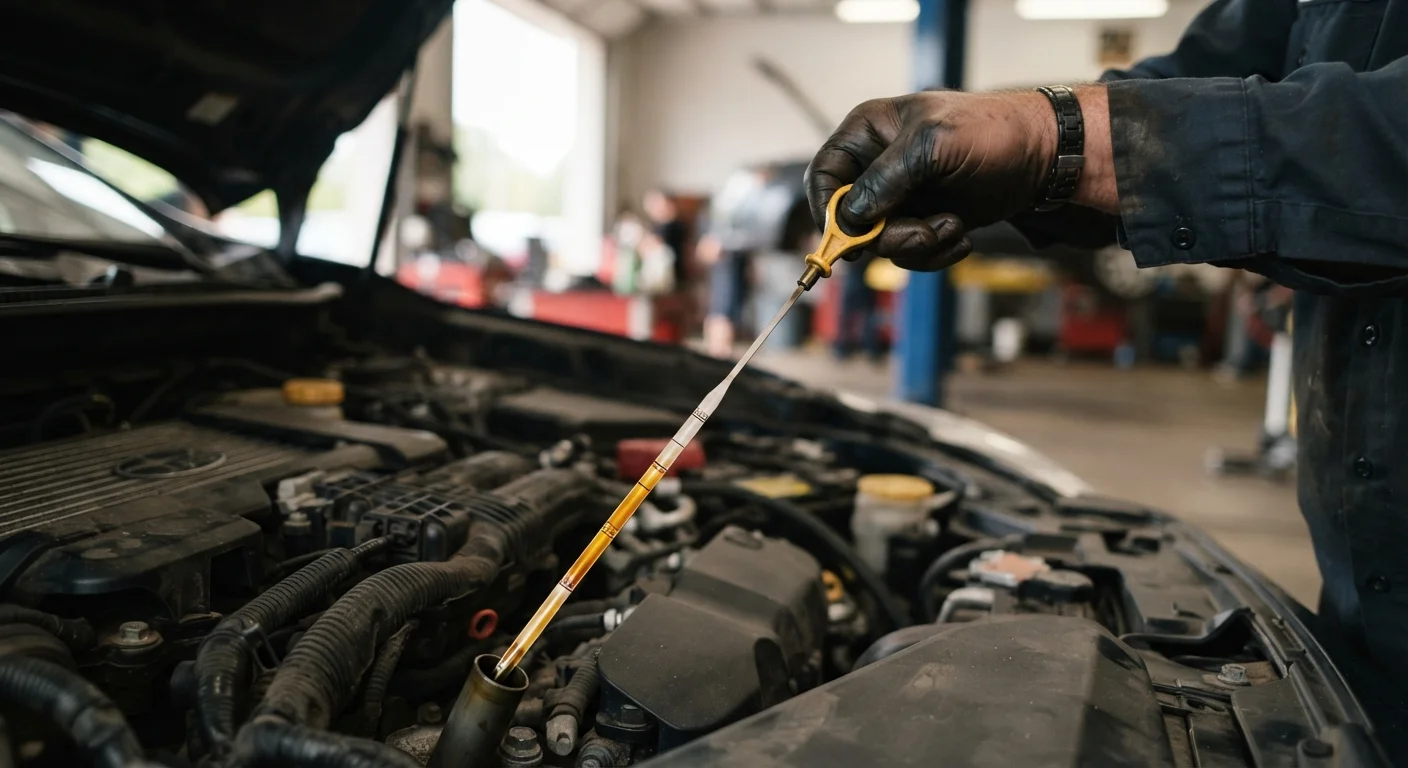
Checking the dipstick takes about two minutes and requires no tools:
- Park on level ground and let the engine cool for a few minutes after shutting off.
- Locate the dipstick - typically identified by a brightly colored loop or handle near the engine front.
- Pull it out, wipe it clean with a rag, then reinsert it all the way.
- Pull it out again and read the oil level against the MIN and MAX marks.
- Also note the oil's appearance: healthy oil ranges from amber to dark brown; milky or foamy oil signals a potential coolant leak and warrants immediate professional inspection.
If your oil is consistently low between changes, that's worth discussing with a mechanic. Burning or leaking oil is not normal for a well-maintained engine. For context on how aging vehicles can affect fluid behavior, our article on high-mileage vehicles and road safety covers related considerations.
Overfilling Oil Is Also a Problem
Adding too much oil - above the MAX mark on the dipstick - can cause the crankshaft to whip air into the oil, creating foam that doesn't lubricate effectively. It can also build excess pressure that damages seals. If you've accidentally overfilled, have the excess drained by a mechanic rather than driving on it.
Putting It All Together: A Simple Oil-Care Routine
Engine oil management doesn't require mechanical expertise - it requires consistency. A straightforward routine keeps your engine protected and helps you catch problems early:
- Know your grade: Check the owner's manual and keep a note in your glove box. Don't rely on memory at the parts store.
- Follow the right interval: Use the manufacturer's schedule, accounting for whether your driving qualifies as "severe."
- Check the dipstick monthly: A quick level and condition check each month is a low-effort habit with high protective value.
- Top off carefully: If the level is below the MIN mark, add the correct grade in small amounts - typically a quarter quart at a time - and recheck. Overfilling can cause foaming and pressure issues.
Engine oil is one of several fluids that deserve routine attention. Our car fluid glossary covers coolant, brake fluid, and other systems in the same practical format. And for a broader view of vehicle ownership logistics, visit our owning a vehicle hub.